


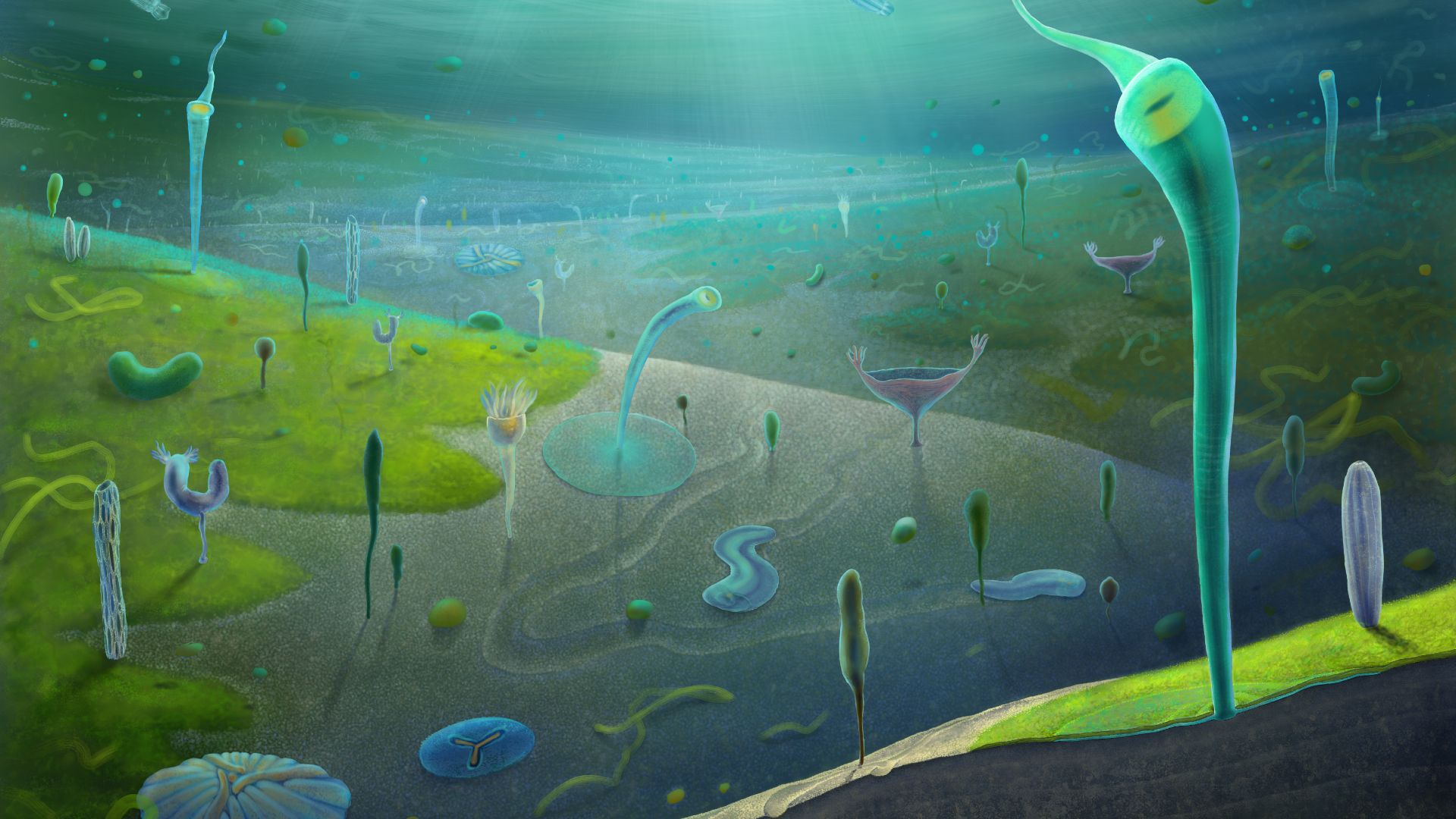
A newly discovered fossil trove in southwestern China is changing the timeline of how complex animals evolved.
Animal diversity and complexity are thought to have increased rapidly during an evolutionary explosion known as the Cambrian Explosion about 539 million years ago. But new fossil sites suggest that some of that complexity was already present at the end of the Ediacaran period (about 635 to 539 million years ago), millions of years before the Cambrian explosion.
you may like
“One specimen looks very much like a sandworm in the sand dunes,” study co-author Frankie Dunn, a researcher on Ediacaran life at the University of Oxford’s Natural History Museum, said in a statement.
Some simple multicellular organisms, such as sponges, first appeared during the Ediacaran period. However, most modern animal phyla emerged during the subsequent Cambrian explosion, which spanned 13 to 25 million years. This includes the phylum Chordata, which includes humans and other vertebrates.
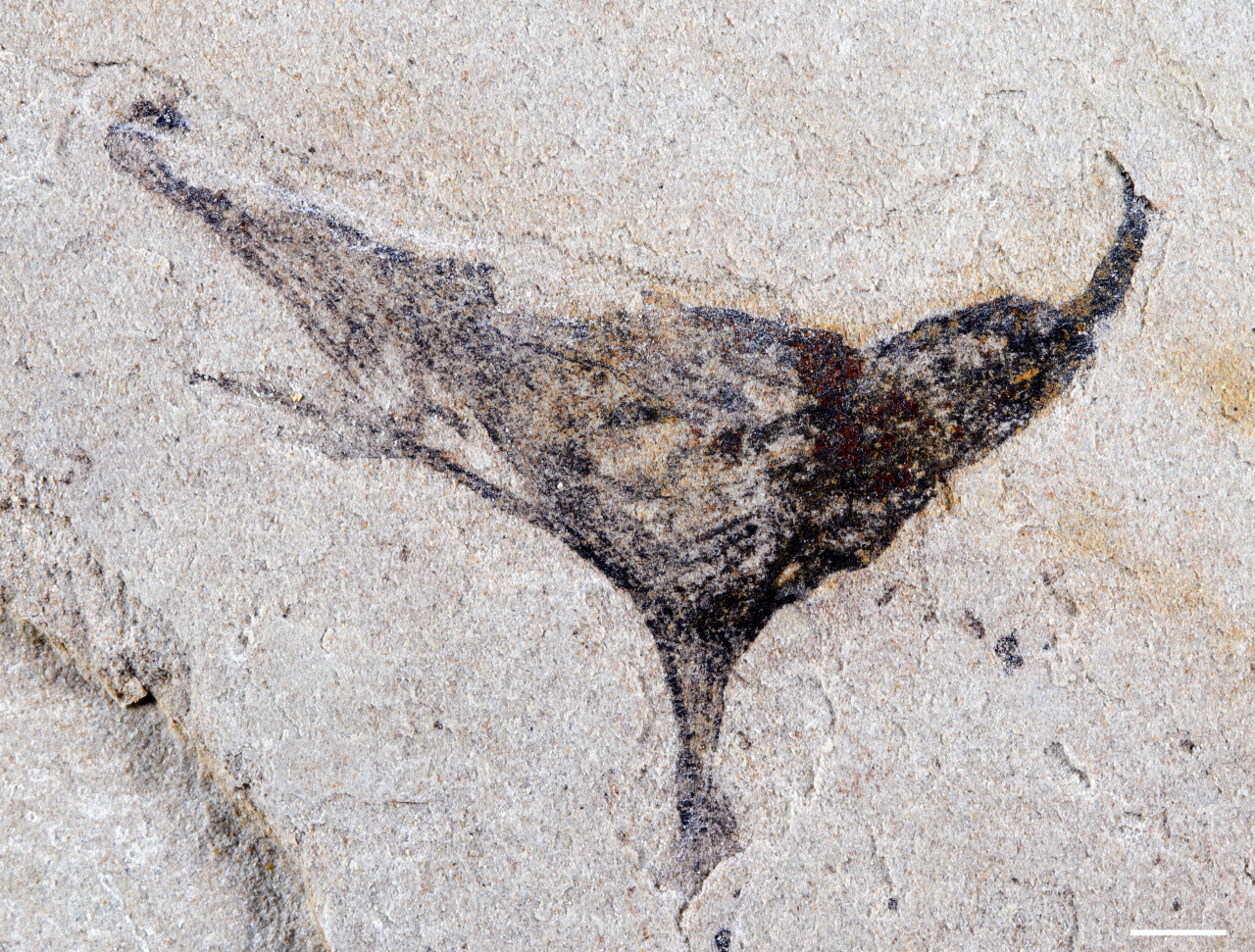
New fossil discoveries suggest that some of that complexity was already occurring by the Late Ediacaran. Discovered as part of the fossil collection of the Jiangchuan biota in southwestern China, the collection includes more than 700 fossilized animal and algal specimens dating from 554 to 539 million years ago. The researchers reported their findings in the journal Science on Thursday (April 2).
“When we first saw these specimens, it was clear that this was something completely unique and unexpected,” study co-author Luke Parry, a paleontologist at the University of Oxford, said in a statement.
Most of the fossils from this site are flat traces of organisms on the surrounding rock, known as carbonaceous membranes. Unlike three-dimensional traces left by durable body parts such as bones and shells, carbonaceous films capture details of an organism’s soft tissues such as the intestines and mouthparts.
This less common preservation method may help explain why scientists have so far failed to find evidence of these more complex animals from the Cambrian.
“Our results show that the apparent absence of these complex fauna at other Ediacaran sites may reflect differences in preservation rather than a lack of true biological presence,” co-author Ross Anderson, a researcher who studies the evolution of complex life at Oxford University’s Natural History Museum, said in a statement. “Carbonaceous compactions like Egawa’s are rare in rocks of this age, meaning similar communities may not be preserved elsewhere.”
Gaorong Li et al., Dawn of the Phanerozoic: Late Ediacaran transitional fauna of southwestern China. Science 392,63-68(2026). DOI:10.1126/science.adu2291