

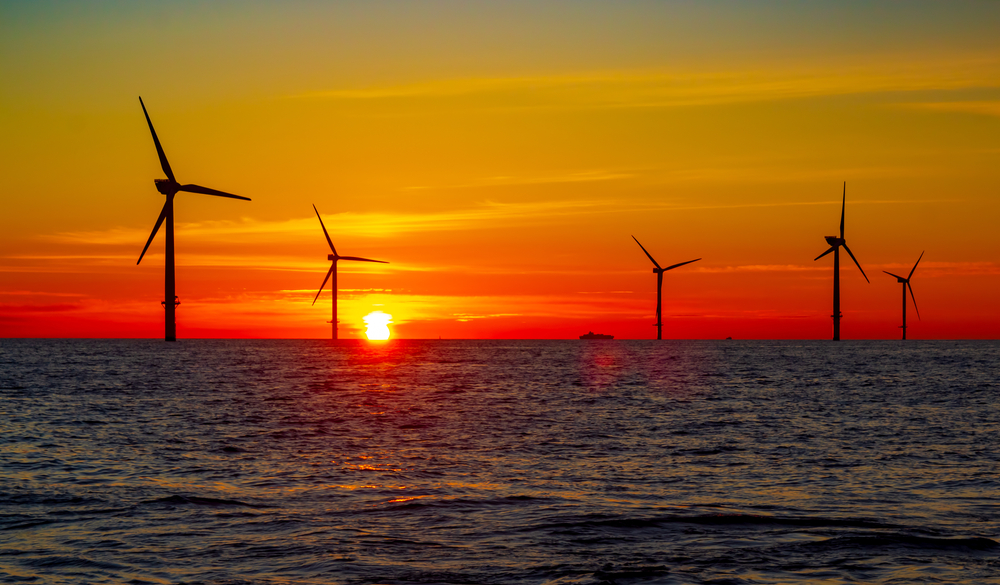
UK Energy Secretary Ed Miliband signed a historic clean energy security agreement known as the Hamburg Declaration.
The Hamburg Declaration was signed with European allies to strengthen energy security for homes and businesses in the UK and across Europe amid global instability.
The agreement will harness the energy wealth of Europe’s shared North Sea to facilitate unprecedented joint offshore wind projects between European countries including Germany, Norway, France and Denmark.
Mr Miliband said: “We are protecting our national interests by promoting clean energy, which will take Britain off the fossil fuel rollercoaster and deliver energy sovereignty and prosperity.”
Commitment to clean and safe energy
The UK and Europe have come together despite global headwinds to reaffirm our commitment to clean and safe energy as the only route out of the fossil fuel rollercoaster.
The deal comes after the UK held a record offshore wind auction, creating 7,000 jobs and driving £22bn of private investment in UK factories and ports.
“Following a record renewable energy auction, we have today taken further steps forward by signing a Clean Energy Security Agreement with our European allies to ensure we maximize the clean energy potential of the North Sea,” Mr Miliband commented.
Unleashing offshore wind in the North Sea
Three years ago, North Sea nations pledged to build 300 gigawatts of offshore wind power in the North Sea by 2050 in response to Putin’s illegal invasion of Ukraine and the weaponization of Europe’s energy supplies.
The agreement marks the first time North Sea countries have agreed to supply 100GW of this offshore wind power through a joint clean energy project. These include new “offshore wind hybrid assets” – offshore wind farms directly connected to multiple countries via interconnectors.
The Energy Secretary met with European leaders at the North Sea Future Summit to push ahead with plans to transform the North Sea into the world’s largest clean energy reservoir.
This major summit will bring together European leaders from Germany, France, Belgium, Iceland, Ireland, the Netherlands, Luxembourg, Denmark and Norway.
Interconnectors are critical to future energy security
The industry is expected to live up to this pledge by announcing ambitious plans for new projects.
The interconnector is critical to Europe’s energy security, allowing North Sea countries to send clean electricity to where it is needed most and ending Europe’s dependence on volatile fossil fuel markets controlled by petrostates and dictators.
Ben Wilson, Managing Director of National Grid Ventures, explained: “Today is a step towards a more integrated energy system in the North Sea. Collaboration is key to delivering safer and more affordable energy to consumers in the UK and Europe.”
Results of the North Sea Summit
Further important outcomes expected from the summit include:
Interconnected Offshore Power Grids – The Energy Secretary has signed a letter of intent to launch cross-border offshore power projects with Germany, Belgium, Denmark and the Netherlands, with a focus on joint planning, cost-sharing and market arrangements to accelerate supply. Offshore hybrid assets – The UK has agreed a framework to deepen cooperation between Germany and the UK on offshore hybrid assets. These are advanced subsea energy infrastructures that combine offshore wind farm connections and power interconnections. This will put UK companies at the forefront of grid technology, unlocking export opportunities and boosting growth.
William Bain, head of trade policy at the British Chambers of Commerce, concluded: “Working more closely with our European allies to unlock the full potential of the North Sea is essential to the UK’s energy security and economic growth.”
“The commitments set out in the Hamburg Declaration will do that and enable our companies to work on joint projects on renewable energy, interconnections and other critical energy infrastructure.”
Source link
