
Close Menu
  • Home
  • Identity
  • Inventions
  • Future
  • Science
  • Startups
  • Spanish
What's Hot

Sam Altman took a very harsh stance on Claude’s Super Bowl ad

Alphabet won’t tell investors about Google and Apple’s AI deal

Tinder looks to AI to fight ‘swipe fatigue’ and dating app burnout

Facebook X (Twitter) Instagram
  • Home
  • About Us
  • Advertise with Us
  • Contact Us
  • DMCA
  • Privacy Policy
  • Terms & Conditions
  • User-Submitted Posts
Facebook X (Twitter) Instagram
Fyself News
  • Home
  • Identity
  • Inventions
  • Future
  • Science
  • Startups
  • Spanish
Fyself News
Home » Most modern dogs have wolf DNA from relatively recent breeding. Here’s which breeds are the least “wolf-like” and the least “wolf-like.”
Science

Most modern dogs have wolf DNA from relatively recent breeding. Here’s which breeds are the least “wolf-like” and the least “wolf-like.”

userBy userNovember 26, 2025No Comments4 Mins Read
Share Facebook Twitter Pinterest Telegram LinkedIn Tumblr Email Copy Link
Follow Us
Google News Flipboard
Share
Facebook Twitter LinkedIn Pinterest Email Copy Link

A new study has found that most modern dog breeds have small amounts of wolf ancestry, long after dogs were domesticated.

Wolf DNA does not remain from when dogs and wolves diverged. Rather, they are most likely the result of interbreeding over the past several thousand years. That wolf-like influence may be related to specific characteristics, such as body size and personality traits, in different dog breeds, researchers reported Nov. 24 in the journal PNAS.

“Dogs are our friends, but it appears that wolves played a big role in shaping us into the companions we know and love today,” study co-author Logan Kistler, curator of botanical archeology and archaeogenomics at the Smithsonian National Museum of Natural History in Washington, D.C., said in a statement.

you may like

Wolves and dogs genetically diverged over 20,000 years ago. Since then, a certain amount of gene flow has existed between dogs and wolves, thanks to their genetic compatibility. To measure the extent of admixture and its impact on both animals, the researchers studied the genomes of about 2,700 previously published dogs and wolves from the late Pleistocene (the last Ice Age) to the present. This group included 146 ancient dogs and wolves, 1,872 modern dogs, and about 300 “village dogs” that lived around humans but were not pets.

The researchers found that at least 264 modern dog breeds have wolf ancestors passed down through interbreeding that took place an average of 900 generations before dogs, or about 2,600 years ago. This was long after dogs were domesticated at least 20,000 years ago. The most wolf-like dog genomes contained up to 40% wolf ancestry, while most dog genomes contained 0 to 5% wolf ancestry.

“Until this study, the prevailing science seemed to suggest that for a dog to be a dog, there couldn’t be much, if any, wolf DNA present,” study co-author Audrey Lin, an evolutionary biologist at the American Museum of Natural History in New York City, said in a statement. “But when we take a closer look at the modern dog genome, we find that wolves are there. This suggests that the dog genome can ‘tolerate’ wolf DNA to an unknown degree and still remain the dog we know and love.” ”
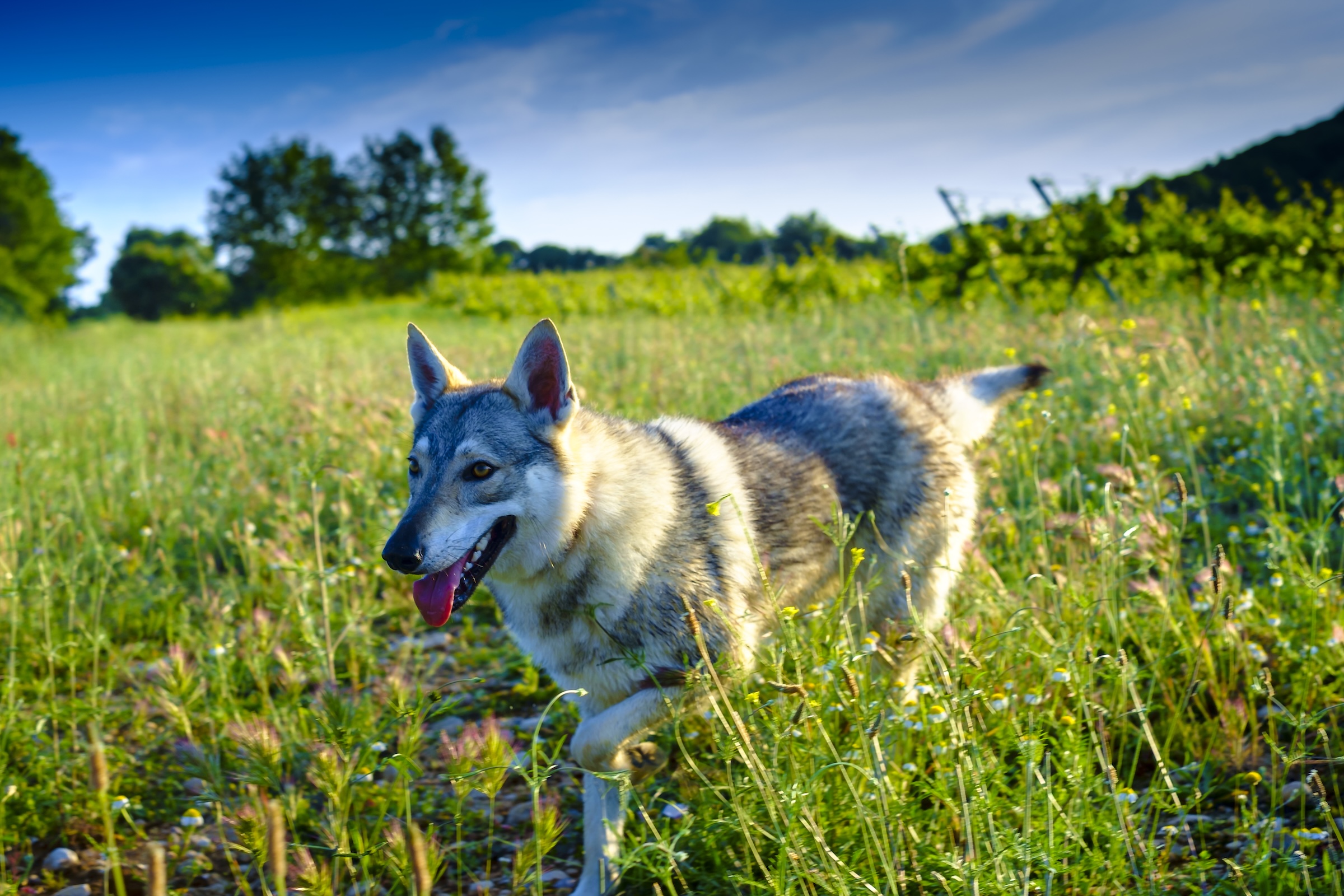
A wolf-like dog is smiling and walking across a grassy meadow.

The Czechoslovakian Wolfdog (pictured above) and the Saarloth Wolfdog had the most advanced wolf ancestry compared to other dog breeds. (Image credit: Mikel Bilbao /VW Pics/Universal Images Group via Getty Images)

The Czechoslovakian Wolfdog and Saarloos Wolfdog have the highest wolf ancestry, which is perhaps not surprising since they were deliberately bred in the 20th century by crossing domestic dogs with wolves. Large dogs and certain working dog breeds, such as Arctic sled dogs, hunting dogs, and certain guard dog breeds from West and Central Asia, such as the Anatolian Shepherd, tended to have higher levels of wolf ancestry.

Get the world’s most fascinating discoveries delivered straight to your inbox.

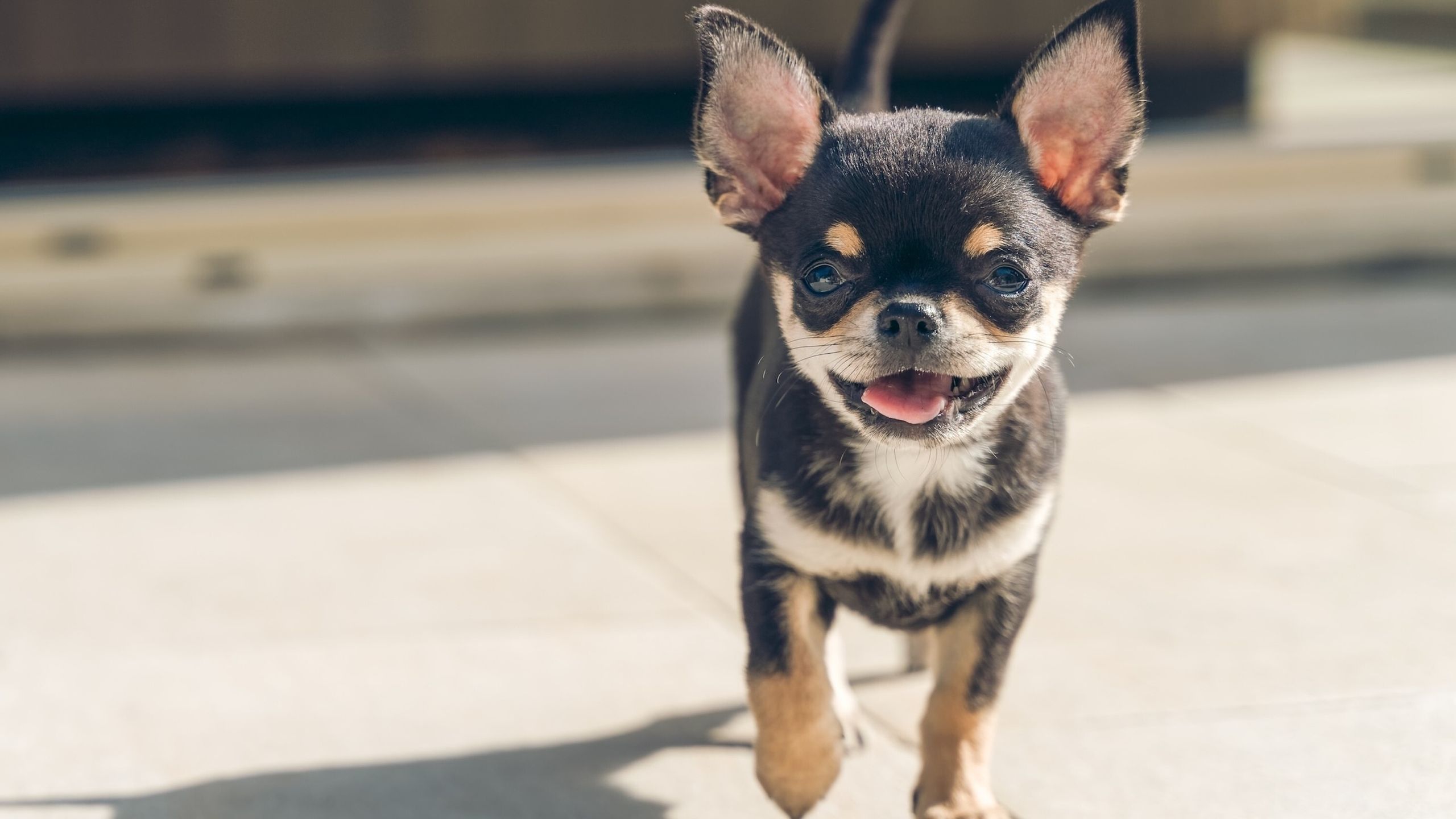
However, many breeds did not fit these patterns. Some large guard dogs, such as bullmastiffs and St. Bernards, have no recognized wolf ancestry. Some small dogs also have small amounts of wolf-like DNA. For example, the researchers found that 0.2% of the Chihuahua’s genome can be traced back to wolves.

“This is completely understandable to anyone who owns a Chihuahua,” Lin said in a statement. “And what we’ve found is that this is the norm. Most dogs are a little bit wolfish.”

Meanwhile, scientists found that the genomes of all the “village dogs” tested contained wolf DNA. And the reason may be related to their survival. “A set of wolf DNA found in the village dog genome contained genes associated with olfactory receptors,” Lin and Kistler write in The Conversation. “We imagine that wolf genetically influenced olfactory abilities may have helped these free-living dogs survive in harsh and unstable environments.”

Some personality traits that Kennel Clubs use to describe certain breeds are also tracked, along with the amount of wolf influence. Breeds with low wolf ancestry were often described as “friendly,” “easy to train,” or “active,” while breeds with more wolf DNA were pegged as “suspicious of strangers,” “independent,” and “dignified.” It is not yet clear whether wolf genes are directly involved in these traits.


Source link

#Biotechnology #ClimateScience #Health #Science #ScientificAdvances #ScientificResearch
Follow on Google News Follow on Flipboard
Share. Facebook Twitter Pinterest LinkedIn Tumblr Email Copy Link
Previous ArticleEU plans €51 million ‘Choose Europe’ recruitment for researchers in 2027
Next Article Diagnostic dilemma: The man’s muscles appeared strangely deformed. Doctors discovered that calcium was leaking into the blood.
user
  • Website

Related Posts

‘Textbooks need to be updated’: Juno spacecraft reveals Jupiter is smaller and flatter than we thought

February 4, 2026

A deer carrying the rotting head of a vanquished enemy and a playful lynx shortlisted for the Nuveen People’s Choice Award for Wildlife Photographer of the Year.

February 4, 2026

Terrifying photo of polar bear mother and cub resting in the mud in the summer heat

February 4, 2026
Add A Comment
Leave A Reply Cancel Reply

Latest Posts

Sam Altman took a very harsh stance on Claude’s Super Bowl ad

Alphabet won’t tell investors about Google and Apple’s AI deal

Tinder looks to AI to fight ‘swipe fatigue’ and dating app burnout

Lunar Energy raises $232 million to deploy home battery storage to support power grid

Trending Posts

Subscribe to News

Subscribe to our newsletter and never miss our latest news

Please enable JavaScript in your browser to complete this form.
Loading

Welcome to Fyself News, your go-to platform for the latest in tech, startups, inventions, sustainability, and fintech! We are a passionate team of enthusiasts committed to bringing you timely, insightful, and accurate information on the most pressing developments across these industries. Whether you’re an entrepreneur, investor, or just someone curious about the future of technology and innovation, Fyself News has something for you.

Castilla-La Mancha Ignites Innovation: fiveclmsummit Redefines Tech Future

Local Power, Health Innovation: Alcolea de Calatrava Boosts FiveCLM PoC with Community Engagement

The Future of Digital Twins in Healthcare: From Virtual Replicas to Personalized Medical Models

Human Digital Twins: The Next Tech Frontier Set to Transform Healthcare and Beyond

Facebook X (Twitter) Instagram Pinterest YouTube
  • Home
  • About Us
  • Advertise with Us
  • Contact Us
  • DMCA
  • Privacy Policy
  • Terms & Conditions
  • User-Submitted Posts
© 2026 news.fyself. Designed by by fyself.

Type above and press Enter to search. Press Esc to cancel.