
NASA accelerates planning for Artemis III mission
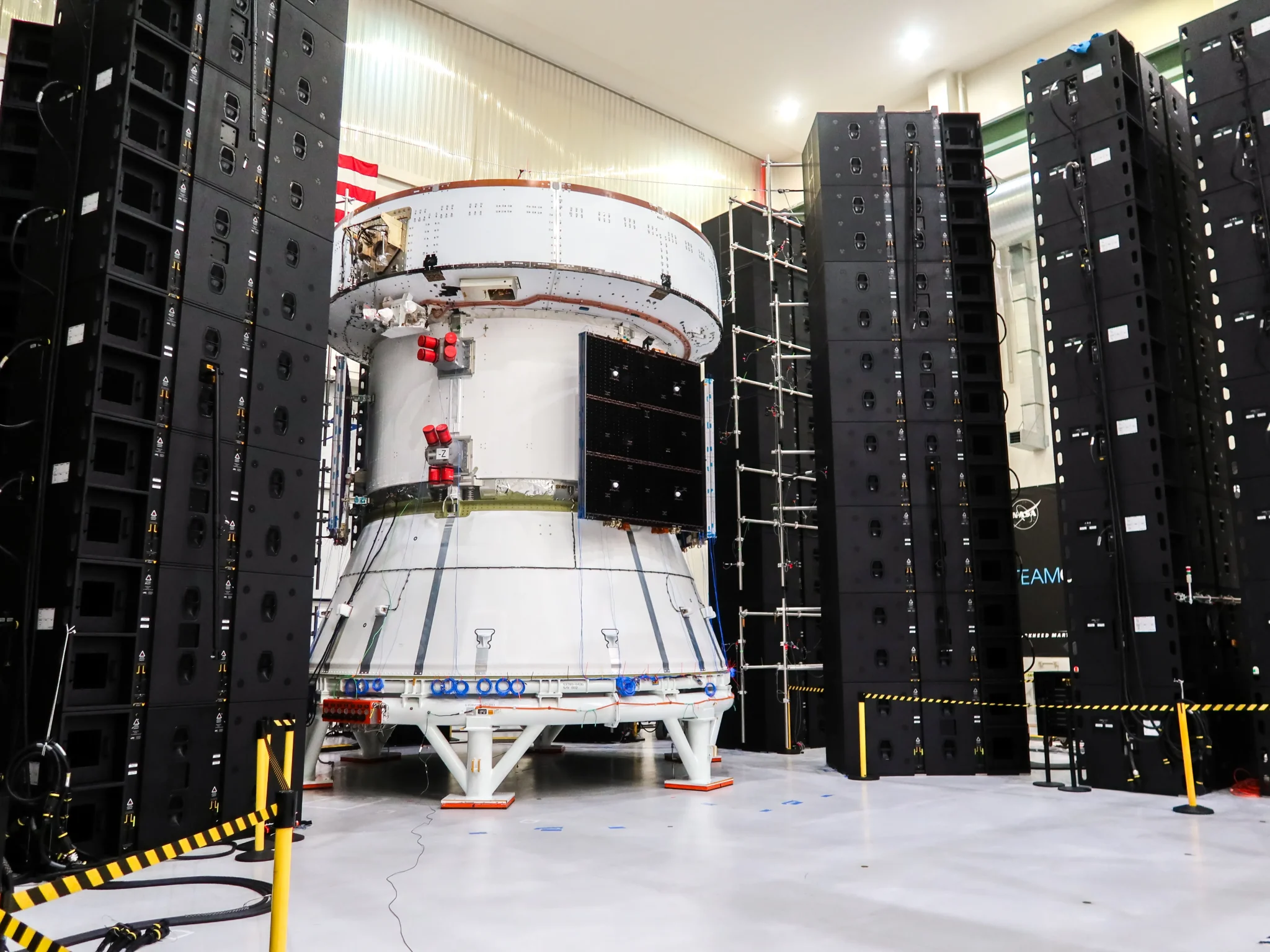
NASA is rapidly shaping the next phase of its lunar exploration strategy through the Artemis III mission, a critical crewed test flight designed to validate docking and rendezvous techniques in Earth orbit before astronauts return to the Moon.
The agency confirmed that the mission will include operating the Orion spacecraft in parallel with the commercial lunar lander system being developed by Blue Origin and SpaceX.
The Artemis III mission will launch four astronauts aboard NASA’s Space Launch System (SLS) rocket from Kennedy Space Center in Florida.
Instead of heading directly to lunar orbit, the crew will remain in low Earth orbit to test mission-critical systems such as docking procedures, crew habitability, and Orion’s upgraded heat shield technology.
NASA says the revised approach is aimed at reducing technical risks ahead of future Artemis IV lunar landing missions.
The result is a more flexible, operations-focused mission architecture that gives NASA, commercial partners, and international collaborators additional opportunities to validate hardware and procedures before sending astronauts to the lunar surface.
Engineers are currently refining the timeline, astronaut training plans, spacesuit testing requirements and potential science goals ahead of the mission’s final configuration.
Commenting on the mission, Jeremy Parsons, acting deputy administrator for Moon to Mars at NASA’s Exploration Systems Development Mission Directorate in Washington, said, “Although this is a mission to Earth orbit, it is an important stepping stone toward a successful Artemis IV moon landing. Artemis III is one of the most complex missions NASA has ever undertaken.”
“For the first time, NASA is coordinating a launch campaign involving multiple spacecraft and integrating new capabilities into Artemis operations. We are systematically integrating more partners and interrelated operations into this mission. This will help Orion, its crew, and ground teams all learn how to interact with the hardware and teams from both lander providers before sending astronauts to the lunar surface and building a lunar base there.”
Artemis III mission shifts focus to Earth orbit testing
NASA first revealed earlier this year that it plans to insert an additional Artemis mission before a manned lunar landing at the moon’s south pole. The Artemis III mission is currently expected to serve as a large-scale system demonstration rather than an immediate landing attempt.
Under the current concept, Orion would launch aboard an SLS rocket using a non-propulsive “spacer” element instead of the interim cryogenic propulsion stage typically used in deep space missions.
The spacer replicates the size and structural interface of the upper stage while eliminating propulsion hardware unnecessary for Earth orbit operations.
Hardware work is already underway at NASA Marshall Space Flight Center, where engineers are machining barrel sections and structural rings prior to welding and integration work.
Orion spacecraft demonstrates advanced docking maneuvers
Once Orion reaches orbit, a European-built service module will steer the spacecraft into stable low-Earth orbit. NASA officials believe this orbital strategy will significantly increase launch flexibility for all participating systems.
The Artemis III mission is expected to include operations involving SpaceX’s Starship manned landing system Pathfinder and Blue Origin’s Blue Moon Mark 2 lander test product.
NASA says astronauts may enter at least one of the commercial lander systems during the mission, but final steps are still being considered.
The central objective of the Artemis III mission is to validate the performance of the docking system for the first time in a manned Artemis environment.
NASA also plans to extend astronaut time on Orion compared to Artemis II to further evaluate life support reliability, habitation systems, and operational durability.
Includes testing of upgraded heat shields and spacesuits
NASA also plans to use the Artemis III mission to test the enhanced Orion heat shield during Earth reentry. Engineers believe the upgraded design could support more robust and flexible return trajectories for future moon missions.
The agency is also considering opportunities to evaluate compatibility between the lunar module and Axiom Space’s AxEMU lunar spacesuit.
These assessments are intended to streamline future lunar surface operations and reduce integration risks in advance of manned lunar landings later in Operation Artemis.
NASA is also soliciting industry proposals to improve communication capabilities during missions, since the Deep Space Network does not support Artemis III operations in Earth orbit.
International cooperation and CubeSat opportunities expand
The Artemis III mission could also create opportunities for international and commercial participation. NASA confirmed that it is seeking interest from domestic and international organizations interested in deploying CubeSats in flight.
These secondary payloads have the potential to contribute to broader Artemis program goals while supporting scientific research, technology demonstrations, and Earth orbit experiments.
NASA continues to position Artemis as the foundation for continued lunar exploration and, ultimately, human missions to Mars.
Agency officials described the program as part of a broader effort to establish a long-term human presence on the moon while expanding scientific discovery and commercial space exploration.
With mission concepts evolving rapidly, the Artemis III mission is shaping up to be one of the most strategically important steps in NASA’s roadmap to return astronauts to the moon and ultimately deep into the solar system.
Source link

