
New East African bat coronavirus can invade human cells
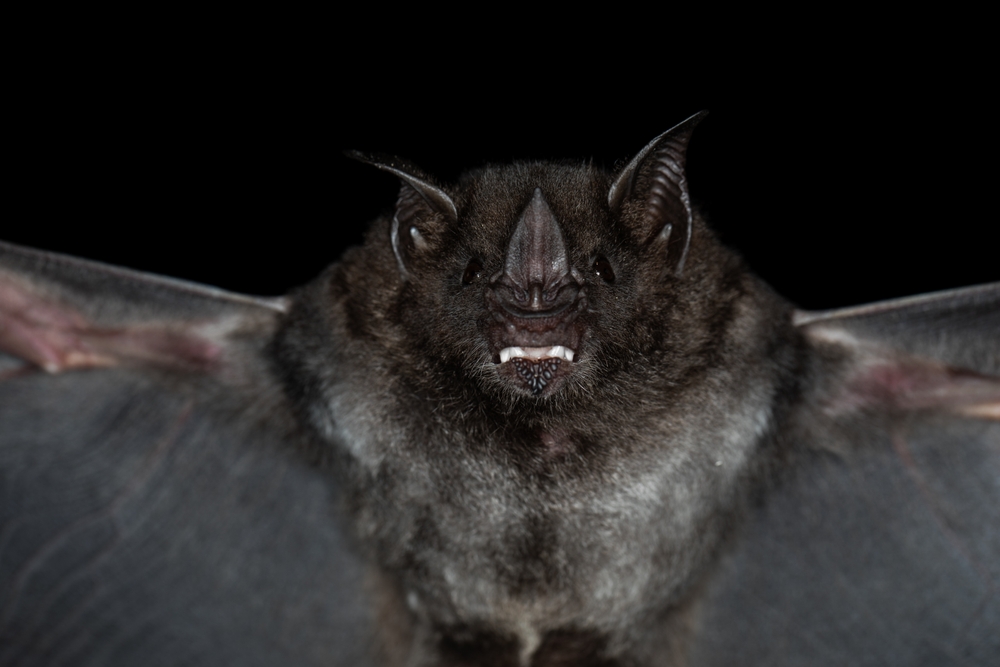
Biotechnology and Biological Sciences Research Council (BBSRC)-funded researchers have identified a new bat coronavirus in East Africa that can invade human cells, raising concerns about the potential for future outbreaks.
The study, led by the Perbright Institute and published in the journal Nature, focused on viruses circulating in bat populations and their potential to make their way to humans.
The international collaboration, which brought together the University of Cambridge, the University of York, the KEMRI-Wellcome Trust Research Program and the National Museum of Kenya, has identified a virus in heart-nosed bats that can bind to a human receptor known as CEACAM6. This interaction is a necessary step for the virus to enter human cells.
This result does not indicate that human infection has occurred. Preliminary testing in Kenya found no evidence of spread among the local population.
But the ability of the virus to attach to human cells establishes a plausible route for spread of infection, highlighting the risks of the new coronavirus that researchers say need to be closely monitored.
Coronavirus background and the lasting impact of the 2019 epidemic
Coronaviruses are a large family of viruses, many of which are transmitted by animals such as bats. Infection depends on the virus successfully binding to a receptor on the host cell, and this process determines whether the virus can cross species barriers.
The 2019 outbreak fundamentally changed how scientists assess these risks. The study showed how quickly coronaviruses can spread once they become infectious among humans, and how limited early visibility for animal viruses can slow response efforts.
As a result, research has shifted upstream. The focus now is on identifying potential threats before they spread. In that context, the detection of bat coronaviruses that can interact with human cell receptors represents an early warning signal, long before human infection is confirmed.
Bat coronavirus binds to human cells
The focus of the research is a virus discovered in fruit bats in East Africa. Researchers discovered that it can bind to the human CEACAM6 receptor, a protein on the surface of certain cells.
This is an important advance since receptor binding is one of the key requirements for infection. Without this, the virus would not be able to enter and replicate inside human cells. This discovery is therefore an important step in understanding how animal viruses adapt to humans.
Importantly, this does not mean the virus is currently infecting people. However, compatibility at the cellular level has been demonstrated. This was not previously seen in this group of viruses.
There is no evidence of human-induced infection at this stage.
Field studies conducted in Kenya indicate that the virus has not entered the human population. Researchers found no signs of infection in people in the areas where the bats were collected.
That distinction is important. The presence of a new coronavirus with the ability to bind to human cells indicates a potential risk rather than an active infection. Many viruses exhibit partial compatibility with human biology without causing outbreaks.
Still, scientists stress that this is the point when vigilance is most effective. Monitoring the virus at this stage allows for early detection if the situation changes.
Expanding models of how coronaviruses infect cells
This finding questions existing assumptions about alphacoronaviruses. Previously, these viruses were thought to rely on a limited set of receptors, limiting their ability to infect different species.
This study suggests a broader mechanism. Alphacoronaviruses may be able to utilize a wider range of receptors than previously understood, said Dr Darran Bailey of the Perbright Institute.
This change has implications for risk assessment. If receptor use were more flexible, the boundaries between animal and human infection may not be as rigid as the model assumes.
Implications for surveillance and global health strategies
The research is part of a broader effort by UK Research and Innovation (UKRI) to better understand the origins of infectious diseases. By focusing on viruses within animals’ reservoirs, scientists aim to identify threats before they emerge.
Professor Anne Ferguson-Smith, BBSRC Executive Chair, commented: “This discovery shows that with the right investment in basic science and strong international partnerships, we can stay ahead.
“By bringing together world-class scientists from the UK and Kenya, this team has discovered a smarter and safer way to identify viruses before they can infect humans.
“Understanding how animal viruses enter human cells is essential to better prepare for future health threats.”
Bats remain a key focus due to the diversity of coronaviruses they host. Such studies can help map which viruses have properties relevant to human infection, such as receptor binding.
The identification of a bat coronavirus with this ability does not indicate an imminent outbreak. But the study provides a clearer picture of how the coronavirus begins its transition to humans, providing a narrow but valuable window of opportunity to prepare for a pandemic.
Source link

