Close Menu
  • Home
  • Identity
  • Inventions
  • Future
  • Science
  • Startups
  • Spanish
What's Hot

China-linked DKnife AitM framework, routers targeted for traffic hijacking and malware distribution

Combat antimicrobial resistance with McGill rapid tests

Asian State Assistance Group TGR-STA-1030 breaches 70 governments and infrastructure-related organizations

Facebook X (Twitter) Instagram
  • Home
  • About Us
  • Advertise with Us
  • Contact Us
  • DMCA
  • Privacy Policy
  • Terms & Conditions
  • User-Submitted Posts
Facebook X (Twitter) Instagram
Fyself News
  • Home
  • Identity
  • Inventions
  • Future
  • Science
  • Startups
  • Spanish
Fyself News
Home » One of Siberia’s last shamans was an 18th-century woman whose parents were related, a DNA study reveals
Science

One of Siberia’s last shamans was an 18th-century woman whose parents were related, a DNA study reveals

userBy userJanuary 7, 2026No Comments5 Mins Read
Share Facebook Twitter Pinterest Telegram LinkedIn Tumblr Email Copy Link
Follow Us
Google News Flipboard
Share
Facebook Twitter LinkedIn Pinterest Email Copy Link

The mummified bodies of centuries-old indigenous Siberians reveal secrets about their genetics over a long period before, during and after the Russian conquest of their land, including that the female shaman buried in a red woolen dress had closely related parents, a new study has found.

Archaeologists have recovered more than 100 naturally mummified bodies of indigenous Yakuts buried in Siberia between the 14th and 19th centuries. DNA analysis of their remains shows that the Yakuts resisted Russian conquest and Christianization attempts in ways not typically seen among indigenous peoples.

Researchers detailed their archaeogenetic investigation in Yakutia (also known as the Sakha Republic), one of the coldest regions on earth in northeastern Siberia, in a study published in the journal Nature on Wednesday (7 January). After nearly 16 years of archaeological excavations, researchers discovered 122 individuals from four regions of Yakutia dating back to before and after the start of the Russian Empire’s conquest of Siberia in 1632. The researchers then analyzed the DNA of the indigenous Yakuts to see if their genes had changed as a result of the Russian conquest.

you may like

They found that the genetic origins of modern Yakutia date back to the 12th-13th centuries, which confirms Yakut oral history. But unlike what happened with other colonial conquests, such as the Hispanic conquest of the Americas, the researchers found no strong evidence of population decline or interbreeding between Russians and Yakuts.

“Our analysis shows that the genetic heritage of Yakutia has remained stable from the 16th century to the present day,” study co-author Pearl Guarino-Vignon, a postdoctoral fellow at the Saint-Antoine Research Center in Paris, said in a statement. “Therefore, there was no conquest through demographic replacement, probably due to the logistical difficulties of settling in such an extreme environment.”

The researchers also investigated the Yakut oral microbiome (the community of microorganisms that live in the human mouth) by analyzing the mummies’ teeth and dental plaque. Scientists hypothesized that the microbiome would change over time as Russian settlers brought in foods such as barley, rye, and tobacco, but analysis revealed that the Yakut microbiome remained surprisingly stable despite the Russian conquest.

siberian shamanism

Yakut tombs also reveal that traditional shamanism was practiced until the late 18th century, long after Russia attempted to Christianize Yakutia. The last Yakut shaman, a woman in her 30s when she died more than 250 years ago, also had something surprising in her DNA. Her parents could be second-degree relatives, meaning they could be half-siblings, uncles and nieces, aunts and nephews, or grandparents and grandchildren, study co-author Ludovic Orlando, a molecular geneticist at France’s National Center for Scientific Research (CNRS), told Live Science in an email.

Get the world’s most fascinating discoveries delivered straight to your inbox.

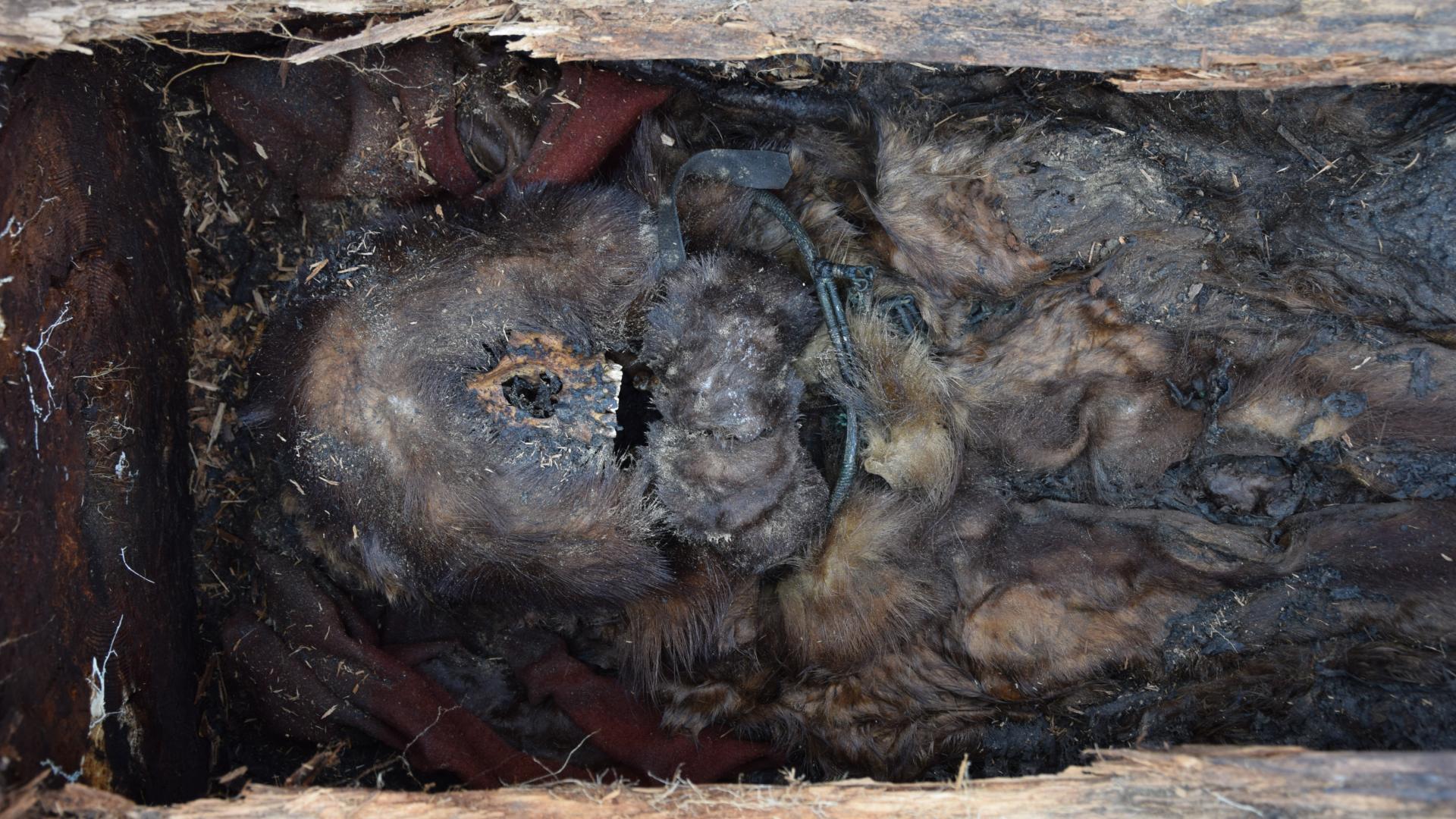
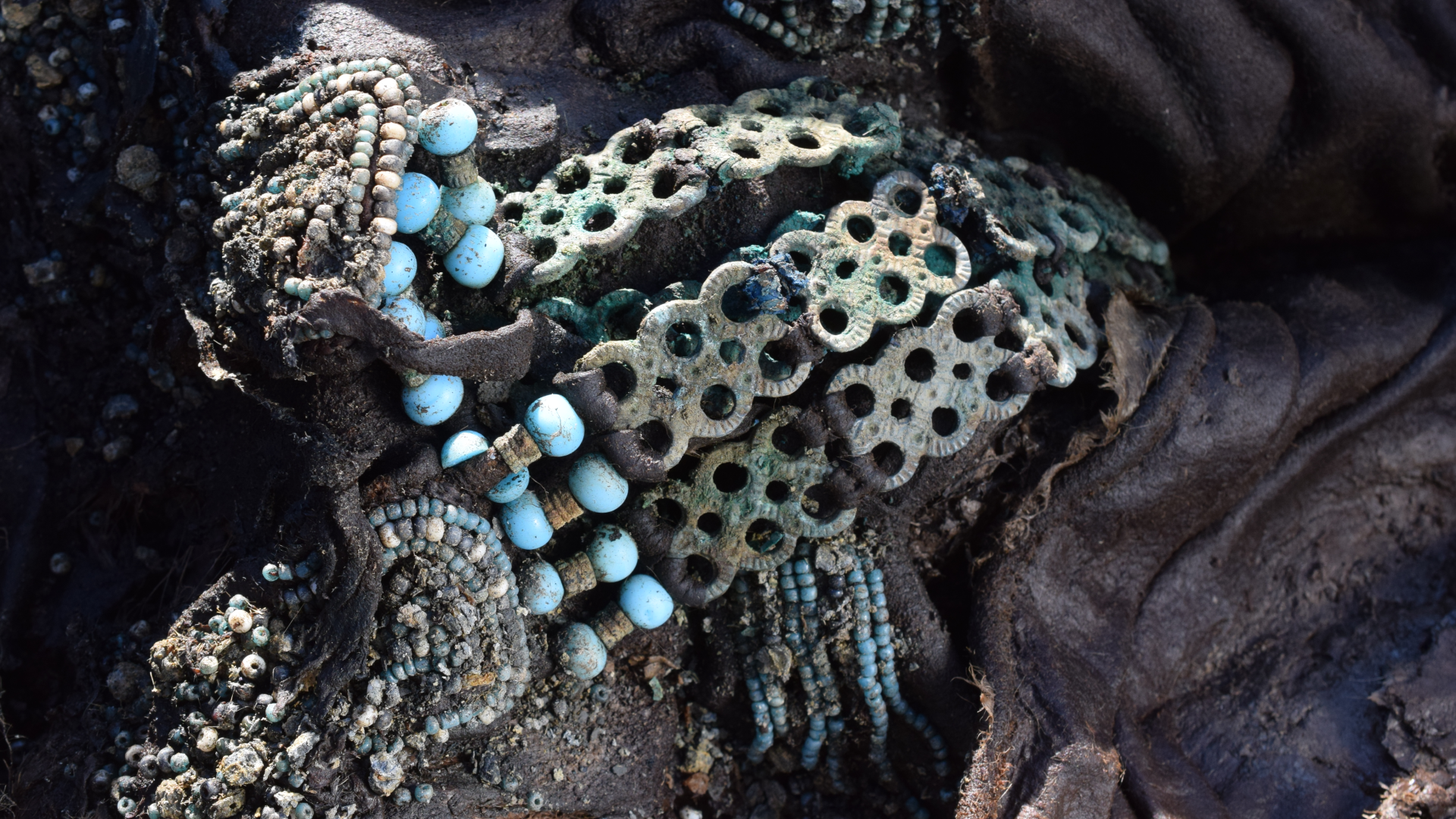
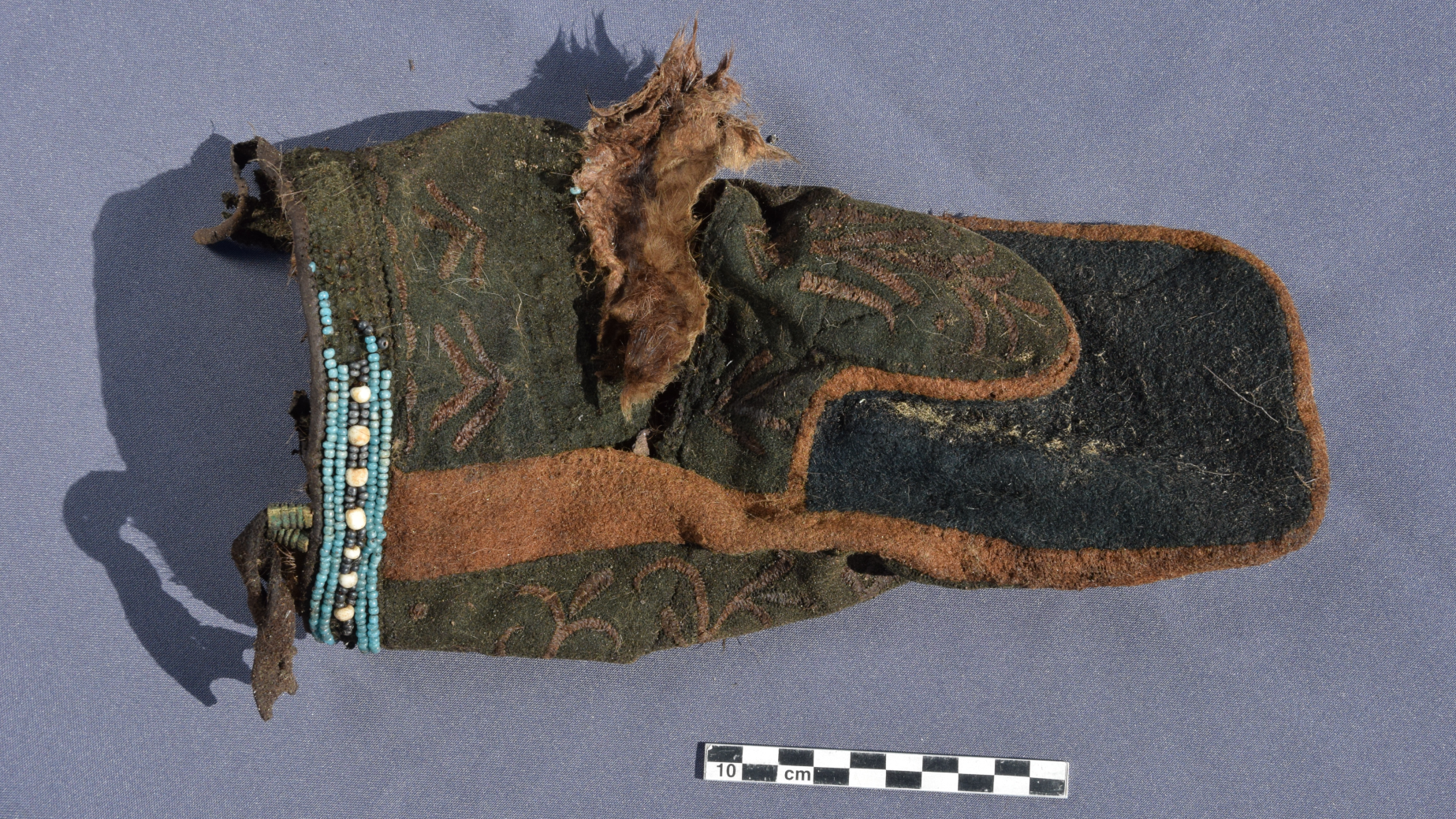
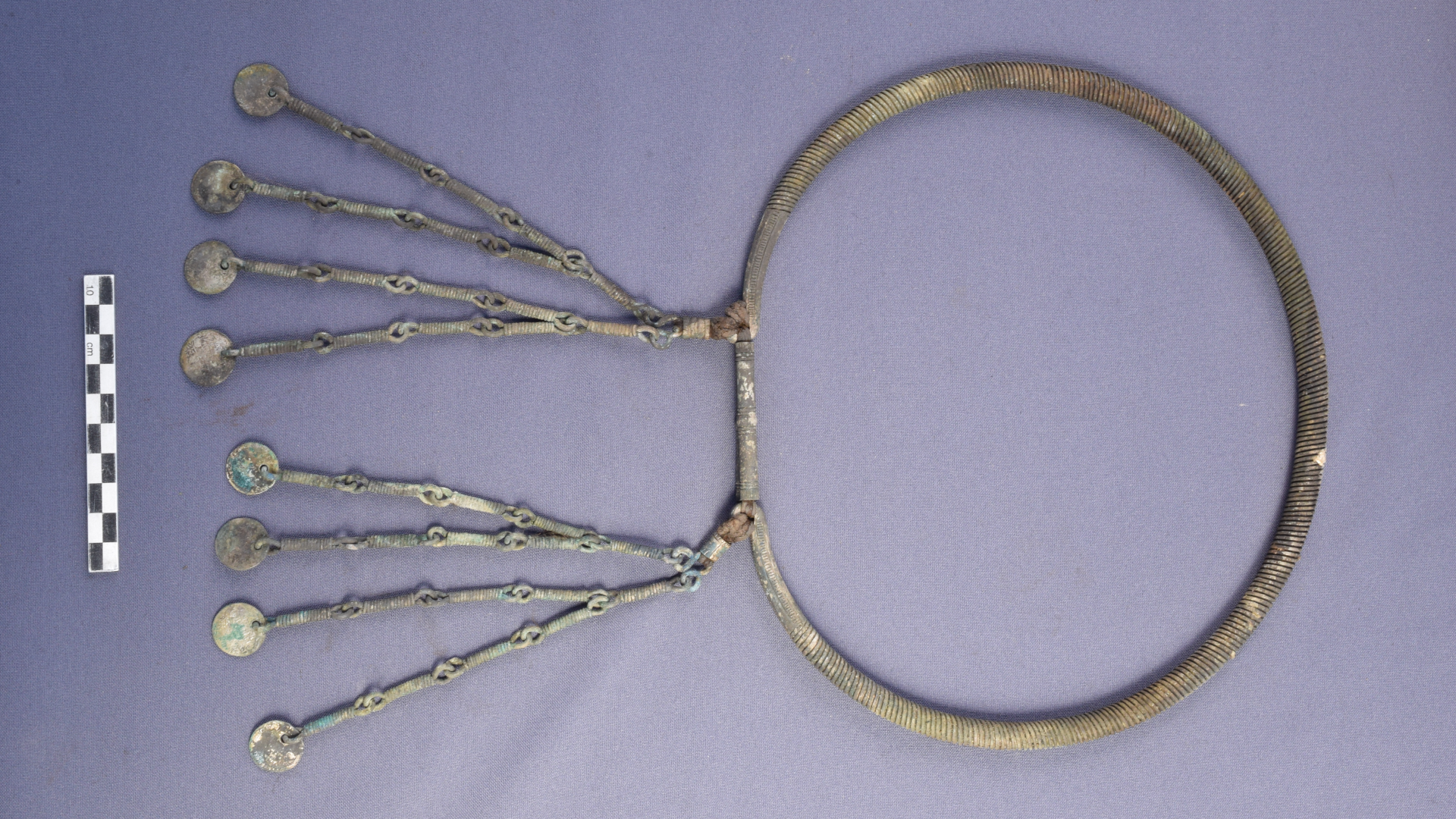
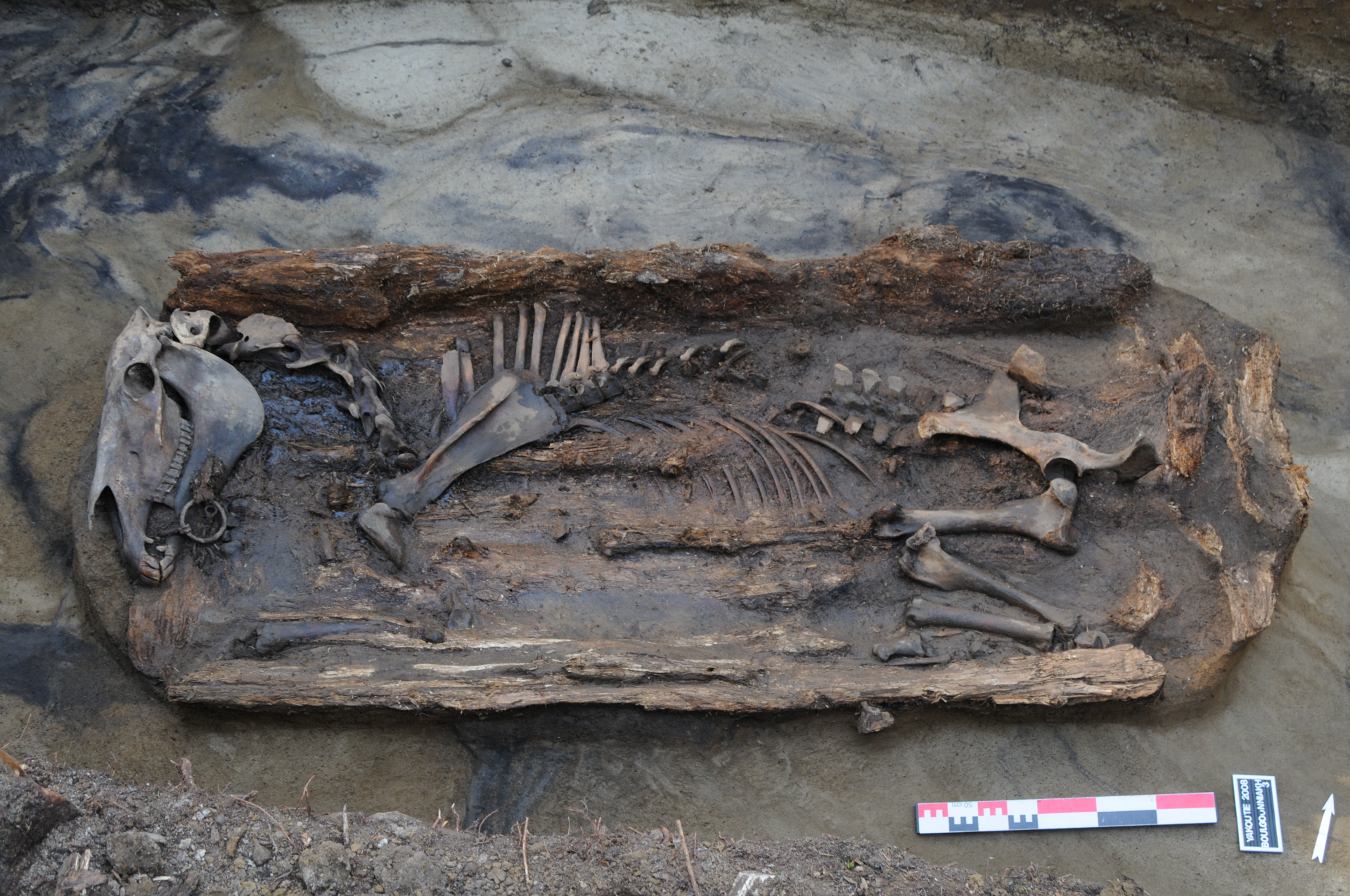
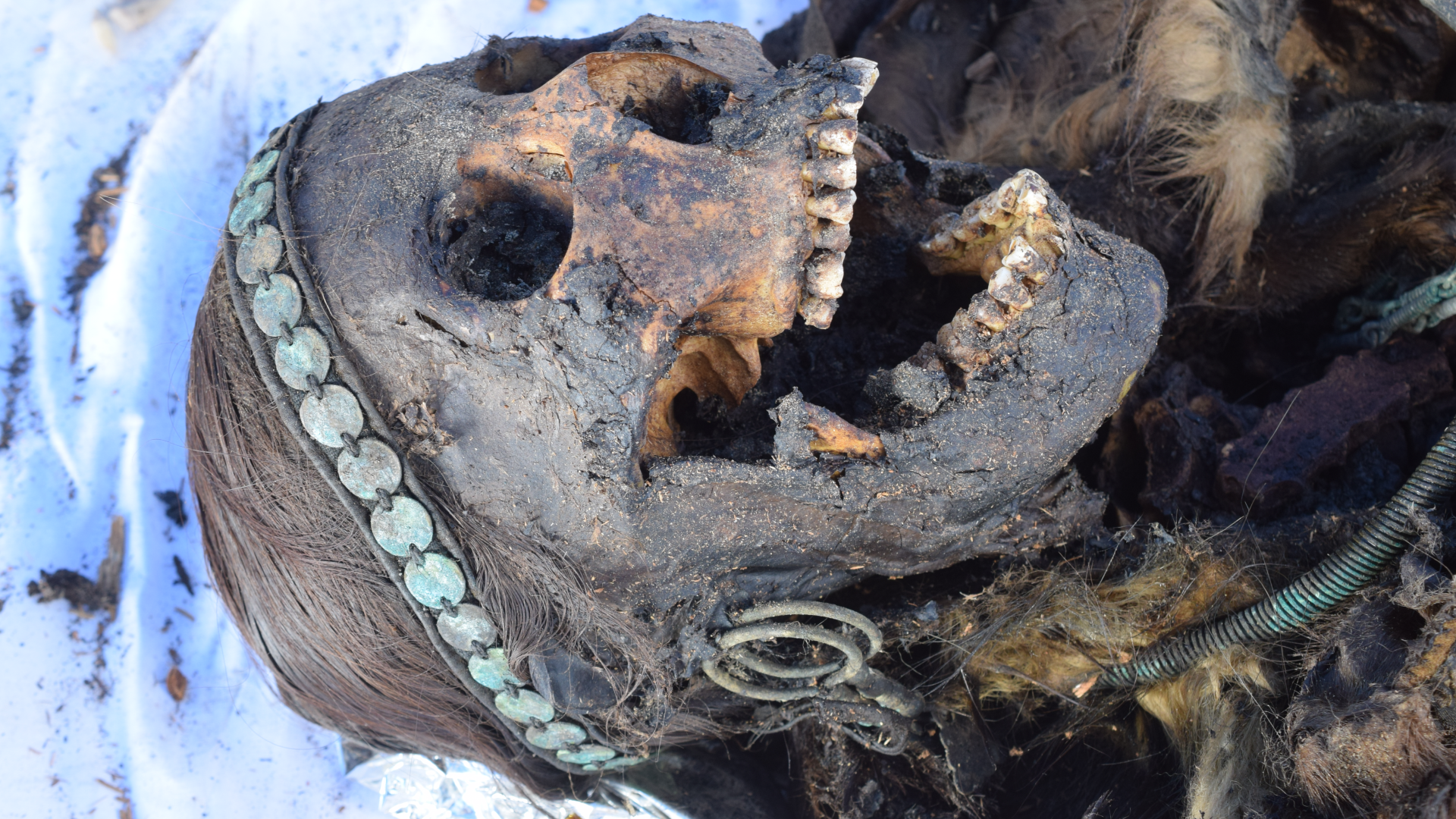
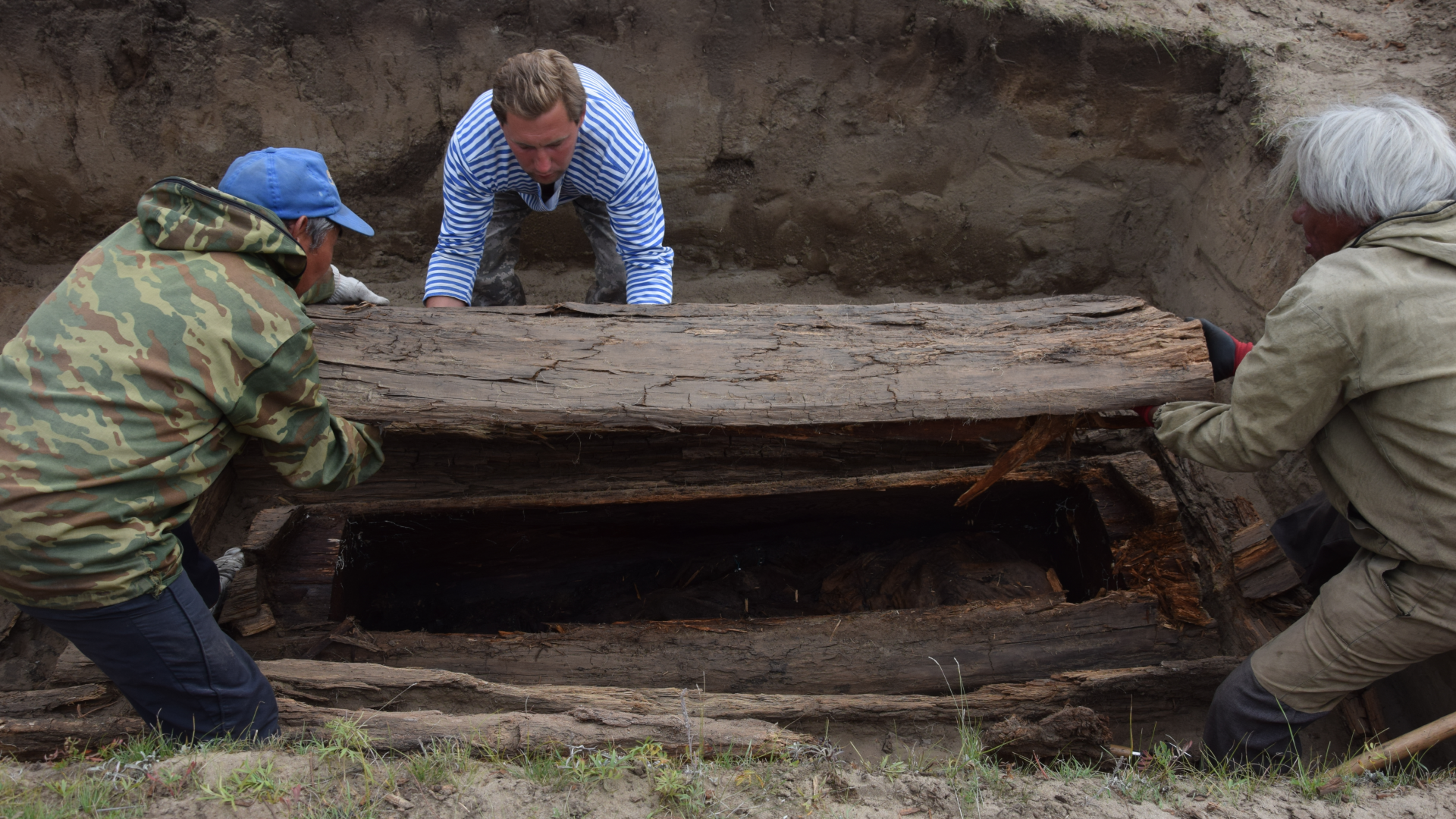
The last Yakut shaman was found in central Yakutia in a place called Us Serg, and researchers call her Us Serg 1. She was buried in a tree-trunk coffin and wearing layers of clothing, including a traditional Yakut ushanka hat and thigh-high leather leg warmers. She wore a red wool dress made from imported blankets, but also featured indigenous shamanic features, including a “bridal belt” accessory. Nearby, archaeologists discovered a pit containing the skeletons of three horses, one of which had an accessory with a design matching the woman’s dress.

Image 1/6
Images of artifacts preserved in permafrost
(Image credit: © Patrice Gérard-CNRS)

An archaeologist opens the wooden coffin of Usserg 1, a female shaman from Yakutia in the 18th century.

Images of artifacts preserved in permafrost
(Image credit: © Patrice Gérard-CNRS)

The mummified body of Usserg I, a female shaman from Yakutia from the 18th century, after archaeologists open the coffin.

Images of artifacts preserved in permafrost
(Image credit: © Patrice Gérard-CNRS)

Beaded accessories from the tomb of the 18th century Yakut shaman Usserg 1.

Images of artifacts preserved in permafrost
(Image credit: © Patrice Gérard-CNRS)

A beaded mitten found in the coffin of UsSergue1, a female shaman from Yakutia in the 18th century.

Images of artifacts preserved in permafrost
(Image credit: © Patrice Gérard-CNRS)

UsSergue1’s “Bride Belt” – Shamanic accessories for women.

Images of artifacts preserved in permafrost
(Image credit: © Patrice Gérard-CNRS)

Several indigenous Yakuts were buried with or near the horses.

“We interpret UsSergue1 as the embodiment of her family,” Orlando said, adding that it is a way for them to “preserve their traditional and spiritual traditions.” Although Christianity was on the rise around the time UsSergue1 was buried, “some Yakuts may have resisted and stuck to their traditions, including shamanism,” Orlando added.

However, the high inbreeding level of UsSergue1 was surprising. When researchers analyzed DNA for kinship among the skeletons, they found that many relatives were buried close to each other, but UsSergue 1 was the most inbred Yakut, the researchers wrote in the study. She was also the descendant of the most powerful clan and the last shaman of her kind.

But researchers don’t know exactly how her parents were related, or whether this union was considered abnormal.

“All we can say is that her parents were second-degree relatives,” Orlando said. Several other shaman burials have also been discovered, but none of them had inbred parents, so “we don’t think you need to be closely related to be a shaman,” Orlando added.

Historic Yakut burials have provided researchers with a treasure trove of information about indigenous life in past centuries. “Preservation in this environment is unique,” study co-author and CNRS biological anthropologist Eric Kourvezy said in a statement. “The remains were so intact that dissection was possible.” In addition to the bodies, “their clothing and jewelry were also left intact, providing a unique opportunity to compare biological and cultural data,” Kulbezi said.


Source link

#Biotechnology #ClimateScience #Health #Science #ScientificAdvances #ScientificResearch
Follow on Google News Follow on Flipboard
Share. Facebook Twitter Pinterest LinkedIn Tumblr Email Copy Link
Previous Article‘They’re much more connected than we thought’: study could rewrite our understanding of glia, the nervous system’s supporting cells
Next Article Greenland’s giant ice dome disappeared 7,000 years ago – and is melting at today’s temperatures
user
  • Website

Related Posts

7,500-year-old deer headdress discovered in Germany shows hunter-gatherers shared sacred objects and ideas with the region’s first farmers

February 5, 2026

How well can AI and humans work together? Scientists are looking to Dungeons & Dragons to find out.

February 5, 2026

Saltwater crocodiles crossed the Indian Ocean to the Seychelles before humans arrived and made them extinct.

February 5, 2026
Add A Comment
Leave A Reply Cancel Reply

Latest Posts

China-linked DKnife AitM framework, routers targeted for traffic hijacking and malware distribution

Combat antimicrobial resistance with McGill rapid tests

Asian State Assistance Group TGR-STA-1030 breaches 70 governments and infrastructure-related organizations

How printed electronics from Tampere Uni is building a sustainable future

Trending Posts

Subscribe to News

Subscribe to our newsletter and never miss our latest news

Please enable JavaScript in your browser to complete this form.
Loading

Welcome to Fyself News, your go-to platform for the latest in tech, startups, inventions, sustainability, and fintech! We are a passionate team of enthusiasts committed to bringing you timely, insightful, and accurate information on the most pressing developments across these industries. Whether you’re an entrepreneur, investor, or just someone curious about the future of technology and innovation, Fyself News has something for you.

Castilla-La Mancha Ignites Innovation: fiveclmsummit Redefines Tech Future

Local Power, Health Innovation: Alcolea de Calatrava Boosts FiveCLM PoC with Community Engagement

The Future of Digital Twins in Healthcare: From Virtual Replicas to Personalized Medical Models

Human Digital Twins: The Next Tech Frontier Set to Transform Healthcare and Beyond

Facebook X (Twitter) Instagram Pinterest YouTube
  • Home
  • About Us
  • Advertise with Us
  • Contact Us
  • DMCA
  • Privacy Policy
  • Terms & Conditions
  • User-Submitted Posts
© 2026 news.fyself. Designed by by fyself.

Type above and press Enter to search. Press Esc to cancel.