


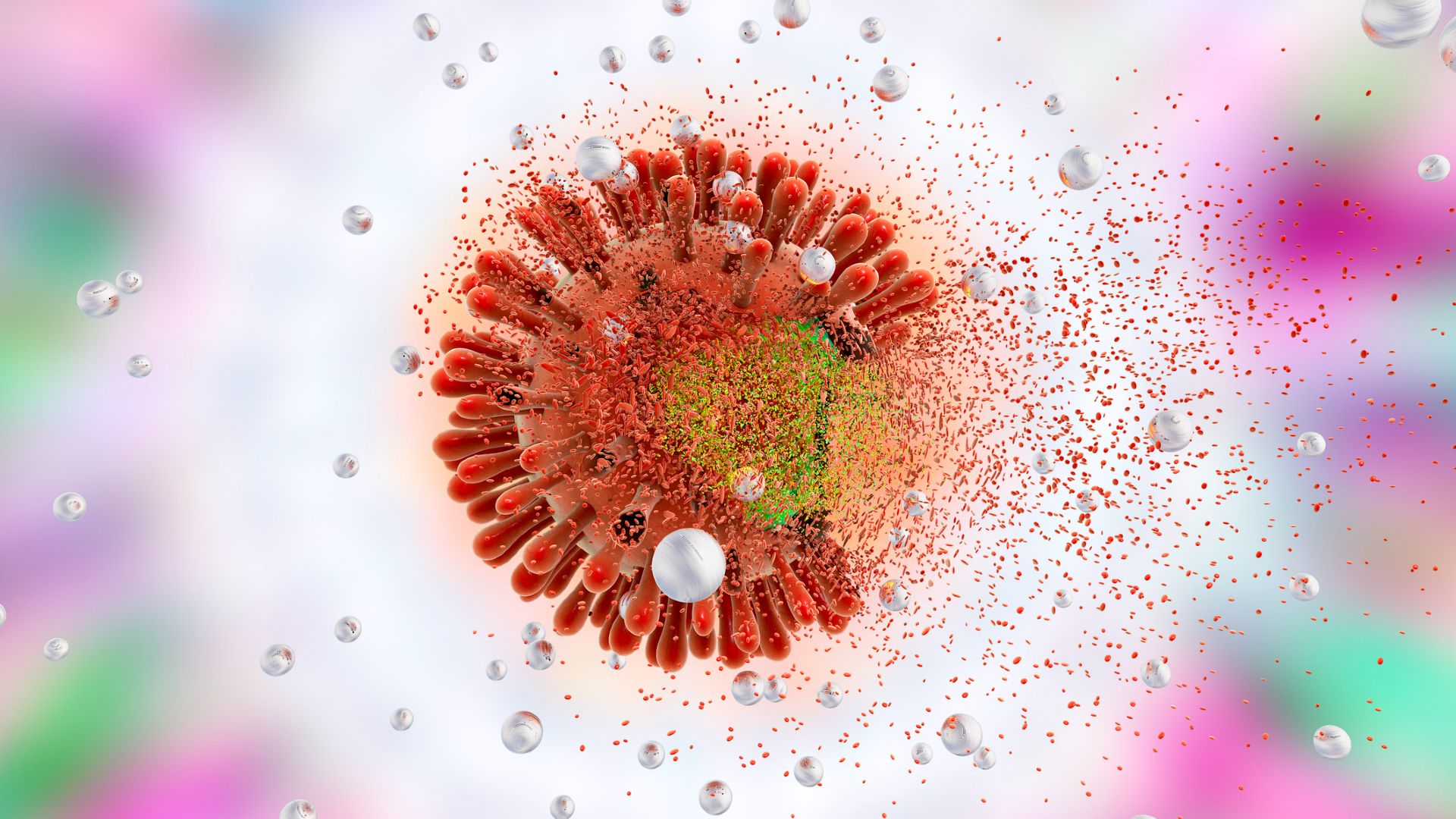
A 63-year-old man known as the Oslo Patient is “likely” cured of HIV after his entire immune system was remodeled through a stem cell transplant.
Prior to this case, several other HIV patients who underwent similar transplants had entered long-term remission from infection. In these cases, the donated cells came from people unrelated to the patient, but in the case of the Oslo patient, the transplanted cells came from his brother. His brother happened to have a genetic mutation that made him resistant to HIV, doctors reported Monday (April 13) in the journal Nature Microbiology.
you may like
“The chance of a sibling being eligible for transplantation is 25% and the frequency of CCR5Δ32/Δ32 is about 1%” in the northern European population, study co-author Dr. Anders Eyvind Miffle, a hematologist at Oslo University Hospital, where the patient was treated, told Live Science via email. “Therefore, this is an unlikely scenario and we were not aware of the donor’s CCR5 status prior to transplantation.”
“It’s like winning the lottery twice.”
The Oslo patient had been diagnosed with HIV in 2006 at the age of 44. Antiretroviral therapy (ART) was started in 2010. This suppresses the virus’s ability to replicate in the body and prevents the infection from progressing to AIDS. The treatment reduced the level of HIV in the man’s blood to undetectable levels and also stopped him from sexually transmitting the virus. The patient has maintained this level of “viral suppression” from August 2010 to the present.
However, in 2017, the patient felt fatigued and his blood cell count plummeted. The following year, he was diagnosed with a type of bone marrow cancer called myelodysplastic syndrome, in which new blood cells produced in the bone marrow do not mature. Initially, the patient responded well to drugs to treat the condition and went into remission, but later relapsed, prompting doctors to seek a bone marrow transplant instead.
A bone marrow transplant, also known as a hematopoietic stem cell transplant, involves injecting healthy blood-producing stem cells into the body to replace diseased stem cells. These new stem cells multiply and give rise to new red and white blood cells, ultimately remodeling the patient’s blood supply and immune system.
At that point, the patient was referred to Myhre’s care at Oslo University Hospital, where the team looked for a bone marrow donor who happened to have the coveted CCR5 delta32 mutation. They were aware of a similar case in which a patient with HIV and blood cancer received a transplant with the mutation and subsequently went into long-term remission from both conditions. (More recently, several cases have been reported in which CCR5 delta 32 was absent or only one copy resulted in remission.)
Unfortunately, the team’s search failed to find a compatible donor with two copies of CCR5 delta 32, so the patient’s 60-year-old brother donated bone marrow instead, at least to treat the cancer. However, on the day of the surgery, the medical team discovered that the brother happened to have two copies of CCR5 delta 32.
The patient described it as “feeling like I won the lottery twice,” study co-author, group leader, professor, and infectious disease expert at Oslo University Hospital Dr. Marius Trosaid told Live Science. “He has been cured of a potentially fatal bone marrow disease and is now probably cured of HIV as well.”
What to read next
After the transplant, the patient experienced a complication known as graft-versus-host disease. This happens when the transplanted cells generate new immune cells, which see the patient’s body as a “foreign body” and attack the tissue. However, this complication was treated with immunomodulatory drugs, and over time, the new immune system successfully took over.
Two years later, in a thorough analysis, the study authors discovered that the patients’ original immune cells in their blood, bone marrow, and intestines had been completely replaced by new cells.
“Perhaps it’s a cure.”
Trosaid was asked to evaluate the case of a post-transplant Oslo patient, which raised the question of whether ART could be safely discontinued. Tests confirmed that the patient’s immune system had completely changed and there were no traces of HIV in his blood. The researchers collected 65 million CD4 T cells, the main target of HIV infection, and found that none of them harbored replication-competent virus.
Therefore, 24 months after transplantation, patients were allowed to discontinue ART. Since then, there has been no sign of the virus returning, and Trosaid and others remain vigilant.
They thoroughly analyzed the lymph tissue in the patient’s gastrointestinal tract, which serves as the main hiding place for HIV in the body, and found no trace of the virus. They also tested the patient’s immune cells and found that they responded well to common viruses such as the “mono” virus and the influenza virus, but not to HIV.
“So they work well, but they don’t recognize HIV,” Trosaid said. “His new immune system has never encountered HIV and does not seem to recognize it.”
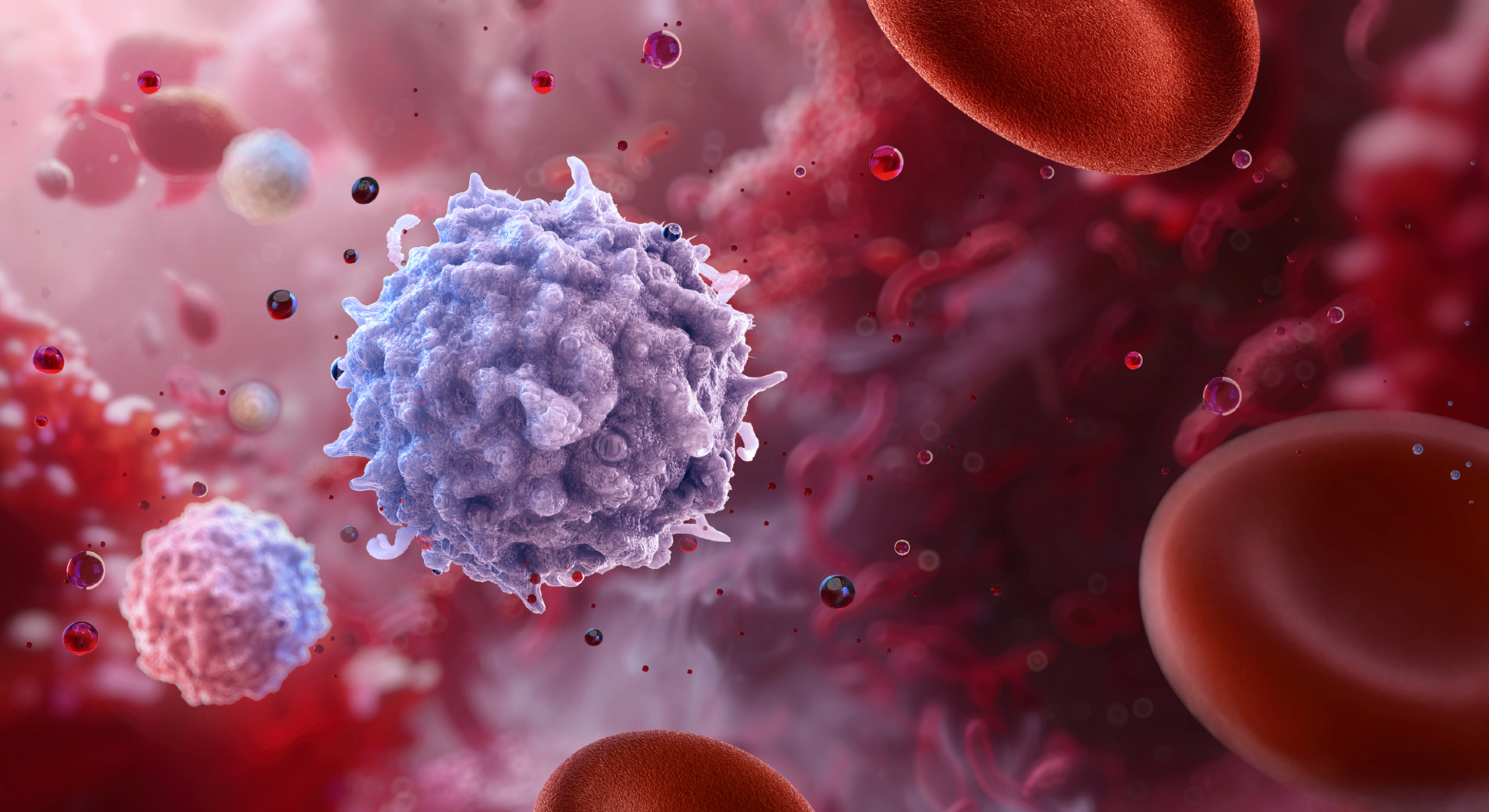
Taken together, these analyzes suggest that the Oslo patient’s case is “likely to be cured,” but scientists conservatively prefer to classify such cases as “sustained remission” of HIV, Trosaid noted. There is no agreement on when a particular patient can be officially declared cured, but from a practical point of view, patients in Oslo no longer need to take daily medication to ward off the virus.
“What will happen if some of these cured cases get very old and their immune systems start to decline a little bit for other reasons? We don’t know,” he added. “I think we’ll have to wait and see. But maybe it’s a cure.”
Professor Trosaid believes the myriad of tests performed in this study could serve as a benchmark for future transplants and help doctors determine when patients are in long-term remission. Studying these patients could also help uncover new and better strategies to control the virus, which are still needed.
“This is one of several stepping stones on the road to functional healing,” Professor Toroseid said of studying these transplant cases. A functional treatment would provide sustained suppression of HIV in the body without requiring complete elimination of HIV, although the latter is a more difficult feat to achieve.
ART is highly effective at stopping the virus from replicating, disease progression, and transmission, but it must be taken continuously for life. This poses logistical and financial challenges for many people living with HIV, some of whom struggle to access ART due to the stigma associated with admitting an HIV diagnosis. Bone marrow transplants also offer one route to long-term remission, but this grueling procedure comes with many risks and is usually given only to patients who need a transplant for another serious disease, such as cancer.
“There are more than 30 million people living with HIV around the world, and it is not realistic to provide transplants to all of them,” Trosade said. “We need to find other strategies to treat or control the virus.”
Dr. Trosade pointed out that recent trials suggest that engineered antibodies may be a promising solution to controlling the virus without ART. And in Europe, an international consortium called EU2Cure has been established to accelerate the development of these and other potential HIV treatments.
“Hopefully, we can move the threshold a little bit with each trial and eventually have a functional treatment that allows the majority of people to live longer without taking drugs,” he said.
This article is for informational purposes only and does not provide medical advice.
Myhre, A.E., Meyer-Myklestad, M.H., Gullaksen, H.H., Søgaard, O.S., Tolstrup, M., Salgado, M., Martinez-Picado, J., Holberg-Petersen, M., Juhl, A.K., Schleimann, M.H., Gunst, J.D., Thomsen, A., Fisher, K., Bhamra, J.S., Kran, AB, Halvorsen, B., Dyrhol-Riise, A., MA, Reikvam, DH, Aukrust, P., . . Trosade, M. (2026). Allogeneic hematopoietic stem cell transplantation from a CCR5Δ32/Δ32 sibling donor achieved long-term HIV-1 remission. Natural microbiology. https://doi.org/10.1038/s41564-026-02304-8