
Peter Sarlin’s QuTwo reaches $380 million valuation in angel round
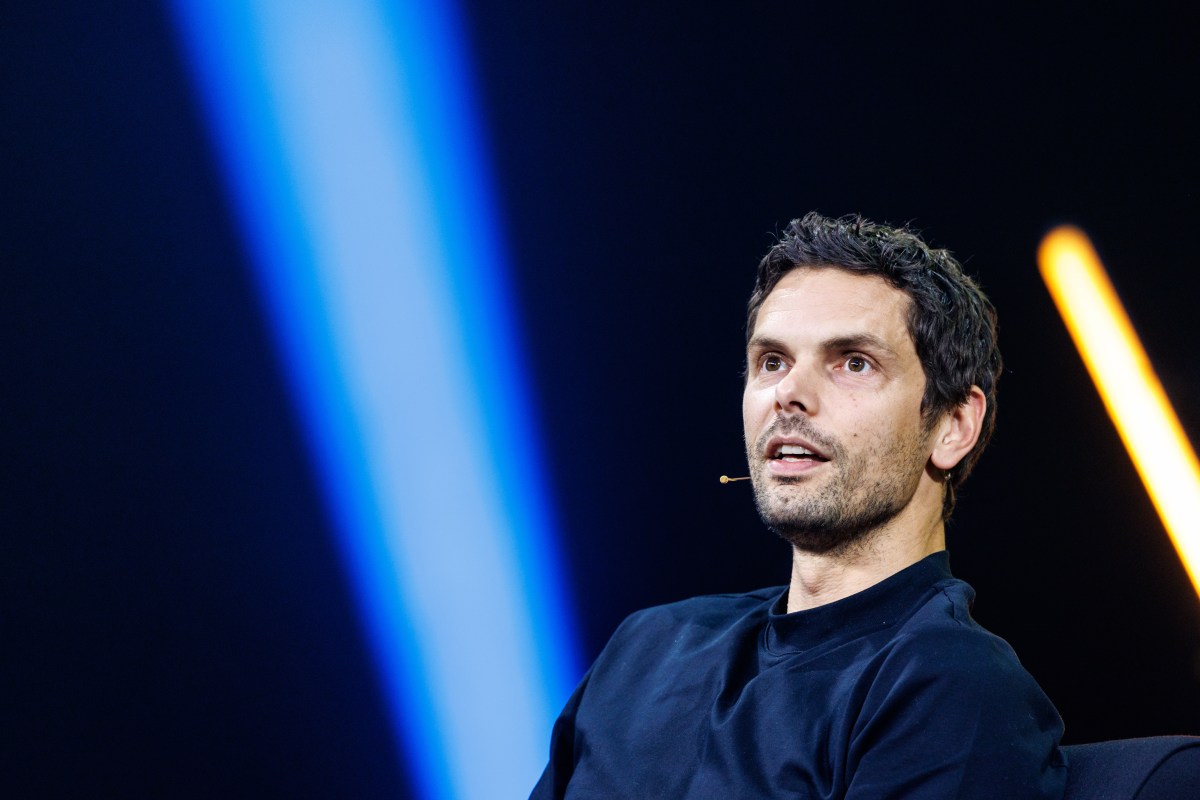
QuTwo, the Finnish AI lab founded by former AMD Silo AI CEO Peter Sahlin, has raised an angel round of 25 million euros (about $29 million) and is now valued at 325 million euros (about $380 million). This reflects continued tailwinds for AI, quantum computing, and sovereign technology, particularly for European-made companies.
Although QuTwo’s name suggests quantum computing, it is not entirely committed to quantum. Its core product, QuTwo OS, is an orchestration layer that directs tasks to classical, quantum, or hybrid architectures. The idea is that enterprise use cases are often best served by “quantum-inspired” computing, which uses classical chips to simulate quantum behavior on more reliable hardware.
Enterprise AI will be the foundation of QuTwo. The company has already secured around $23 million in committed revenue thanks to design partnerships with retailers such as Zalando, which helped develop the AI assistant. “AI is the north star that we continue to strive for, and Quantum is just a new type of computing,” said Sahlin, who is adamant that QuTwo is an AI company.
Momentum is building around Europe-based AI labs, some of which have become unicorns overnight. Just last week, former DeepMind researcher David Silver secured $1.1 billion for his new initiative, Ineffable Intelligence. QuTwo’s valuation and round size are somewhat modest by comparison, but will allow it to pursue its roadmap under less pressure.
Sahlin, QuTwo’s executive chairman, said this was a decision he also made for his previous company, Silo AI, which AMD acquired for $665 million in 2024. “There were a lot of investors who wanted to put a lot of money into bringing Silo to OpenAI in Europe, but I didn’t believe in that idea,” he told TechCrunch.
The main difference is that QuTwo wants the freedom to think long-term, 5 to 10 years. “Given that Europe has not succeeded in building an AI company in this era, we are on a mission to build a world-leading AI company for the next paradigm,” Sahlin said.
This is not to say that Sahlin is bearish on European AI; he is a big supporter of it. Nor is he necessarily criticizing super-large rounds. He also volunteered to be an investor in Recursive Superintelligence, an Anglo-American venture rumored to follow in the footsteps of Yann LeCun’s Ami Labs, which raised $1.03 billion. But he didn’t think a $1 billion round was right for QuTwo, at least for now, and he didn’t think VC money was right either.
tech crunch event
San Francisco, California
|
October 13-15, 2026
Until recently, QuTwo was funded solely through Sahlin’s family office, PostScriptum. PostScriptum also cultivated another company, NestAI, of which he is executive chairman. However, while NestAI raised about $115 million in a funding round led by Finland’s sovereign wealth fund and Nokia, QuTwo did not seek external funding.
But when the institute’s soft launch attracted significant interest earlier this year, Sahlin decided to say no to checks from venture capital and strategic investors and yes to angel rounds, citing the geopolitical moment Europe is currently facing.
Europeans are increasingly favoring local alternatives to U.S. technology providers, giving Finnish AI a boost. But there is also investor appetite for companies promising more ambitious R&D efforts in areas where the region already has strong players, such as automotive, life sciences and gaming.
Conversely, Sahlin expects QuTwo’s angel investors could open doors across Europe. This group includes Yuri Milner, Xavier Niel, Nico Rosberg, Dieter Schwarz, Niklas Zennström, and many other startup founders such as Hugging Space, Regola, Milo, Skype, Supercell, Walt, etc., so there are definitely quite a few people he could ask for introductions to this group.
This will also support QuTwo’s growth. The company has recently expanded into Sweden and is currently recruiting. Sahlin said about 50 quantum and AI scientists are on the team, including two other second-time entrepreneurs. Kuan Yen Tan is the co-founder of IQM, a Finnish quantum company that plans to go public.
QuTwo’s relationship with IQM is a reminder that the company believes it will soon enter the quantum era. I can’t wait. “Questions for repeat founders include: [us] How can we make an even bigger impact? In the long term, it is important for Europe to build AI companies for Europe’s next paradigm. However, in the short term, it can have a significant impact on driving ambitious research and development in Europe,” said Sahlin.
If you buy through links in our articles, we may earn a small commission. This does not affect editorial independence.
Source link

