
Close Menu
  • Home
  • Identity
  • Inventions
  • Future
  • Science
  • Startups
  • Spanish
What's Hot

Researchers detail Tuoni C2’s role in 2025 real estate cyber intrusion attempt

Iranian hackers use DEEPROOT and TWOSTROKE malware in aerospace and defense attacks

Where Europe’s green transition becomes reality

Facebook X (Twitter) Instagram
  • Home
  • About Us
  • Advertise with Us
  • Contact Us
  • DMCA
  • Privacy Policy
  • Terms & Conditions
  • User-Submitted Posts
Facebook X (Twitter) Instagram
Fyself News
  • Home
  • Identity
  • Inventions
  • Future
  • Science
  • Startups
  • Spanish
Fyself News
Home » Pioneer of organometallic structures wins Nobel Prize in Chemistry
Inventions

Pioneer of organometallic structures wins Nobel Prize in Chemistry
userBy userOctober 14, 2025No Comments2 Mins Read
Share Facebook Twitter Pinterest Telegram LinkedIn Tumblr Email Copy Link
Follow Us
Google News Flipboard
Share
Facebook Twitter LinkedIn Pinterest Email Copy Link

These crystalline materials are transforming the way scientists store, separate, and use gases and molecules.

The three winners, from Japan, Australia and the United States, respectively, created molecular structures with vast interior spaces that function like complex scaffolds.

These organometallic frameworks can capture, store, or transform materials, opening new frontiers in energy, climate, and environmental science.

Structure of the molecular revolution

At the heart of this award-winning discovery is a new way to build materials.

MOFs are formed when metal ions, which serve as structural nodes, combine with long organic linkers to form rigid, porous crystals. The resulting framework contains a huge internal cavity, like a molecular sponge.

This modular architecture allows chemists to precisely design and tune MOFs to capture carbon dioxide, store hydrogen, catalyze chemical reactions, and even conduct electricity.

Heiner Linke, Chairman of the Nobel Committee for Chemistry, said: “Metal-organic frameworks have great potential and offer previously unforeseen opportunities for custom-made materials with new functionalities.”

From fragile beginnings to functional wonders

The story begins in 1989, when Australian chemist Richard Robson investigated how atoms could be organized into spacious repeating structures.

His first experiment – combining copper ions with a four-armed organic molecule – produced elegant crystals resembling diamonds filled with microscopic cavities. Although this structure was unstable, it sparked a new scientific vision.

Building on Robson’s foundation, Susumu Kitagawa of Kyoto University demonstrated in the early 1990s that gas could move through these frameworks, demonstrating their porosity and flexibility.

Meanwhile, Omar Yaghi, then at the University of California, Berkeley, developed robust and stable MOFs that used rational design to modify their properties and expand their potential applications.

From laboratory curiosity to global solutions

Since those pioneering days, researchers have created tens of thousands of organometallic frameworks, each with distinct chemical properties.

Currently, MOFs are being investigated for carbon capture, water recovery from desert atmospheres, toxic gas storage, and environmental remediation such as PFAS removal and degradation of pharmaceutical residues in water.

The Nobel Committee’s decision is more than just a scientific advance; it recognizes a new paradigm in chemistry, one that marries the elegance of molecular design with real-world sustainability.

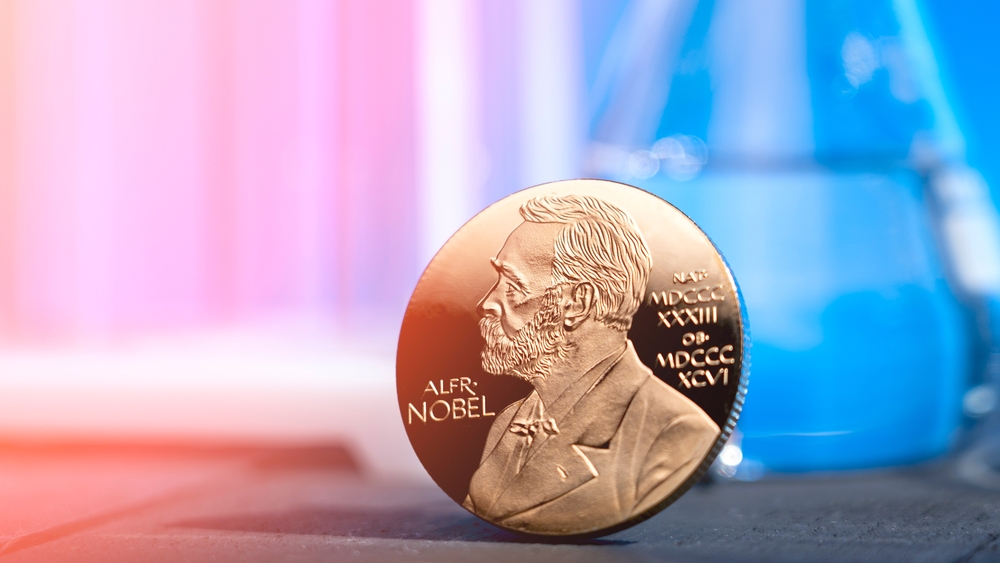
The 2025 Nobel Prize in Chemistry will honor three visionaries whose molecular blueprints have the potential to solve some of the biggest challenges of our time.


Source link

#CreativeSolutions #DigitalTransformation. #DisruptiveTechnology #Innovation #Patents #SocialInnovation
Follow on Google News Follow on Flipboard
Share. Facebook Twitter Pinterest LinkedIn Tumblr Email Copy Link
Previous ArticleIndia’s Airbound invests $8.65 million to develop rocket-shaped drone that delivers 1 cent deliveries
Next Article Global resistance to antibiotics has reached alarming levels
user
  • Website

Related Posts

Where Europe’s green transition becomes reality

November 18, 2025

Incorporating human-centered values ​​into robotics

November 18, 2025

Government invests more than £74m in UK life sciences

November 18, 2025
Add A Comment
Leave A Reply Cancel Reply

Latest Posts

Researchers detail Tuoni C2’s role in 2025 real estate cyber intrusion attempt

Iranian hackers use DEEPROOT and TWOSTROKE malware in aerospace and defense attacks

Where Europe’s green transition becomes reality

Incorporating human-centered values ​​into robotics

Trending Posts

Subscribe to News

Subscribe to our newsletter and never miss our latest news

Please enable JavaScript in your browser to complete this form.
Loading

Welcome to Fyself News, your go-to platform for the latest in tech, startups, inventions, sustainability, and fintech! We are a passionate team of enthusiasts committed to bringing you timely, insightful, and accurate information on the most pressing developments across these industries. Whether you’re an entrepreneur, investor, or just someone curious about the future of technology and innovation, Fyself News has something for you.

Meet Your Digital Twin: Europe’s Cutting-Edge AI is Personalizing Medicine

TwinH: The AI Game-Changer for Faster, More Accessible Legal Services

Immortality is No Longer Science Fiction: TwinH’s AI Breakthrough Could Change Everything

The AI Revolution: Beyond Superintelligence – TwinH Leads the Charge in Personalized, Secure Digital Identities

Facebook X (Twitter) Instagram Pinterest YouTube
  • Home
  • About Us
  • Advertise with Us
  • Contact Us
  • DMCA
  • Privacy Policy
  • Terms & Conditions
  • User-Submitted Posts
© 2025 news.fyself. Designed by by fyself.

Type above and press Enter to search. Press Esc to cancel.