

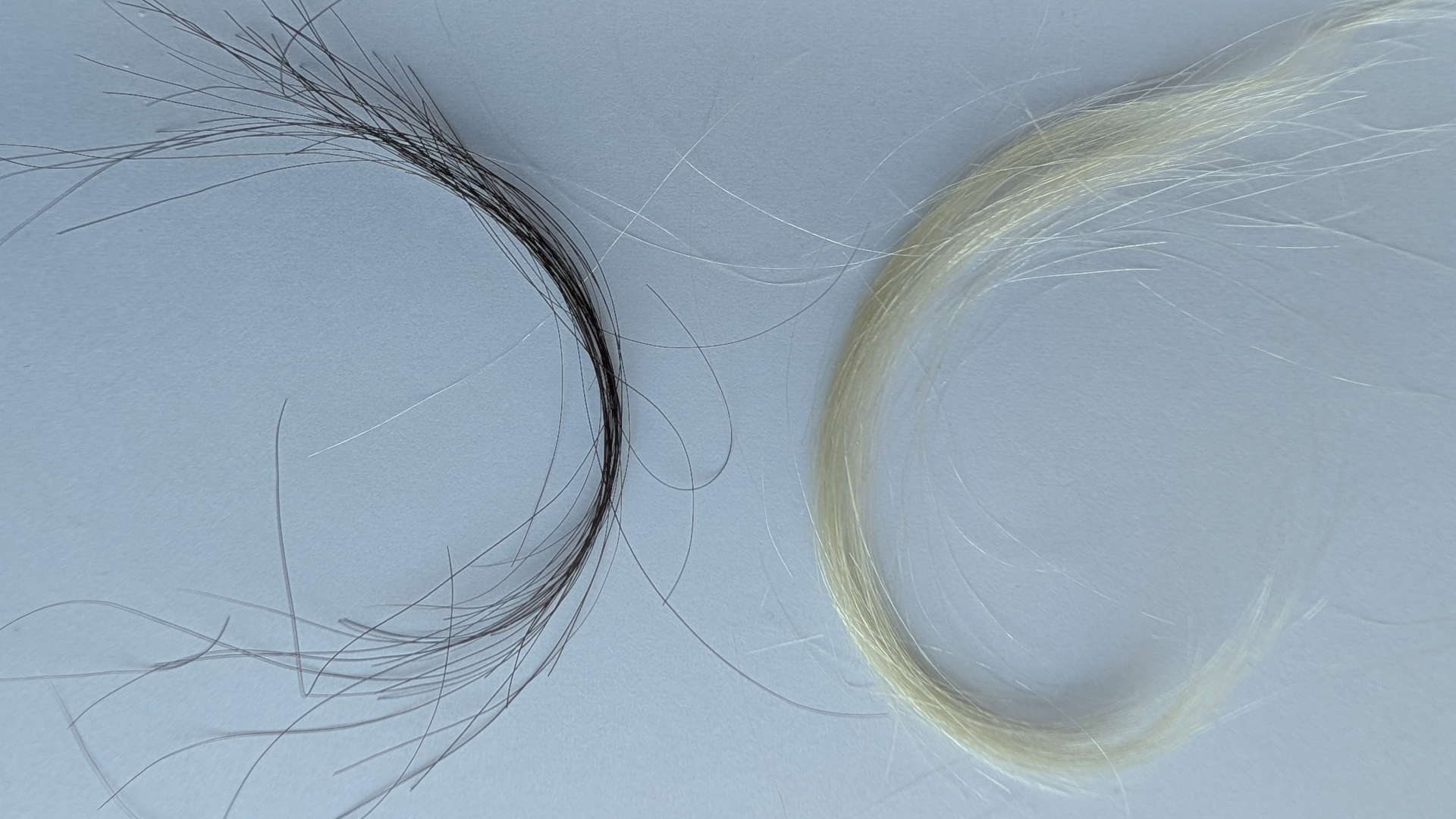
Although humans have found lead useful for thousands of years, the toxic effects of this metal were not well known until the 20th century. Now, researchers use historical hair samples to show that regulations targeting heavy metal pollution are highly effective at reducing public exposure to lead once its dangers are known.
“We have hair samples spanning approximately 100 years,” study co-author Ken Smith, a demographer at the University of Utah, said in a statement. The study focused on people living in Utah.
you may like
In a new study published Monday (February 2) in the journal PNAS, researchers detailed an analysis of hair samples from 47 people who lived in the Greater Salt Lake City area during childhood and adulthood. Study participants provided strands of baby hair kept in family scrapbooks as well as samples of their current hair. The researchers used mass spectrometry, a technique that identifies compounds in a sample, to analyze whether the hair contained lead.
Exposure to lead can adversely affect human health, damaging the nervous system, causing developmental delays, seizures, and learning disabilities, as well as increasing the risk of fertility problems and high blood pressure. Researchers say in their study that safe levels of lead exposure are unknown.
Leaded gasoline was the primary source of toxic lead exposure in the first half of the 20th century. In the 1920s, tetraethyl lead, a compound containing carbon and lead, was added to gasoline to reduce engine “knocking” noise caused by premature ignition of the fuel. Although the U.S. Public Health Service recognized that leaded gasoline caused health problems as early as 1925, the fuel additive was not completely banned in the United States until 1996.
However, major regulations regarding lead were established before the 1990s. The creation of the U.S. Environmental Protection Agency (EPA) by then-President Richard Nixon in 1970 to address multiple air and pollution problems resulted in immediate reductions in lead exposure, researchers found in a new study.
Lead levels in human hair in the Salt Lake City area were extremely high from 1916 to 1969. This was partly due to a lack of EPA regulation and partly because two lead smelters were operating in the area. But from the 1970s, when the EPA was established and smelters closed, to the 1990s, the average decreased by double digits.

“Current hair lead concentrations in this population are, on average, nearly 100 times lower than they were before the establishment of the EPA,” the researchers wrote.
One thing to note is that lead levels in hair don’t exactly match blood levels, which are common criteria for doctors to identify people who need treatment for lead toxicity.
you may like
Study co-author Ture Serling, a geologist at the University of Utah, said in a statement that hair samples “do not actually record blood levels in the body as perceived by the brain, but they do tell us about overall environmental exposure.” So overall, the study showed that people were ingesting significantly higher amounts of lead before 1970.
“It comes out of the exhaust pipe, goes up into the air, and then comes down,” Serling said. Lead lingers in the air for several days and “is absorbed by your hair, you breathe it, and it goes into your lungs.”
The researchers noted that while studies have demonstrated the effectiveness of environmental regulations in controlling toxic pollutants such as lead, these regulations are now at risk of being rolled back.
Specifically, the researchers pointed to a March 12, 2025 announcement by the EPA and President Donald Trump deregulating many of the EPA’s provisions currently designed to ensure clean air, land, and water for U.S. residents. Although lead pollution was not specifically mentioned, experts suggested the announcement was a “roadmap” for rolling back regulations on things like manufacturing air pollution and wastewater from coal-fired power plants. At least one federal lawsuit has already been filed to revoke the EPA’s “presidential exemption” to the Clean Air Act.
“We must never forget the lessons of history,” Serling said. “These regulations were very important,” as evidenced by the “really, really positive impact” the EPA had in the early days of its creation.
This historic hair study shows that lax environmental standards in the past few decades have resulted in unhealthy lead levels, but that these levels can be controlled with “science-based regulations,” the researchers wrote.
Serling, T. E., Fernandez, D. P., & Smith, K. R. (2026). Archived lead in hair demonstrates the decline in human lead exposure since the establishment of the U.S. Environmental Protection Agency. PNAS, 123, e2525498123. https://doi.org/10.1073/pnas.2525498123

Nicoletta Lanese
health channel editor
In the United States today, lead exposure tends to be the greatest threat in northeastern and midwestern cities with low-income neighborhoods and older homes, that is, homes built before lead-based paint was banned in 1978. Other common sources of exposure include soil contaminated by historical sources of lead, such as mines. Contaminated pipes and plumbing materials. Contaminated jewelry, toys, and candy. and lead dust that enters homes from workplaces. Children under the age of 6 are especially susceptible to lead poisoning because their growing bodies absorb the metal very efficiently.
Source link
