
Record-breaking 2025 season hints at climate threats
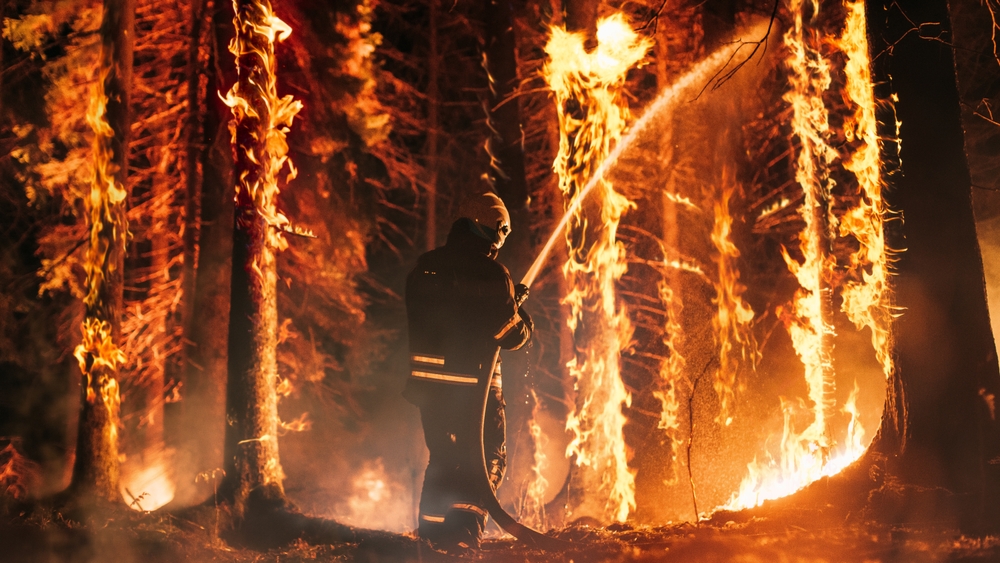
In 2025, the scale of wildfires in the EU reached unprecedented levels, making it the most destructive fire season ever recorded across the EU.
More than 1.07 million hectares of land has been burned within the EU’s borders, according to satellite data from the European Forest Fire Information System (EFFIS). This is approximately the area of Cyprus.
Taking into account neighboring areas monitored by EFFIS, including parts of Europe, the Middle East and North Africa, the total area burned exceeded 2.24 million hectares.
This dramatic increase highlights a worsening trend in wildfire activity, with numbers for 2025 almost double the average recorded from 2006 to 2024.
Fires were reported in 25 of the EU’s 27 member states, with only Luxembourg and Malta spared, while countries such as Germany, Spain, Cyprus and Slovakia set new national records.
Early start and intensifying conditions
One of the characteristics of the 2025 EU bushfire season was its early onset.
By the end of March, fires had already destroyed more than 100,000 hectares, far above the typical seasonal curve. Activity steadily intensified through early summer and peaked in August.
A severe heatwave during the first three weeks of August proved to be a critical turning point.
In Portugal and Spain, 22 large fires broke out almost simultaneously due to extreme temperatures and dry conditions.
These wildfires alone have burned more than 460,000 hectares, representing around 43% of the EU’s total annual bushfire loss.
This pattern reflects broader changes in wildfire dynamics, with hotter and longer summers creating ideal conditions for rapid fire spread and increased intensity.
Protected area under pressure
The environmental damage caused by the 2025 EU bushfires extended deep into protected ecosystems.
Almost 39% of the total area burned occurred within Natura 2000 sites, the EU’s network of protected areas designed to protect biodiversity. A total of more than 424,000 hectares of these protected lands were affected.
This level of impact raises concerns about long-term ecological damage, especially in habitats already susceptible to climate change.
Although the rate of fires impacting protected areas is consistent with previous years, the absolute scale of destruction in 2025 will significantly amplify the risks to wildlife and natural landscapes.

A broader crisis beyond the EU’s borders
The wildfire crisis was not limited to the European Union. Fires have burned a further 1.16 million hectares across a wide range of areas monitored by EFFIS, including neighboring European countries, the Middle East and North Africa.
Ukraine emerged as the most affected country outside the EU, accounting for nearly 30% of the total area burned and nearly 40% of the fires recorded in monitored areas.
This highlights how wildfire risk is increasing across borders and requires coordinated monitoring and response strategies.
A clear trend: earlier, hotter, more serious
The 2025 season confirms a clear and worrying trajectory for EU bushfires. The fires started earlier this year and are becoming longer lasting and more intense.
Heat waves are becoming more frequent and intense, while fires are reaching higher latitudes where the risk has historically been lower.
These changes align closely with broader climate patterns and suggest that wildfire seasons across Europe are entering a new phase of increased instability.
Strengthening response to wildfires in Europe
In response to the growing threat, European authorities are moving to strengthen wildfire risk management systems. EFFIS will continue to play a central role, providing real-time monitoring, early warning and data sharing across a network of 43 countries.
In March 2026, the European Commission introduced a new integrated approach to wildfire management. This framework aims to strengthen coordination across prevention, preparedness, response, and recovery efforts.
The primary focus is on enhancing EFFIS’ technical capabilities, including more advanced fire mapping and improved access to near real-time satellite data.
Expansion of firefighting power
Alongside improved surveillance, the EU is also investing heavily in operational firefighting capabilities.
Through the EU Civil Protection Mechanism, resources from Member States and partner countries are pooled to support rapid response efforts. This includes personnel, equipment, and a tailored deployment strategy.
Every summer, firefighters are strategically deployed to high-risk areas with the support of a shared air squadron known as rescEU. The fleet has been significantly expanded in response to the recent record wildfire season.
Plans are already underway to add 12 new firefighting aircraft and five helicopters to the permanent force. These assets are distributed across multiple countries including Portugal, Spain, France, Italy, Croatia, Greece, Slovakia, the Czech Republic and Romania.
The first helicopters have already been delivered, and additional aircraft are expected to enter service from 2028.
Growing challenges for Europe
The severity of EU wildfires in 2025 serves as a stark warning. As climate conditions continue to change, the risk of large-scale fires is no longer limited to traditional hotspots. Rather, it is becoming a widespread and persistent challenge across the continent.
Although improvements in coordination, technology and investment have strengthened Europe’s response capacity, the scale of recent fires suggests that prevention and adaptation will be as important as fire suppression itself in the coming years.
Source link

