
Close Menu
  • Home
  • Identity
  • Inventions
  • Future
  • Science
  • Startups
  • Spanish
What's Hot

Resolve AI, a startup led by former Splunk executives, reaches $1 billion Series A valuation

Establish a venture-backable company in a highly regulated field

Cursor continues acquisition spree with deal with Graphite

Facebook X (Twitter) Instagram
  • Home
  • About Us
  • Advertise with Us
  • Contact Us
  • DMCA
  • Privacy Policy
  • Terms & Conditions
  • User-Submitted Posts
Facebook X (Twitter) Instagram
Fyself News
  • Home
  • Identity
  • Inventions
  • Future
  • Science
  • Startups
  • Spanish
Fyself News
Home » Research reveals that lava debris on the ocean floor acts as a carbon dioxide ‘sponge’
Science

Research reveals that lava debris on the ocean floor acts as a carbon dioxide ‘sponge’

userBy userDecember 18, 2025No Comments3 Mins Read
Share Facebook Twitter Pinterest Telegram LinkedIn Tumblr Email Copy Link
Follow Us
Google News Flipboard
Share
Facebook Twitter LinkedIn Pinterest Email Copy Link

Ancient lava debris on the ocean floor may be acting like a giant “sponge” storing large amounts of carbon dioxide, a new study has found.

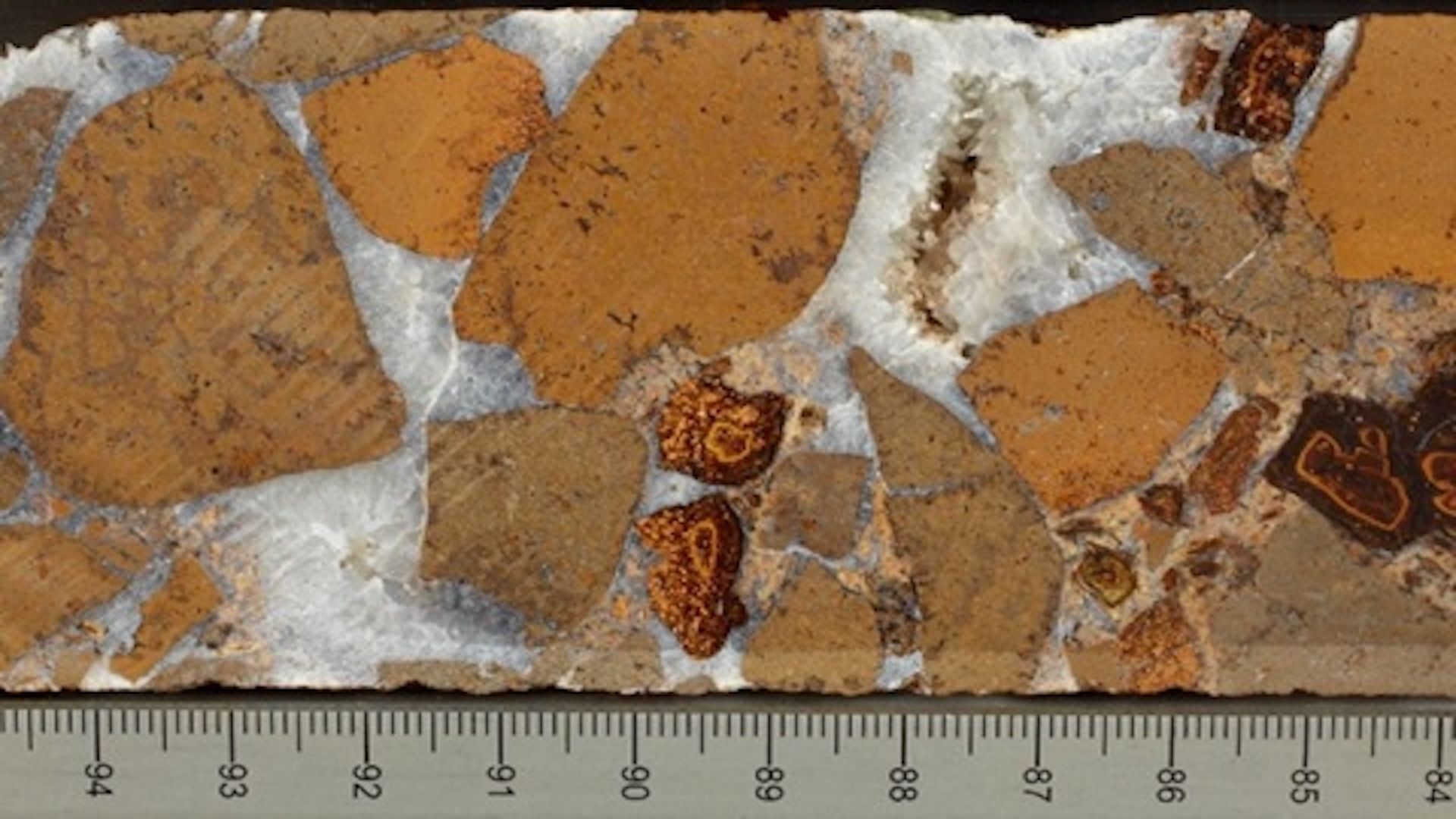
Cores taken from the ocean floor of the South Atlantic Ocean show that this debris, formed by volcanic activity and spread across the ocean floor over millions of years, stores between two and 40 times more carbon dioxide than the upper crust of the ocean floor, according to a study published Nov. 24 in the journal Nature Geoscience. The discovery could help scientists better understand how Earth’s climate has changed in the past.

Over millions of years, carbon cycles through the Earth’s crust and atmosphere. Volcanic activity at mid-ocean ridges (undersea mountain ranges where tectonic plates spread apart) releases carbon dioxide into the ocean and atmosphere and forms volcanic rocks on the ocean floor. However, the ocean also acts as a sink for carbon dioxide.

you may like

“Ocean basins are more than just containers for seawater,” study co-author Rosalind Coggon, an ocean crust researcher at the University of Southampton in the UK, said in a statement. “For millions of years, seawater flows through cracks in the cooling lava, reacting with the rocks and transferring elements between the ocean and the rocks. This process removes CO2 from the water and stores it in minerals such as calcium carbonate in the rocks.”

Mineral-rich volcanic debris known as breccia could help scientists understand how processes under the sea affected the amount of carbon dioxide in the atmosphere millions of years ago, and how that carbon dioxide influenced Earth’s climate.

In the new study, Cogon and her colleagues drilled deep into the crust of the ocean floor of the southern Atlantic Ocean and collected some of it for further study. “Our drilling efforts have recovered the first core of this material that spent tens of millions of years floating on the ocean floor as the Earth’s plates widened,” Cogon said.

The research team collected cores from a 61-million-year-old chunk of Earth’s crust that includes sediments and breccia. The core was porous and brittle, with calcium carbonate growing in the open spaces of various debris fragments, at its edges, and between core fragments.

Get the world’s most fascinating discoveries delivered straight to your inbox.

The researchers found that carbon dioxide, converted into carbonate minerals by reaction with seawater, accounted for an average of 7.5% of the core’s weight. This corresponds to between two and 40 times the carbon dioxide content of upper ocean crust samples collected to date. Breccias could store as much as 20% of the carbon dioxide released as the underlying crust formed, the researchers wrote in a study.

Cogon said breccia “acts as a carbon sponge in the long-term carbon cycle.”

The amount of carbon dioxide that breccias can store depends on the amount of carbon dioxide present in the ocean, the thickness of the breccias on the ocean floor, and how quickly the tectonic plates of mid-ocean ridges are moving apart, the researchers said in the study. Past changes in any of these values ​​may have influenced how much of a role breccia played in the carbon cycle and Earth’s climate.

The extra carbon stored in lava debris was previously unexplained, the researchers wrote in their study. This new discovery could help researchers better understand the role that thermostats played in regulating Earth’s past.


Source link

#Biotechnology #ClimateScience #Health #Science #ScientificAdvances #ScientificResearch
Follow on Google News Follow on Flipboard
Share. Facebook Twitter Pinterest LinkedIn Tumblr Email Copy Link
Previous ArticleChatGPT launches app store and lets developers know the app store is open for business
Next Article Instacart pays $60 million in settlement with FTC for defrauding consumers
user
  • Website

Related Posts

Interstellar comet 3I/ATLAS is rapidly moving away from us. Can we ‘intercept’ it before it leaves us forever?

December 19, 2025

Japan trials 100-kilowatt laser weapon – capable of cutting metal and drones while in flight

December 19, 2025

2025 Urids meteor shower: When and where to see ‘shooting stars’ on the longest night of the year

December 19, 2025
Add A Comment
Leave A Reply Cancel Reply

Latest Posts

Resolve AI, a startup led by former Splunk executives, reaches $1 billion Series A valuation

Establish a venture-backable company in a highly regulated field

Cursor continues acquisition spree with deal with Graphite

Elon Musk’s $56 billion Tesla pay package reinstated by Delaware Supreme Court

Trending Posts

Subscribe to News

Subscribe to our newsletter and never miss our latest news

Please enable JavaScript in your browser to complete this form.
Loading

Welcome to Fyself News, your go-to platform for the latest in tech, startups, inventions, sustainability, and fintech! We are a passionate team of enthusiasts committed to bringing you timely, insightful, and accurate information on the most pressing developments across these industries. Whether you’re an entrepreneur, investor, or just someone curious about the future of technology and innovation, Fyself News has something for you.

Castilla-La Mancha Ignites Innovation: fiveclmsummit Redefines Tech Future

Local Power, Health Innovation: Alcolea de Calatrava Boosts FiveCLM PoC with Community Engagement

The Future of Digital Twins in Healthcare: From Virtual Replicas to Personalized Medical Models

Human Digital Twins: The Next Tech Frontier Set to Transform Healthcare and Beyond

Facebook X (Twitter) Instagram Pinterest YouTube
  • Home
  • About Us
  • Advertise with Us
  • Contact Us
  • DMCA
  • Privacy Policy
  • Terms & Conditions
  • User-Submitted Posts
© 2025 news.fyself. Designed by by fyself.

Type above and press Enter to search. Press Esc to cancel.