
Sustainable materials need system change, not just substitution
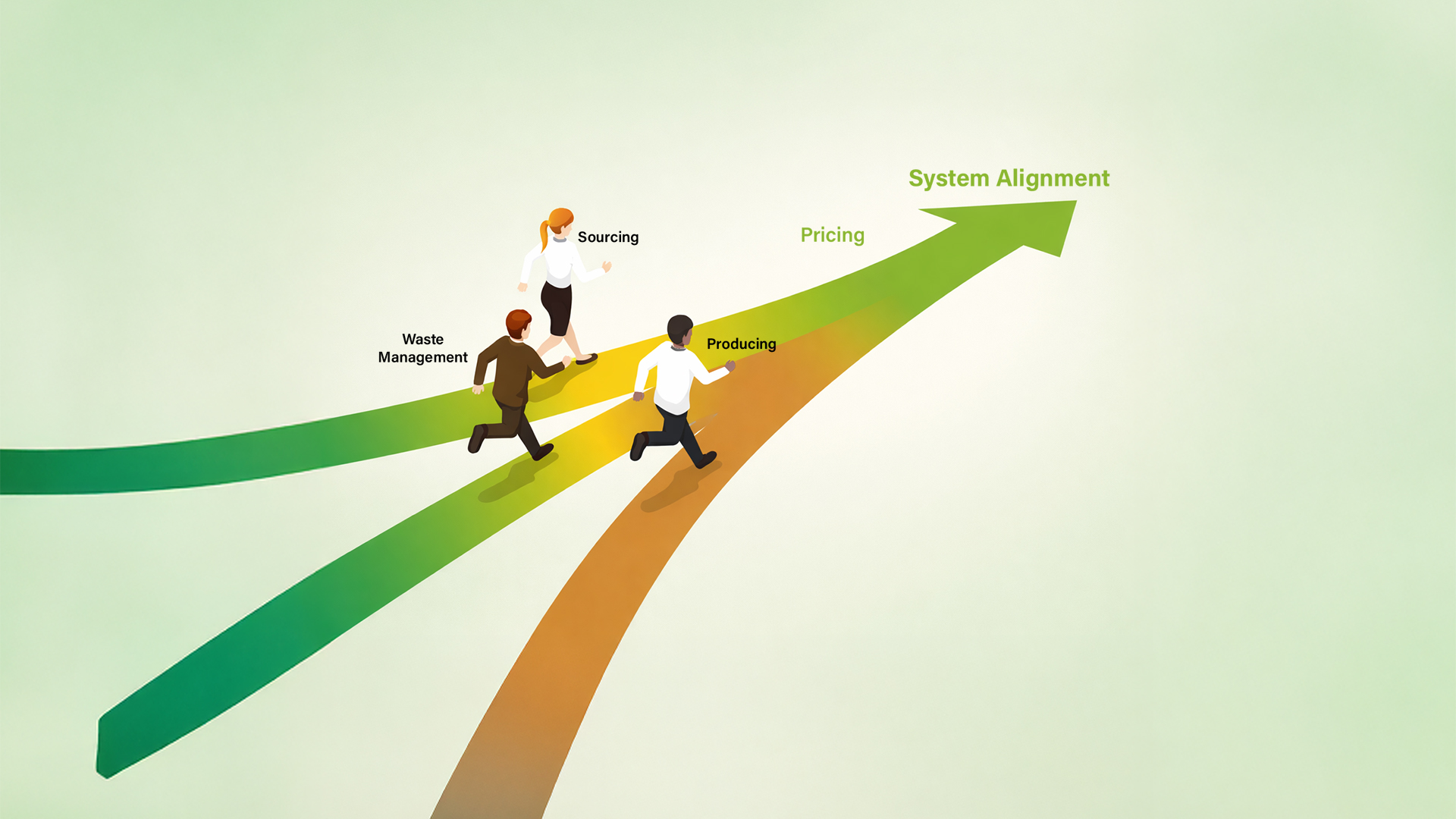
Roland Pluut from Solinatra outlines the main points to consider when making the shift from traditional plastics toward more sustainable materials
Plastic has become one of the defining materials of modern society. Its rise is not accidental. It is the result of a powerful combination of properties: low-cost, high-performance, durability, and the ability to scale across global production systems. These characteristics have enabled decades of industrial growth, efficient logistics, and the widespread availability of consumer goods.
Yet, the very system that made plastic successful also reveals its limitations. The price of plastic reflects the efficiency of its production, but it does not fully account for what happens after use or over time. Waste management, environmental persistence, and long-term exposure effects are only partially integrated into current economic models. This creates a structural discrepancy between production costs and what might be called full system costs.
As long as this discrepancy exists, material markets remain incomplete. They optimise for short-term efficiency while distributing part of the cost across municipalities, ecosystems, and future generations. This is not an abstract concern. It is increasingly visible in strained waste infrastructures, the accumulation of plastic in natural environments, and the growing body of scientific research into material persistence.
Micro- and nanoplastics (MNPs), for example, are now detected across environmental and biological systems, from oceans and soil to human tissue. While causal relationships and health impacts are still under investigation, their widespread presence has intensified scientific scrutiny and policy attention. In parallel, regulatory frameworks are evolving. Initiatives such as the European Green Deal, extended producer responsibility (EPR) schemes, and restrictions on single-use plastics signal a broader reassessment of material systems, not only in terms of performance, but also in terms of long-term behaviour.
Core principle: Cost versus system cost
The price of a material does not necessarily reflect its full impact. In most cases, pricing is based on direct production costs such as raw materials, energy, and manufacturing.
However, materials also generate broader system costs over time, including waste management, environmental effects, long-term persistence, and pressure on public and ecological systems. When these costs are not fully accounted for, structural distortions arise in how materials are compared and valued.
The economic structure behind plastic dominance
To understand why plastic remains dominant despite these concerns, it is essential to examine its underlying economic structure. Plastic is not merely a material; it is embedded in a highly optimised system that prioritises low-cost feedstock, high-volume production, predictable performance, and global scalability. These features are reinforced by decades of infrastructure investment and market incentives.
However, this system operates on a partial cost model. While production and distribution costs are internalised within value chains, many downstream consequences are not. Waste processing, environmental accumulation, and long-term system impacts are distributed across public systems and ecological domains. This creates a structural imbalance: private actors make decisions based on visible, immediate costs, these costs are effectively transferred to society, borne by public systems, ecosystems, and future generations rather than reflected in the price of the material itself.
What do we mean by ‘system costs’?
System costs refer to the total impact of a material across its full lifecycle, including effects that fall outside the immediate value chain. This includes the burden on waste infrastructure, environmental damage and recovery, loss of resources, and long-term accumulation in ecosystems, as well as potential exposure-related effects.
The gap between production costs and system costs determines how accurately materials are priced in the market.
This imbalance helps explain why plastics maintain a competitive advantage that extends beyond material performance alone. Price comparisons between plastics and emerging materials often fail to capture this dynamic. They compare production costs, but not the full lifecycle costs embedded in the system. As a result, alternatives are frequently evaluated within a framework that inherently favours the status quo.

Why new material systems struggle to scale
In response to increasing environmental and regulatory pressure, a wide range of alternatives have emerged. Bioplastics, recycled materials, and composite solutions each address specific aspects of the problem. Some reduce dependence on fossil resources, others improve recyclability, and some are designed to biodegrade under controlled conditions.
Yet, most of these emerging material systems face a common challenge: they are introduced into a system that was not designed for them. Bioplastics may rely on the same disposal pathways as conventional plastics, limiting their intended benefits. Recycled materials depend on collection and processing infrastructure that is inconsistent across regions. Biodegradable materials often require specific environmental conditions that are not met in real-world settings.
This leads to a recurring pattern. Innovations improve individual dimensions of the system, but fail to align with the system as a whole. The fundamental gap between production costs and full system costs remains largely intact. Consequently, many of these emerging material systems struggle to achieve scale; not because they lack technical merit, but because they are misaligned with the economic and infrastructural realities in which they must operate.
Why many new material systems struggle to scale
Many material innovations do not fail because of technical limitations, but because they do not align with the systems in which they must operate. They may depend on infrastructure that is not available at scale, or carry higher visible costs in a system where competing materials are incompletely priced.
At the same time, mismatches with existing supply chains and unclear regulatory definitions further slow adoption. As long as the underlying system remains unchanged, these materials remain at a structural disadvantage.
From substitution to system alignment
A more effective approach begins by reframing the question. Rather than asking how to replace plastic, the focus shifts to how materials should behave within the broader system. This perspective moves beyond substitution toward alignment.
Materials must be designed not only for performance during use, but also for their behaviour across the entire lifecycle: during production, throughout their functional phase, and after disposal. This includes how they interact with existing infrastructure, how they degrade or transform over time, and how they affect environmental and biological systems.

At Solinatra, this systems-oriented perspective forms the basis of material development. The objective is not to force new materials into existing frameworks, but to design materials that inherently align with system realities. This approach is guided by four core principles.
First, scalability is essential. Materials must be capable of functioning at industrial scale from the outset. Solutions that cannot scale remain niche, regardless of their technical promise.
Second, economic viability must be addressed directly. Materials must operate within real market conditions, where cost structures and competitive dynamics determine adoption.
Third, lifecycle integrity is critical. The behaviour of materials over time must be predictable and controlled, particularly in post-use phases.
Finally, system compatibility is required. New materials must integrate into existing supply chains, manufacturing processes, and logistical systems without excessive friction.
Two elements are central to this approach. First, materials are designed to integrate seamlessly into existing manufacturing and processing systems, avoiding the need for disruptive infrastructure changes. Second, equal attention is given to post-use behaviour – ensuring materials do not leave persistent residues or fragment into uncontrolled microstructures. Materials are developed to avoid persistent residues and uncontrolled fragmentation, thereby reducing long-term accumulation and limiting exposure pathways in both environmental and biological systems. In doing so, material design begins to close the gap between production costs and full system costs.
The design question for next-generation materials
The central question is no longer which material can replace plastic, but which material behaviour fits within a system that is sustainable over time.
This shifts design toward controlled post-use behaviour, minimal persistence, compatibility with existing systems, and predictable lifecycle outcomes. In this context, material choice becomes a system-level decision rather than a purely technical one.
Bridging innovation and real-world deployment
One of the central challenges in sustainable materials innovation is the gap between laboratory performance and real-world application. Many promising materials perform well under controlled conditions, but encounter difficulties when exposed to the complexities of actual systems. These include inconsistent waste infrastructure, cost constraints, supply chain variability, and regulatory fragmentation.
This underscores an important distinction: innovation is not only about material properties, but about system integration. A material that cannot function reliably within existing systems is unlikely to achieve widespread adoption.
For this reason, Solinatra emphasises deployment from an early stage of development. Materials are designed with real-world conditions in mind, including compatibility with existing industrial processes and infrastructure. Applications span sectors such as consumer packaging, agriculture and horticulture, hospitality, quick service restaurants (QSR), and industrial logistics. Across these domains, the requirement is consistent: materials must deliver reliable performance under practical conditions.
Beyond the material itself, successful implementation requires a broader ecosystem. Collaboration with manufacturers, agricultural partners, know-how centres, financial institutions, and regulatory bodies is essential. This network enables not only innovation, but also the translation of innovation into scalable solutions.
Creating value across the supply chain
System alignment extends beyond the material itself to the broader supply chain. One of the opportunities in rethinking material systems lies in the use of agricultural residues and side streams as input resources.

By integrating these materials into production processes, it becomes possible to create additional value streams while reducing dependence on primary raw materials.
What was previously considered waste can be transformed into a valuable input. This has multiple effects: it improves resource efficiency, enhances resilience in agricultural income, and reduces pressure on natural resources. It also contributes to a more balanced distribution of value across the supply chain.

In this context, the transition away from conventional plastics is not only an environmental imperative, but also an economic and structural opportunity. It enables the development of systems that are both more efficient and more equitable.
Governance and policy as system shapers
Material systems do not operate in isolation. They are shaped by governance frameworks that define incentives, boundaries, and accountability. Policies such as extended producer responsibility, material standards, and environmental regulations play a crucial role in determining how costs are allocated and how materials are evaluated.
These frameworks are increasingly aimed at addressing the gap between production costs and full system costs. However, their effectiveness depends on careful design and implementation. If definitions are too broad, regulatory signals become diluted. If verification mechanisms are inconsistent, trust erodes. If regulatory ambition exceeds practical implementation capacity, adoption can slow.
Effective governance therefore requires a balance. It must provide clear and consistent signals while remaining aligned with the capabilities of real-world systems. For material transitions to succeed, these signals must be both credible and actionable.
The role of industry and market dynamics
Industry actors, manufacturers, brands, and supply chain operators, play a decisive role in material adoption. Their decisions determine which materials are used, how they are integrated, and at what scale.
Adoption depends on several factors: performance reliability, cost alignment, and compatibility with existing processes. Markets respond to these signals. If they are distorted or incomplete, adoption is delayed.

Consumers also influence material transitions, but their impact is mediated through product design, pricing, and availability. Ultimately, the success of new materials depends on alignment across the entire system: incentives, infrastructure, regulatory frameworks, and behaviour must converge.
When is a material future proof?
A material can be considered future proof when it performs reliably at scale, remains economically viable under normal market conditions, and does not shift structural costs to society. It must also fit within existing or realistically deployable infrastructure and demonstrate predictable behaviour across its lifecycle.
Materials that depend on exceptional conditions, such as sustained subsidies or unusually high input prices, remain inherently vulnerable.
The economic dimension of material transition
Global plastic use is projected to nearly triple by 2060. This continued growth does not only increase pressure on existing systems – it also creates space for new material systems to scale alongside it.
The global plastics industry represents a vast and deeply embedded economic system. Transitioning away from plastic is therefore not simply a matter of material substitution; it involves a broader economic restructuring.
The current system is highly efficient in terms of production, but relies on the partial externalisation of costs. As awareness grows, regulatory frameworks evolve, and input costs fluctuate, this structure becomes increasingly unstable.
This creates both risks and opportunities. Materials that align production costs with full system costs are more likely to remain viable under changing conditions, including fluctuations in oil prices, regulatory developments, and shifts in infrastructure.
From this perspective, the transition toward new materials is not only about sustainability, but also about long-term economic resilience.
From signals to structural change
Current developments, ranging from rising regulatory pressure to increased scientific attention, should be understood as signals. They indicate that existing material systems are based on assumptions that may not hold indefinitely.

However, signals alone do not drive transformation. Structural change requires alignment: between costs and consequences, between material design and system behaviour, and between governance frameworks and practical implementation.
The core of the transition
The transition in materials is not only about innovation. It is about closing the gap between what materials cost and what they cause.
As long as this gap persists, market signals remain incomplete. The next phase of material development will be defined by how effectively this gap is reduced.
At Solinatra, the focus is on enabling this alignment. The approach goes beyond material development. It delivers materials that already align performance, economic logic, and lifecycle behaviour within real-world systems.
The direction of travel is becoming clearer. The critical question is not whether critical material systems will change, but which solutions are already designed to operate at scale within that reality.
About the author
Roland Pluut is Co-Founder and Non-Executive Chairman of Solinatra – a mission-driven company delivering natural engineered materials designed for scalable integration into existing industrial systems. His work focuses on aligning material innovation with system-level design to support a transition toward a more resilient and responsible materials economy.
Please Note: This is a Commercial Profile
This article will feature in our upcoming Circular Economy Special Focus Publication.
Source link

