



Researchers have developed a lightweight computer mouse that wears on your finger like a ring and can run for more than a month on a single charge.
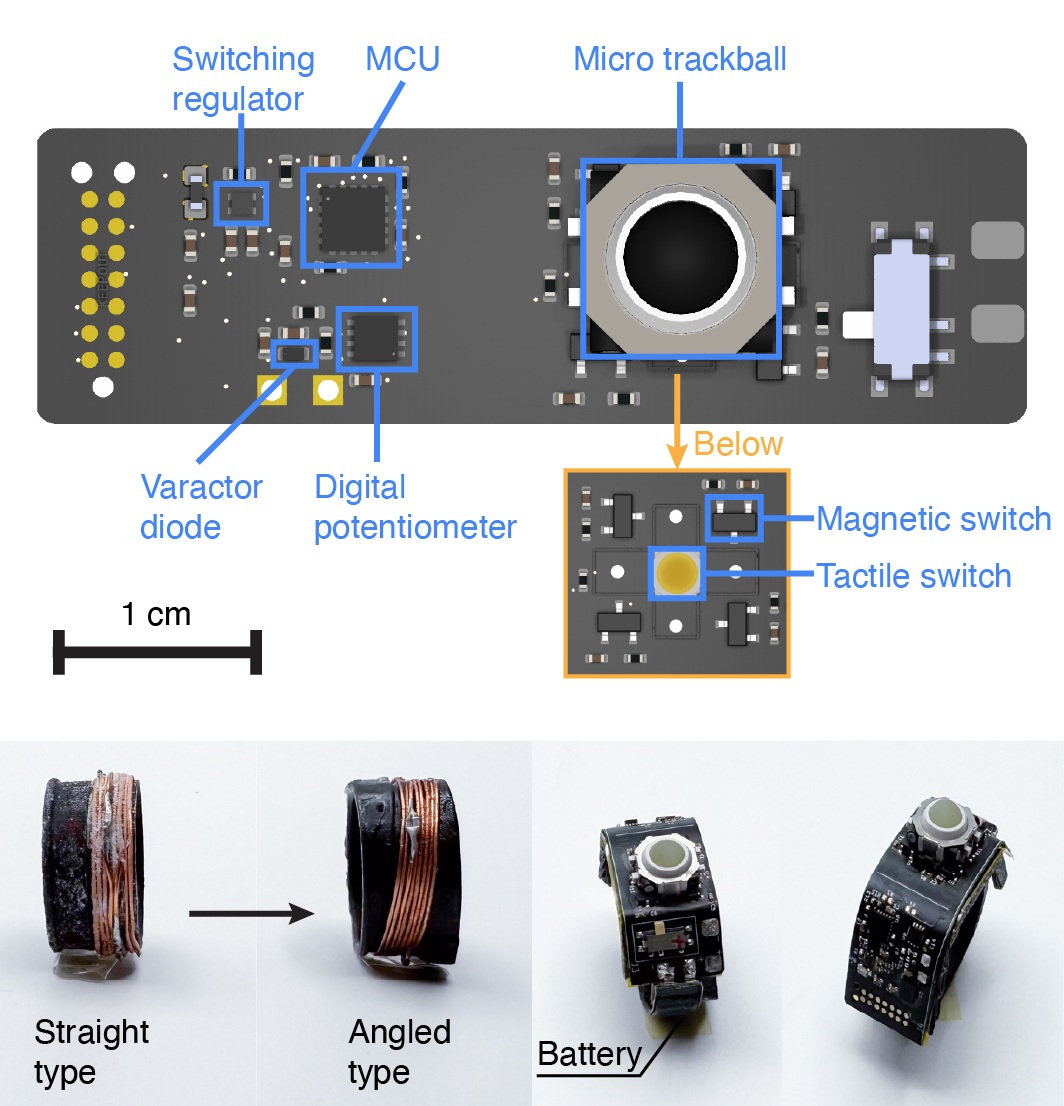
The device, called picoRing, weighs just 0.18 ounces (5 grams) and is designed as a discreet, low-power alternative to traditional mice.
Because the ring makes direct contact with the skin, future versions could also monitor heart rate, stress levels and other health markers, researchers said in a statement. Combining these health functions with interaction control may open the door to “multifunctional wearable devices.”
“Although this is just a prototype, Picoling could have some beneficial effects on the way people interact with technology,” Ryo Takahashi, assistant professor at the University of Tokyo’s Department of Electrical Engineering and Information Systems, said in a statement.
“Obviously, this could mean durable wearable technology becomes more commonplace, but it also offers new and intuitive ways to interact with AR. It allows for more discreet control so that it’s less obtrusive in public, it’s generally more convenient because it’s so compact, and it could become a platform for health sensors and other innovations.”
This humble computer mouse has been around for almost 60 years, and while its design has been refined and improved over that time, a radical rethink has yet to take hold. Researchers hope PicoRing’s convenient form factor and month-long battery life will help it stand out, especially as other ring-style wearables gain traction.
“Previous so-called smart rings have had short lifespans because their small 50 to 60 megawatt-hour batteries struggle to power the necessary communication components for long periods of time. To solve this problem, we needed to reduce the power consumption of the pico ring by a few hundred times, to about 30 to 500 microwatts,” Takahashi said.
Power point ring?
This long battery life is the result of a unique power system called semi-passive inductive telemetry (semi-PIT). This power system combines a ring and a wristband that acts as a relay between the ring and the device it controls.
It’s built around a coil of wire similar to those found in wireless chargers, but with a small capacitor running along its length. Together, they strengthen the magnetic field that carries the signal between the ring and the wristband, increasing signal range without the need for an external amplifier.
This allows the ring itself to use components that are much weaker and consume less power than other wireless wearables. The researchers have already ruled out standard wireless systems such as Bluetooth and NFC, noting that Bluetooth is too power-hungry for such small devices, while NFC only works over very short distances.
Like many prototypes, picoRing faces practical constraints in its current form. It remains somewhat bulky and may be prone to interference. For now, we only support basic inputs such as scrolling and clicking.
The researchers said future improvements could make the device smaller, more responsive and easier to use in everyday environments. Still, this is unlikely to be ideal for more intensive office work.
“For common office tasks like spreadsheets or long editing sessions, a standard mouse is still more comfortable,” says Takahashi. “But as the technology improves, it could become a lightweight alternative for mobile and occasional use.”