

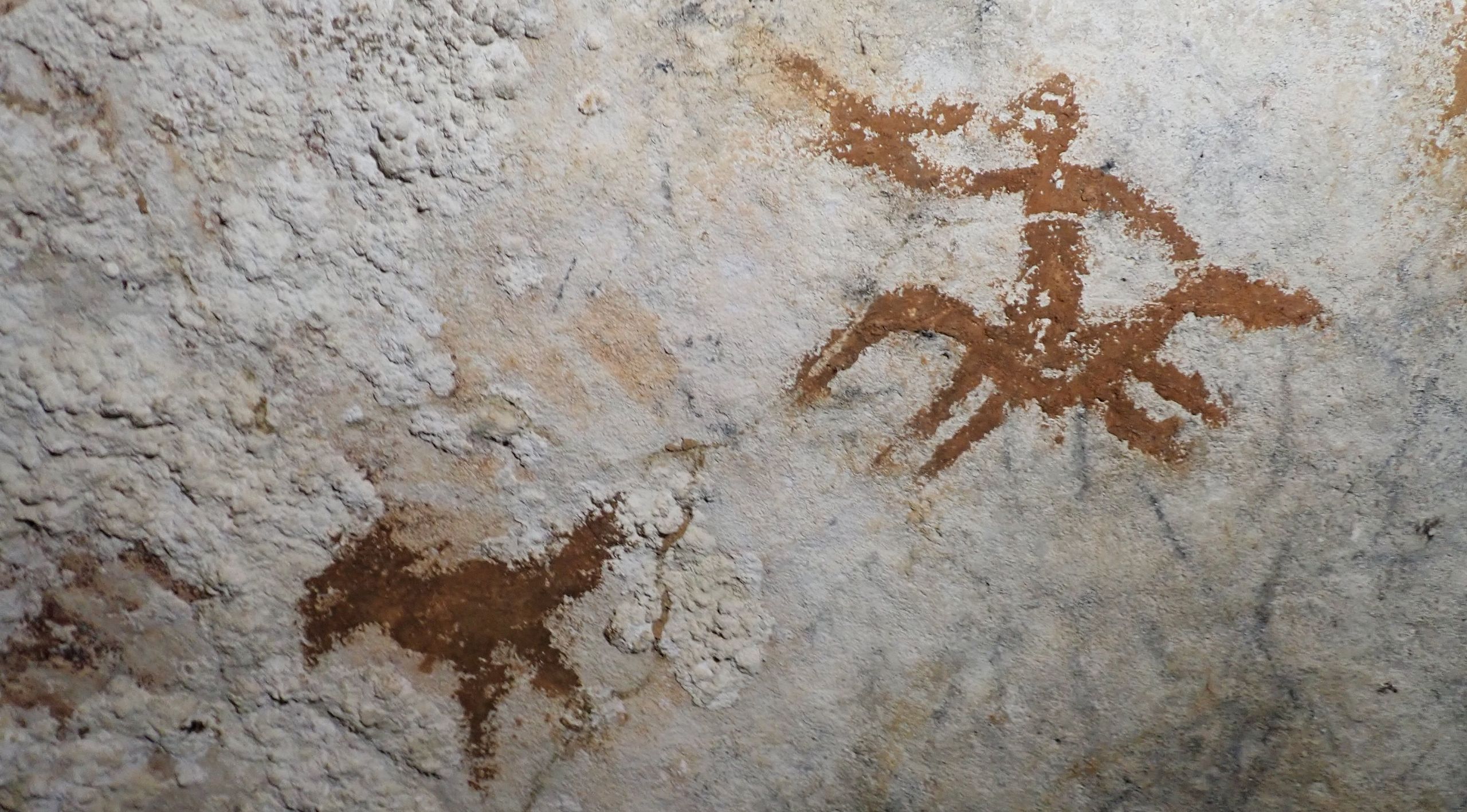
Scientists have identified the world’s oldest known rock art. This is a hand-painted stencil created in Indonesia that is at least 67,800 years old.
The work, located in a cave on the southeastern island of Sulawesi, is also the earliest archaeological evidence of modern humans (Homo sapiens) living on the islands between the Asian and Australian continental shelves, according to a study published Wednesday (January 21) in the journal Nature. The hand stencil is surrounded by younger rock art, including another hand stencil.
you may like
Although the original meaning of the rock art is unknown, the hand stencils suggest that the artists belonged to a relatively large group with its own cultural identity, study co-author Maxime Aubert, an archaeologist and geochemist at Australia’s Griffith University, told Live Science. Aubert said the hand stencils may have been made to indicate group membership. “If you know about that cave and you know about this rock art, you’re part of that group, you’re part of that culture,” he said.
prehistoric art
Prehistoric rock art, art painted on rock surfaces such as cave walls and rock shelters, is found around the world, from 12,000-year-old carvings in Saudi Arabia to 4,000-year-old paintings along the U.S.-Mexico border. The oldest known rock art to date – a roughly 66,700-year-old handprint in Spain – is thought to have been created by Neanderthals, and current evidence suggests that modern humans arrived in Europe 54,000 years ago. However, the dating techniques used in its discovery are controversial.
However, humans have been creating art for even longer than these examples. The oldest known drawing is a 73,000-year-old hashtag on a stone in South Africa, and a 540,000-year-old seashell with zigzag carvings in Indonesia may have been made by Homo erectus.
Sulawesi also has a long-standing artistic heritage, including depictions of humans interacting with wart-covered pigs dating back 51,200 years. As part of a broader project to document Sulawesi’s prehistoric artwork, Aubert and his team examined 11 designs (seven hand stencils, two human figures, and two geometric patterns) found in eight caves.
All of these prehistoric creations were covered with lumps of calcium carbonate called “cave popcorn.” The cave popcorn must have grown after the artwork was created, so dating these growths can tell us the minimum age of the underlying image. In a few cases, maximum age may be obtained when pigment covers one of these mineral deposits.
As part of the project, researchers dated a 5.5-by-3.9-inch (14-by-10-centimeter) stencil to be at least 67,800 years old, making it 1,100 years older than rock art associated with Neanderthals in Spain. The color has faded considerably, but faint remains of fingers and palms remain. The fingers are intentionally thin, an artistic technique found only on the island of Sulawesi.
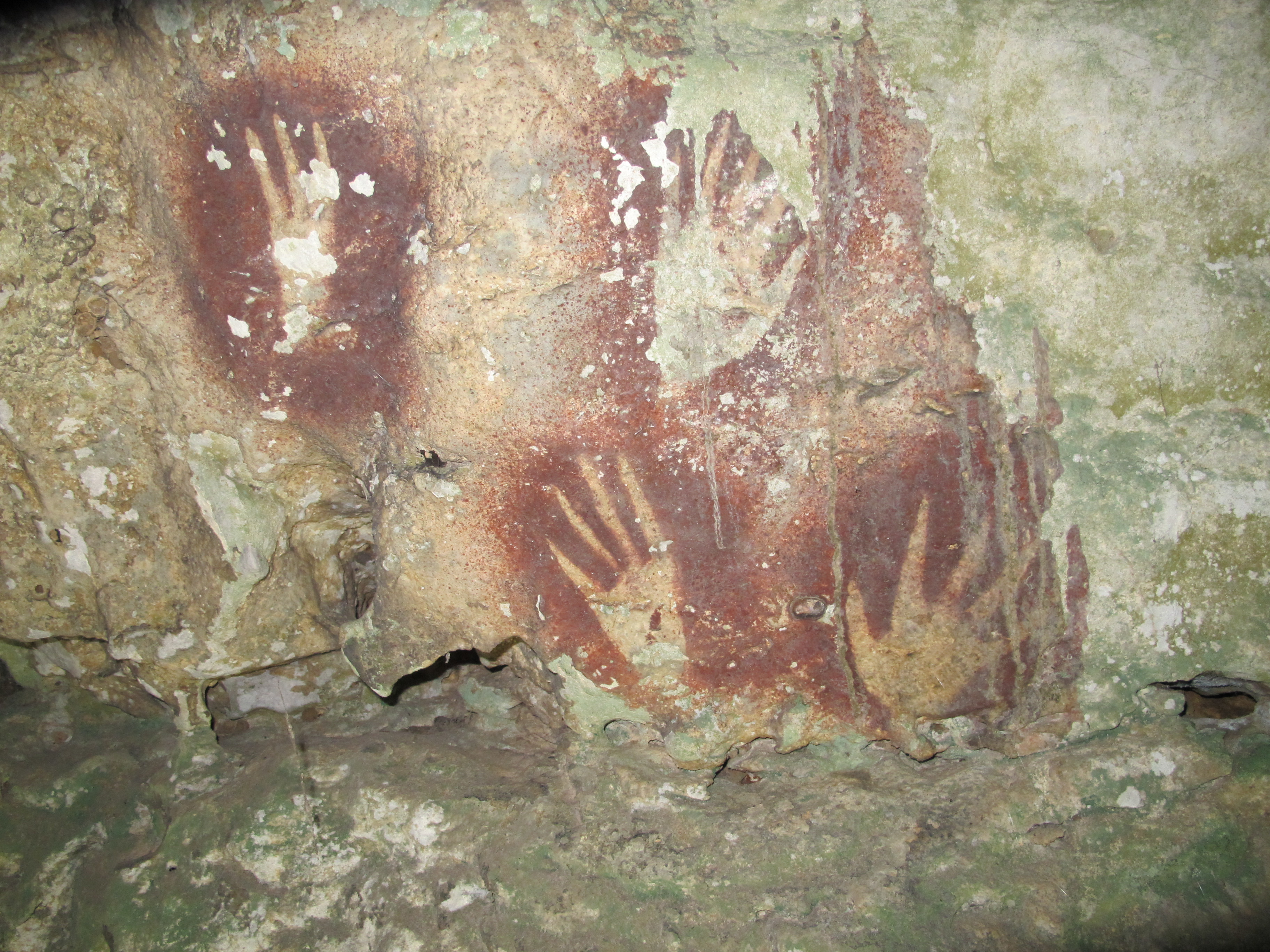
Approximately 4.4 inches (11 cm) to the left of this artwork is a hand-drawn stencil created using darker pigment that is 32,800 years old. This indicates that prehistoric humans have been using the cave as a canvas for at least 35,000 years.
you may like
Although other human species once called Sulawesi home, researchers believe that Homo sapiens created these artifacts because creating tapered fingers is technically complex and modern humans are known to have lived in the area at the time.
This stencil may have been created by an individual spraying pigment on their hands with their mouth. This opens up the possibility of extracting DNA from works of art. “We might be able to learn about the genetic characteristics of the people who are doing this,” Aubert said. “That would be amazing.”
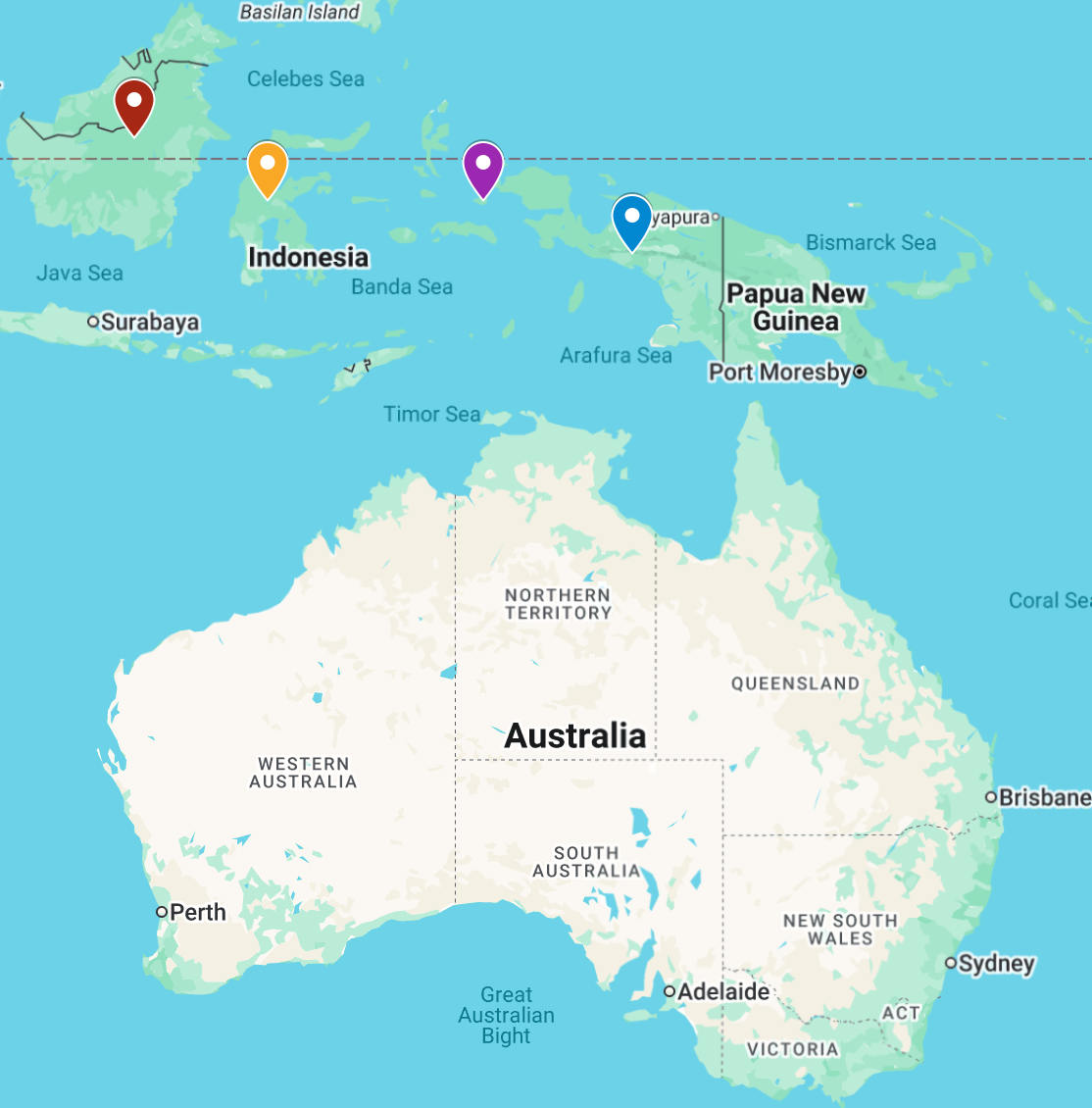
The identification of the oldest rock art on Sulawesi is an important discovery as it adds another data point on the path humans took to spread from the islands of Southeast Asia to Australia. Significantly, the discovery supports suggestions that modern humans navigated the northern passage from present-day Borneo to Sulawesi, then reached Australia via West Papua (the western half of New Guinea) or Indonesia’s Misool island, the authors said in their paper.
“This is an amazing discovery,” Chris Clarkson, also a professor of archeology at Griffith University who was not involved in the new study, told Live Science via email.
He agreed with the conclusion that ancient modern humans were most likely the hand stencil artists, since the dates are perfectly consistent with when they arrived in the region.
“What struck me most was that these works of art were placed directly on the immigration route to Australia,” he said. It also shows that Australia’s first settlers had rich cultural lives. “The first people to cross the islands of Southeast Asia and reach Australia didn’t just survive, they created art, crossed oceans and carried complex symbolic traditions,” Mr Clarkson said.
Source link
