
UKFE launches £1.3bn UK integration strategy, UKAEA publishes national roadmap
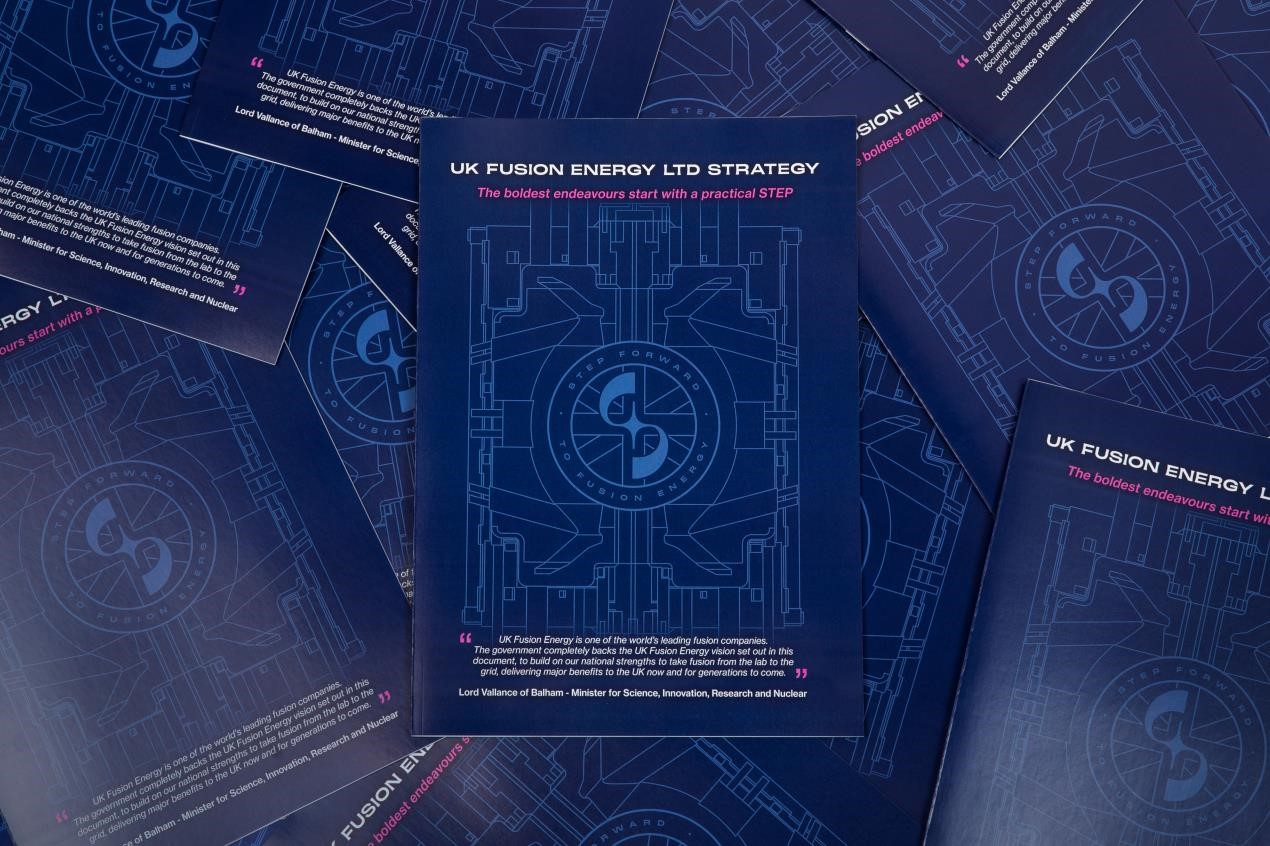
The UK has significantly increased its clean energy ambitions with a series of major announcements, mainly around the UK Fusion Strategy.
The development outlines a concerted national effort to commercialize fusion power and capture top share in a market predicted to reach £12 trillion by 2100.
At the heart of this plan is UK Fusion Energy (UKFE), which has announced its first complete delivery strategy for STEP Fusion prototype power plants.
In parallel, the UK Atomic Energy Agency (UKAEA) announced its own 2026-2030 roadmap and launched new industry initiatives aimed at accelerating supply chain growth and technological capabilities.
Taken together, this announcement represents one of the most comprehensive efforts to date to commercialize fusion from the laboratory.
What is fusion energy?
Fusion energy works by combining light atomic nuclei (usually in the form of hydrogen) to release energy under extreme heat and pressure. It’s the same process that gives power to stars.
Unlike nuclear fission, fusion does not produce long-lived radioactive waste and has a much lower risk profile. They also emit no carbon dioxide and rely on abundant fuel sources.
The difficult part is sustaining the reaction. Temperatures must reach tens of millions of degrees, and powerful magnetic fields must be used to confine the plasma. For decades, this has been a major barrier.
However, advances in superconducting magnets, materials science, and computational modeling are bringing this technology closer to becoming a reality.
If successfully deployed, nuclear fusion could provide an almost limitless source of low-carbon energy and fundamentally reshape the world’s energy system.

STEP Fusion: From concept to delivery
The centerpiece of the UK’s fusion strategy remains STEP (Spherical Tokamak for Energy Production), a prototype fusion power station planned for Westburton in Nottinghamshire, targeted for operation in 2040.
UKFE acts as the national systems integrator and is tasked with bringing together industry partners, academic expertise and advanced digital tools to deliver the project. With the support of £1.3 billion of public funding, the program is now moving from initial design to implementation.
Recent contracts highlight that change. The £70 million deal with Tokamak Energy will accelerate the development of high-temperature superconducting magnets, a core technology needed to maintain the extreme conditions required for nuclear fusion.
Meanwhile, a £30 million partnership with Dassault Systèmes will expand its digital engineering capabilities, including the creation of a complete digital twin of the factory.
These developments demonstrate that STEP is no longer a theoretical exercise, but an engineering program that is well on its way to being built.
Paul Methven, CEO of UKFE, added: “Convergence is a transformative opportunity and the UK is very well placed to seize it.
“Our strategy sets out how we will work with industry to deliver STEP Fusion and use it as the springboard for a globally competitive commercial fusion sector. The benefits for the UK in jobs, innovation and long-term energy security are enormous.”
“UKFE is in a strong position for delivery. Not only do we have a strategy to 2040, we also have construction partners, magnet partners and information systems agreements in place, with site ownership in West Burton now being transferred to UKAEA.
“This is a significant milestone in making fusion energy a reality in the UK.
Fusion strategy for national unity
The latest announcement builds directly on the Government’s comprehensive UK Integration Strategy, published earlier this year.
At Fusion Fest 2026, leaders from government, industry, and academia unveiled a coordinated vision designed to avoid fragmentation and accelerate delivery.
The Department of Energy Security and Net Zero (DESNZ) is coordinating policy, funding and industrial strategy, while UKAEA and UKFE have defined complementary roles. One focuses on basic science and innovation, the other on large-scale supply.
This alignment is intentional. Fusion development has historically been slowed by disjointed efforts. The UK is looking to compress its schedule by tightly integrating research, engineering and commercialization.
UKAEA Strategy: Building the foundation for fusion
Central to this expanded drive is UKAEA’s newly published 2026-2030 Strategy, which defines the role of the National Fusion Laboratory in supporting the UK Fusion Strategy.
The organization will focus on providing the scientific and technological foundation necessary for commercial convergence, while directly supporting the detailed design of STEP plants.
By 2030, UKAEA aims to:
Enabling the completion of STEP’s detailed engineering design Expanding the number of UK companies supplying fusion technology around the world Introducing new world-class research facilities at our Culham campus in Oxfordshire Developing a new generation of scientists, engineers and technical professionals
The strategy frames fusion as four interrelated technical challenges: achieving stable and efficient fusion reactor cores, developing self-sustaining fuel cycles, integrating complex systems into a single power plant, and ensuring the economic viability of the technology.
To address these, UKAEA will focus its efforts across key areas such as plasma physics, advanced materials, robotics, fuel systems and high performance computing.
Our role as a ‘Fusion Partner’ to UKFE puts us at the heart of translating research into practical engineering results.
Addressing the core challenges of nuclear fusion
Nuclear fusion remains one of the most complex engineering challenges ever attempted. UKAEA’s strategy divides the problem into four areas that need to be solved simultaneously.
First, fusion reactors must produce more energy than they consume, and the plasma must be precisely controlled at temperatures above the temperature of the sun.
Second, the system must generate and recycle its own fuel, avoiding dependence on continuous external supplies.
Third, all subsystems, from the magnets to the cooling system, must work together seamlessly. Finally, the entire system must be cost efficient enough to compete in the global energy market.
The UK’s approach is to spread these challenges across a co-ordinated program involving academia, industry and international partners to accelerate progress while reducing risk.
Opening the door to British industry
A key theme running through the UK’s integration strategy is economic opportunity. The global fusion sector is experiencing a period of rapid expansion, with more than 68 private companies currently active and investment expected to exceed £100 billion between 2026 and 2035.
To capitalize on this, UKAEA has launched the Global Fusion Guide for Small and Medium Enterprises (SMEs). This guide provides a practical pathway for UK companies to enter the fusion supply chain, even if they have no experience in the field.
Opportunities span a wide range of capabilities, including advanced manufacturing, robotics, superconducting systems, digital engineering, and AI. The guide also outlines procurement routes, funding mechanisms and regulatory frameworks across key markets in the UK, US, Europe and Asia.
The intent is clear. It means positioning British businesses as suppliers, not just participants, in a rapidly expanding global industry.
A new center to advance fusion diagnosis
To further strengthen the UK’s technology base, UKAEA has launched the Diagnostic Innovation Center of Excellence (DICE) at its Culham campus.
Diagnostic systems are essential for measuring variables such as plasma temperature, density, and stability, and for monitoring and controlling fusion reactions in real time. Without these, safe and sustainable nuclear fusion is impossible.
DICE brings together the expertise gained from major projects such as the Joint European Torus (JET) and the MAST Upgrade, positioning the UK as one of the world leaders in this highly specialized field.
The center has already secured contracts worth more than £10m and is expected to play a key role in both fusion development and spin-off applications in areas such as healthcare.
It will also serve as a hub for collaboration, bringing together industry, academia, and international partners while supporting talent development.
A strategic bet on the future
The expanded UK fusion strategy reflects a calculated long-term investment. By aligning policy, science and industry, the UK is trying to move ahead of its competitors in areas widely seen as innovative.
Projects like STEP Fusion are supported by UKAEA’s research and growing industry ecosystem and are designed to transform decades of expertise into deployable infrastructure and economic value.
The schedule remains ambitious and significant technical hurdles remain. However, the direction is clear. The UK is in a position not only to participate in the fusion era, but to lead it.
Source link

