
US announces review of PFAS strategy with $1 billion drinking water funding push
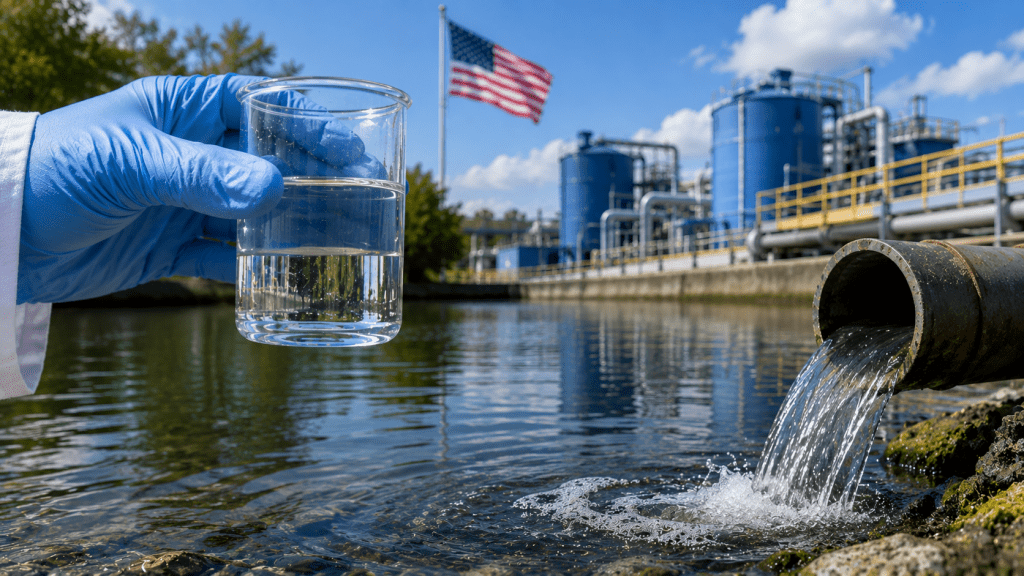
The U.S. Environmental Protection Agency (EPA) is expanding its national PFAS strategy with a new package of drinking water funding, proposed regulations, and new cleanup technologies aimed at permanently reducing exposure to the chemicals.
The announcement, made during a PFAS destruction event with U.S. Secretary of Health and Human Services Robert F. Kennedy Jr., marks one of the agency’s most significant actions against PFAS since the introduction of federal drinking water standards.
At the heart of EPA’s latest PFAS strategy are nearly $1 billion in new grants for states and disadvantaged communities, as well as two proposed rules that would maintain federal limits on PFOA and PFOS while allowing some water systems to comply through 2031.
EPA officials say this approach is designed to balance public health protection with legal durability and practical implementation under the Safe Drinking Water Act (SDWA). The broader result is a more comprehensive federal framework that goes beyond just drinking water treatment.
At the same time, the agency is strengthening oversight of industrial waste, expanding PFAS monitoring and research, accelerating the development of destructive technologies, and increasing financial support for local power companies struggling with the costs of pollution.
Commenting on the PFAS strategy, EPA Administrator Lee Zeldin said: “EPA is committed to making America healthy again by ensuring we have clean air, land, and water, getting PFAS right throughout their lifecycle, and building them to last.
“That means rules based on gold-standard science and the SDWA, support for frontline water systems, and action to stop PFAS contamination at the source, before it reaches your taps.”
EPA restructures PFAS strategy around complete lifecycle management
EPA’s updated PFAS strategy focuses on pollution control from the point of chemical manufacture through disposal and destruction.
The agency says it intends to reduce PFAS releases before they reach drinking water systems, rather than relying solely on downstream water treatment.
Federal regulators increasingly say source reduction is essential because utilities face higher costs for cleaning up PFAS once the contamination spreads to groundwater and public water systems.
EPA officials say the new PFAS strategy combines four core elements.
Drinking water regulations Industrial wastewater regulations Advanced treatment and destruction technologies Long-term scientific monitoring and enforcement
The agency argues that addressing contamination in multiple stages will reduce long-term treatment costs and reduce the amount of PFAS-contaminated waste that needs to be disposed of.
$1 billion in new drinking water funding
The main focus of the announcement is nearly $1 billion in additional funding through the new Contaminants in Small and Disadvantaged Communities program.
This allocation brings total federal funding under this initiative to $5 billion over five years. The EPA says the funding will help communities identify contamination, install treatment systems and reduce exposure risks.
The agency also highlighted additional financing channels already available to utilities.
$4 billion donated through the Drinking Water State Revolving Fund dedicated to PFAS and emerging contaminants More than $6.5 billion in low-interest loans made available through the Water Infrastructure Finance and Innovation Act Loan Program
EPA officials argue that continued federal investment can reduce the overall cost of PFAS treatment technologies by expanding adoption and improving operational data across the industry.
Proposed rule would extend compliance deadlines for some utilities
One of the hottest elements of EPA’s PFAS strategy is a proposed rule that would maintain existing federal drinking water standards for PFOA and PFOS while allowing eligible systems to seek additional compliance time.
Under the proposal, water systems would have up to two more years to apply beyond the current deadline of 2029, and compliance would be extended through 2031.
EPA emphasized that extensions are not automatic. Utilities must opt in and demonstrate legitimate implementation challenges before receiving additional time. The system prepared to meet the original deadline is expected to be compliant by 2029.
The agency says many utilities face technical and financial hurdles, including:
Large-scale water sampling and contamination analysis Pilot testing treatment technology Infrastructure construction Workforce training Financing and procurement challenges
EPA officials argue that giving some utilities additional flexibility could ultimately reduce costs for ratepayers, while processing technology matures and may become cheaper.
Legal issues surrounding previous PFAS regulations
The second proposed rule addresses legal concerns related to how the previous administration regulated additional PFAS compounds, including PFHxS, PFNA, GenX chemicals, and PFBS.
EPA asserts that the prior process may not have fully complied with the procedural requirements under the SDWA. The law requires regulators to first recommend whether a contaminant should be regulated before moving forward with formal drinking water standards, the agency said.
EPA says the previous administration’s combination of these measures limited opportunities for public comment on the initial regulatory decisions. The agency is now restarting its process to strengthen the legal basis for future standards.
Officials emphasized that the review does not necessarily mean relaxing regulations. The EPA said future standards could eventually become more stringent if scientific evidence supports stricter limits.
The agency says its goal is to create rules that can overcome legal challenges while maintaining enforceable health protections.
EPA expands focus on PFAS destruction technology
Another major pillar of modern PFAS strategies is investing in treatment and destruction technologies.
EPA highlighted a growing toolbox of systems already in place nationwide, including:
Granular activated carbon Ion exchange resin Reverse osmosis membrane
The agency is also evaluating new destruction technologies designed to destroy PFAS compounds, rather than simply separating them from water.
These technologies include:
Supercritical water oxidation Electrochemical oxidation Hydrothermal alkali treatment Non-thermal plasma Pyrolysis/gasification system
Disposal of PFAS is a growing concern because many traditional treatment methods transfer contamination to concentrated waste streams rather than completely removing the chemicals.
EPA officials say updating the agency’s PFAS destruction and disposal guidance annually will allow utilities to adapt more quickly as technology evolves. Previously, the guidance was updated every three years.
California project provides real-world test data
EPA also pointed to several full-scale treatment projects in Southern California as evidence that advanced PFAS removal systems are beginning to operate at scale.
The agency said its four treatment systems serving Irvine Ranch and Orange County Water Districts currently protect more than 9,500 homes.
Federal researchers say these deployments will generate critical performance data that will allow utilities to better assess which technologies will perform under real-world operating conditions.
Officials believe the accumulation of on-the-ground data will accelerate adoption and improve efficiency across the sector.
Next up is industrial emissions regulations.
While much of the public’s attention remains focused on drinking water, the EPA says source controls are equally important to broader PFAS strategies.
The agency is currently developing technology-based industrial emissions standards for sectors that release PFAS into waterways, such as chemical manufacturing operations. These proposed limits are expected to be determined in the coming months.
The EPA says reducing pollution at the source reduces downstream treatment burdens and prevents PFAS from repeatedly cycling through wastewater systems, landfills, and drinking water infrastructure.
The agency also reiterated its plan to use its authority under the Toxic Substances Control Act (TSCA) to subject both new and existing chemicals to expanded scientific review before they enter commerce.
Research and detection efforts continue to expand
EPA scientists are also simultaneously working to improve analytical methods that can identify both known and previously undetected PFAS compounds.
The agency recently developed a test method that can detect 40 PFAS compounds across multiple environmental media, including groundwater, sediment, landfill fluids, wastewater, and fish tissue.
Researchers say there are thousands of PFAS compounds, many of which are still poorly understood, making non-targeted detection tools increasingly important.
EPA officials argue that more powerful detection methods will aid both regulation and cleanup enforcement by increasing the reliability of scientific data.
PFAS OUT initiative targets vulnerable communities
Earlier this year, EPA launched the PFAS OUT Initiative, a program to help communities reduce exposure to PFOA and PFOS in drinking water.
This initiative specifically targets small, rural, and disadvantaged systems, which often lack technical expertise and financial resources.
According to EPA, this initiative provides direct support to utilities with sampling, treatment selection, compliance planning, and funding access.
Officials say the goal is to ensure that small communities are not left behind as the nation’s PFAS regulations expand.
Public comment period begins
The two proposed rules will be published in the Federal Register with a 60-day public comment period. EPA also plans to hold a public hearing on July 7, 2026.
The agency says its updated PFAS strategy reflects a long-term commitment to creating legally defensible standards while accelerating decontamination and reducing the risk of future exposure.
With increased federal funding, advances in treatment technology, and expanded industry regulation, EPA has positioned PFAS contamination as a core environmental and public health priority for the next decade.
Source link

