


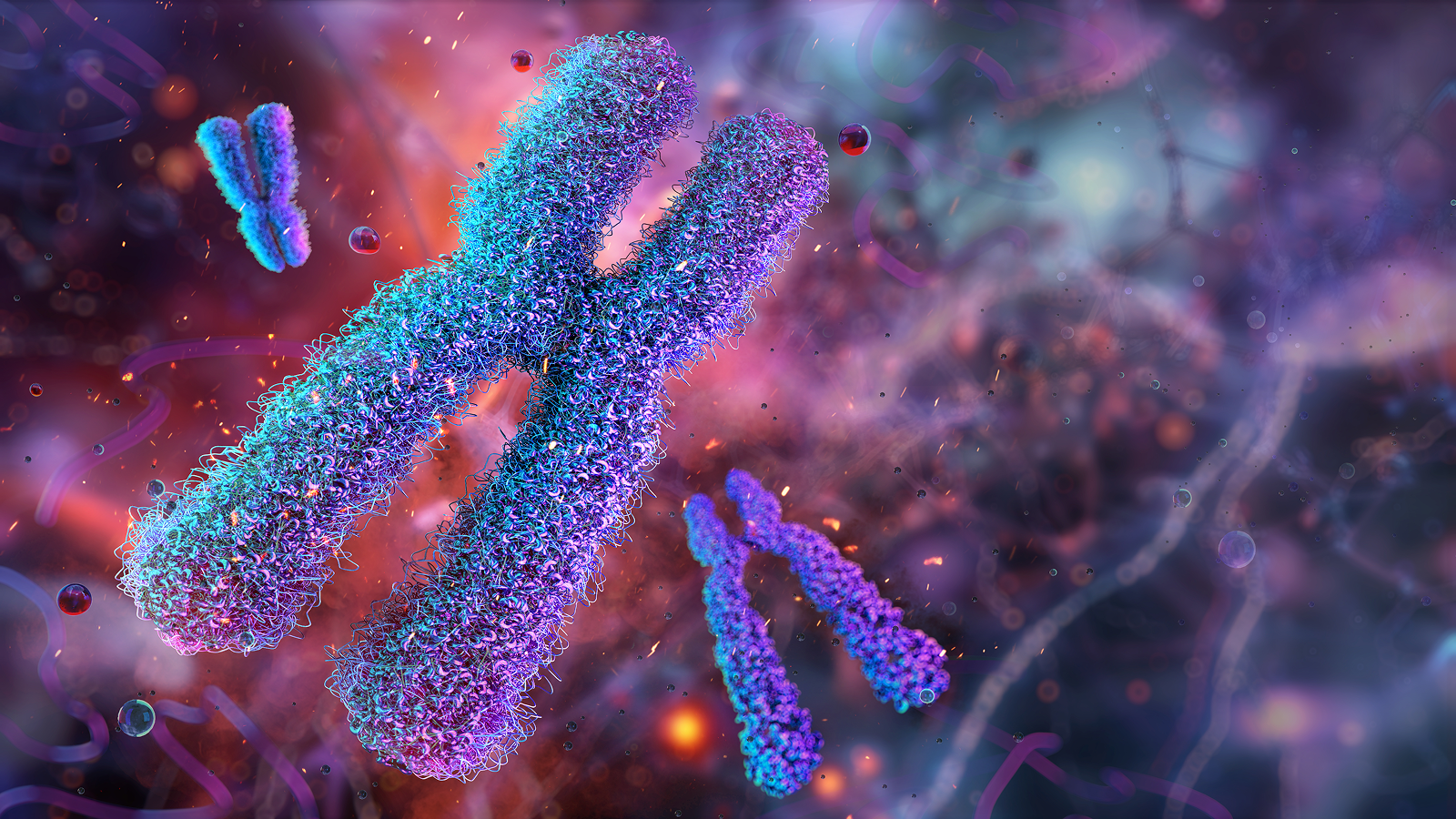
Brain inflammation may be caused by a gene on the X chromosome, a new study in mice suggests.
And in female mice, which have two X chromosomes, a diabetes drug called metformin may be effective at reducing inflammation.
you may like
Gender disparity
Our bodies are patrolled by immune cells that protect us from bacteria and viruses, but in some cases these defenses can attack us. For example, in the autoimmune disease multiple sclerosis (MS), the immune system attacks myelin, the fatty insulation that surrounds nerve fibers in the brain and spinal cord. This can lead to symptoms such as muscle weakness and difficulty walking, as well as problems with memory and thinking ability.
The disease is two to three times more common in women than men, and symptoms often become more debilitating after menopause. But until recently, scientists didn’t know why.
Dr. Rhonda Voskal, a neurologist and neuroscientist at UCLA, has been studying the mystery for decades. The clinical pattern showing higher prevalence in women is an “invaluable clue” that the difference may be driven by X-linked genes, Voskal told Live Science.
That’s because women usually inherit one X chromosome from each parent, while men only inherit one from their mother. Typically, one set of X-linked genes is silenced in females, leaving only one active gene from the mother or father. However, a small number of genes escape this “X inactivation” and allow women to increase the activity of X-related genes, Voskal told Live Science.
To see if X-linked genes could explain the higher incidence of MS in women, Voskuhl and colleagues looked at existing data on human microglia, the main immune cells in the brain. They looked at cells from both men and women with MS.
Compared to male microglia, female microglia had higher levels of a protein called KDM6A, which is encoded by the KDM6A gene on the X chromosome. The women’s cells also showed higher levels of immune-related gene activity.
To investigate the role of the KDM6A gene in the brain, Voskuhl and colleagues used a technique to “knock out” the activity of the KDM6A gene in laboratory mice, specifically rodent microglia. Next, we used established methods to induce an MS-like condition in mice.
you may like
Female knockout mice walked better, had less nerve damage in their brain tissue, and had more intact myelin-covered nerve fibers than female mice with a functional KDM6A gene. The knockout female mice also showed less infiltration by immune cells called T cells compared to female mice with a functioning KDM6A gene.
However, deletion of the KDM6A gene had no effect on male mice, researchers report in a new study published October 15 in Science Translational Medicine. This finding suggests that the KDM6A gene may promote brain inflammation because women have two copies of the gene, and one copy “escapes” from silencing. Therefore, women may receive increased doses of KDM6A protein.
The researchers then looked for drugs that could mimic the effects of KDM6A deletion. Previous studies had shown that metformin could block the KDM6A enzyme in other cell types, so Voskal wondered if it might have the same effect in microglia. Her team found that metformin reduced brain inflammation and improved symptoms in female mice, but had little effect on male mice.
Given that both KDM6A activity and the effects of metformin differ in men and women, this indicates the potential for gender-specific treatment. If such treatments were tested only in men or mixed populations of study participants, their effectiveness in women may not be as significant, Voskal explained. Therefore, data from women must be collected and analyzed separately.
“This is a great study,” said Dr. Lawrence Steinman, a neurologist at Stanford University who was not involved in the study. That’s because this study identified one of the key genes that predisposes women to MS. This is “another step forward” in understanding how KDM6A shapes immune activity in the brain and keeps microglia on the “quiet side,” Steinman told Live Science.
Follow-up studies and clinical trials are still needed to identify the most clinically effective methods of blocking KDM6A in female microglia and to confirm that such agents are therapeutically beneficial.
These findings also suggest an interaction between hormones and chromosome-related inflammation. Previous research has shown that estrogen generally suppresses inflammation in the body and balances immune activity that protects women’s brains from pathogens and excessive inflammation during reproductive years, Voskuhl said.
“So when estrogen levels drop during menopause, that protection is lost,” she says.
This article is for informational purposes only and does not provide medical advice.