
€17 million GAMMA project to accelerate green transport
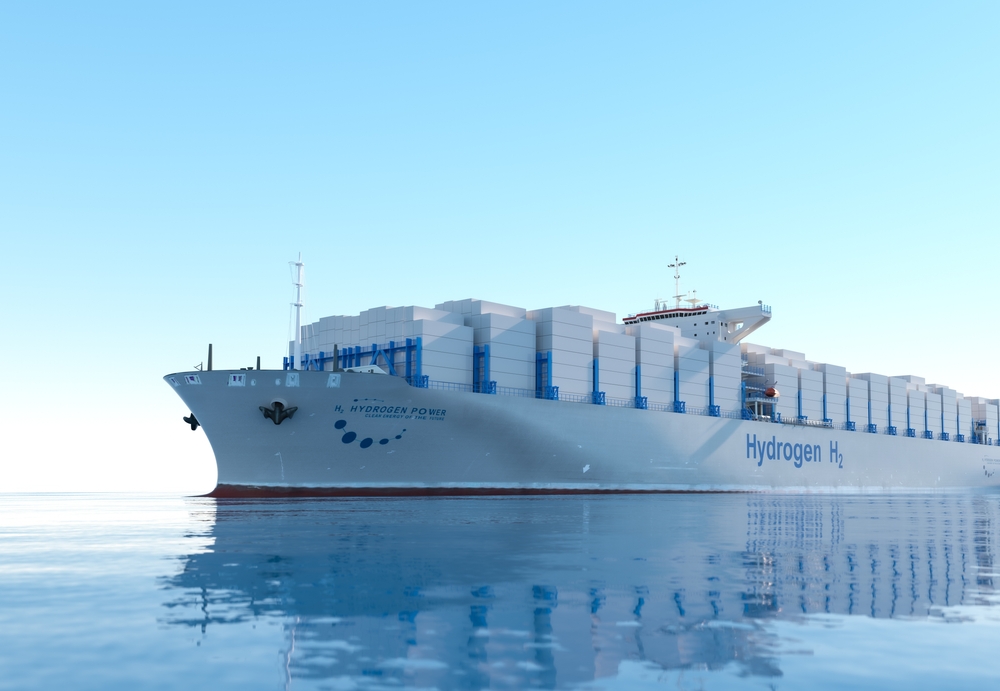
The project, funded to the tune of €17 million through Horizon Europe, aims to demonstrate how hydrogen-based fuel cells and climate-neutral fuels can transform deep-sea shipping and enable zero-emission operations for large ocean-going vessels.
The five-year initiative is led by Icelandic engineering company Verkís and includes a consortium of European innovators including ANT Topic, Fraunhofer, Aurelia, Sea Green Engineering, Energy Cluster Denmark, SINTEF and Politecnico di Milano.
Richard Berkling, CEO of PowerCell Group, commented: “This project represents exactly the kind of industrial learning that the maritime sector currently needs.
“GAMMA allows us to go beyond theoretical research and demonstrate how fuel cells, hydrogen carriers and onboard reforming can work together on board commercial ships. That operational experience will ultimately reduce the risk of adoption and open the possibility for large-scale deployment.”
A groundbreaking project for ocean decarbonization
The GAMMA project (short for Green Ammonia and Biomethanol Fuel MAritime Vessels) brings together 16 European partners to refurbish TOPIC Fleet’s 60,000 DWT bulk carrier.
The retrofit will transform the vessel into a full-scale testbed for green transportation technology, replacing traditional fossil fuel generators with hydrogen fuel cell systems.
PowerCell Group will supply the project with a 1MW class fuel cell power system, enabling onboard power generation using hydrogen derived from green methanol and ammonia.
By integrating this system into the vessel’s auxiliary power architecture, this project will validate real-world performance, safety, durability, and system integration under the harsh conditions of deep sea navigation.
Hydrogen fuel cells have the potential to transform shipping
Although battery technology can support short-range maritime applications, it cannot meet the durability and energy requirements of deep-sea transportation.
Fuel cells powered by hydrogen and hydrogen carriers such as methanol or ammonia offer a scalable solution for zero-emission auxiliary power and, ultimately, main propulsion.
The GAMMA project collects critical operational data regarding system efficiency, reliability, safety, maintenance, and integration.
This information will guide future regulatory frameworks and commercial investments, giving shipowners, shipyards and regulators confidence in the practical feasibility of green transport solutions.
Operational insights from full-scale demonstrations
Demonstration projects like GAMMA are essential for an industry where ships are expected to remain in service for decades.
Real-world testing allows stakeholders to go beyond theoretical studies and gain practical experience with fuel cell systems, shipboard reforming, and hydrogen carriers.
These insights can help de-risk technology adoption and accelerate widespread adoption in the maritime sector.
The importance of decarbonizing shipping
Shipping accounts for almost 3% of global CO₂ emissions, and this figure is expected to increase if the industry continues to rely on fossil fuels.
Decarbonizing shipping is important not only to meet global climate goals, but also to ensure sustainable trade practices.
Green transportation technologies, including hydrogen fuel cells and alternative fuels such as ammonia and methanol, offer practical means to reduce emissions while maintaining operational efficiency.
Projects like GAMMA accelerate the transition to climate-smart shipping by demonstrating these technologies on large-scale operating vessels, paving the way for future regulatory and commercial implementation.
With this initiative, the industry is taking a major leap forward towards operational and climate-neutral vessels.
Source link

