
NHS tests AI and robotics to accelerate lung cancer diagnosis
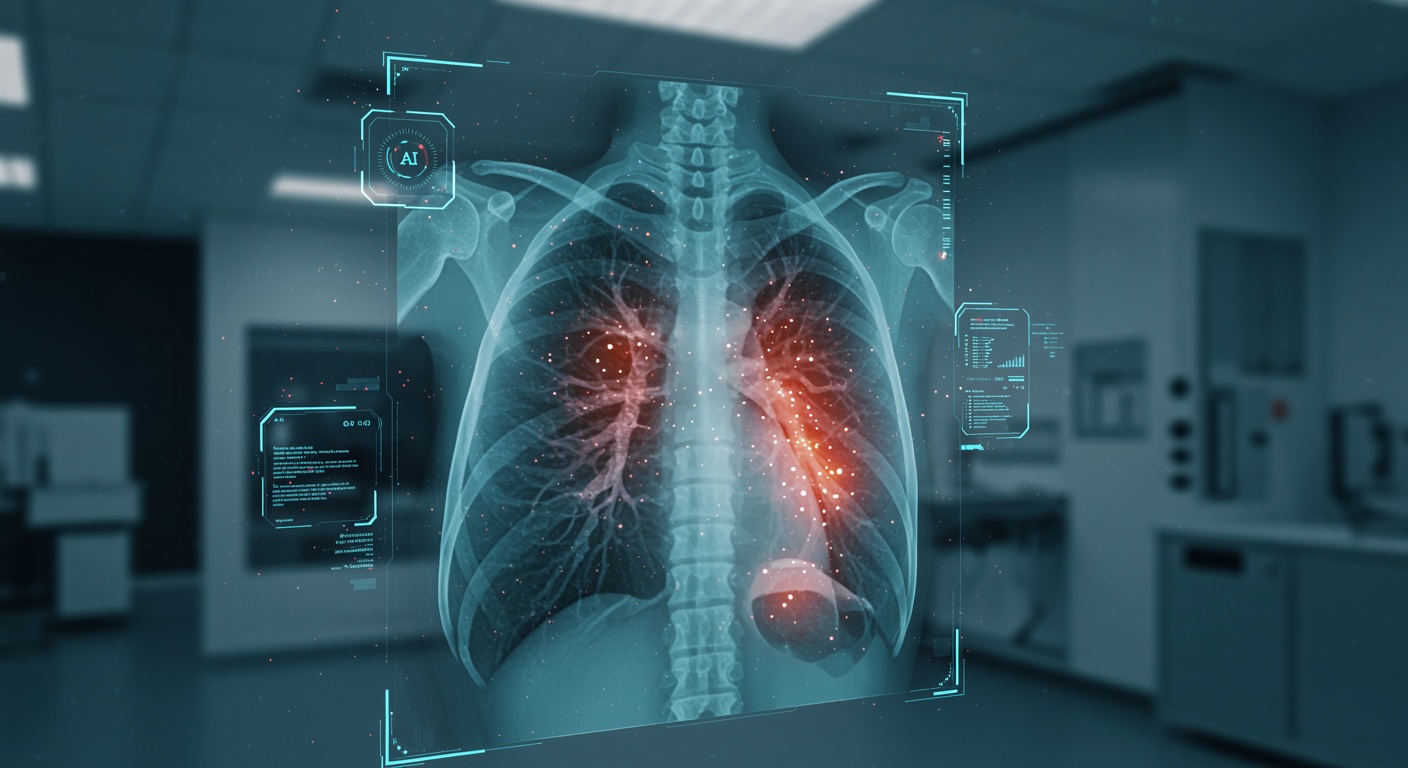
Patients suspected of having lung cancer may soon be able to receive a rapid diagnosis thanks to a pioneering NHS pilot who is combining AI and robotics to reach a cancer that is notoriously difficult to detect.
For thousands of patients each year, a suspected lung cancer diagnosis can involve weeks of scans, follow-up visits, and invasive tests, all of which are lived with anxiety. A new NHS pilot aims to dramatically change that timeline.
The program, led by Guy’s and St Thomas’ NHS Foundation Trust, uses advanced AI software and robotic bronchoscopy to identify and biopsy small lung nodules in one minimally invasive procedure. The goal is simple but innovative: to provide faster, safer, and more accurate lung cancer diagnosis.
UK Health and Social Care Secretary Wes Streeting believes this technology can transform care for the disease, saying: “When I was diagnosed with kidney cancer, the NHS used robotics to save my life. That experience showed me what is possible when talented clinicians have access to cutting-edge innovation. It saves lives.”
“Lung cancer is one of the biggest killers in the UK, claiming an extra year of life in the poorest parts of the country. This pilot will help detect lung cancer earlier, replacing weeks of invasive tests with a single, targeted treatment. For patients anxiously waiting for answers, this speed and accuracy could be life-changing.”
“This is an implementation of our National Cancer Plan, moving from late-stage diagnosis to early intervention, and from analog to digital, so that every patient, no matter where they live, can benefit from the combination of human care and breakthrough technology.”
How AI and robotics work together
The new approach begins with artificial intelligence analyzing CT scans of the lungs. AI quickly flags small nodules and assesses which nodules are most likely cancerous, helping clinicians prioritize areas of concern.
Once these high-risk areas are identified, doctors use a robotic bronchoscopy system (essentially a flexible robotic camera) to navigate deep into the lungs.
Guided with great precision, the robot can reach nodules as small as 6 millimeters, about the size of a grain of rice. These nodules are often hidden deep within the lung tissue and are difficult or dangerous to access using standard biopsy techniques.
Your doctor will then take a precise tissue sample, which will be sent to a specialized lab and reviewed by a team of cancer experts to confirm or rule out cancer.
Early results show promising effects
The pilot follows successful initial testing, with approximately 300 robotic biopsy procedures already performed.
Of these patients, 215 continued to receive cancer treatment after their disease was confirmed. Some were spared more complex or invasive procedures after results showed benign findings.
For many patients, this technology replaces weeks and even months of repeated scans and diagnostic uncertainty with a single 30-minute biopsy. It also reduces the need for surgical biopsies, which are risky and have long recovery times.
Expanding access
A formal pilot will begin in January at Guy’s and St Thomas’s, with plans to expand to King’s College Hospitals NHS Foundation Trust and Lewisham and Greenwich NHS Trust.
This will allow more patients referred with suspected lung cancer to benefit from earlier and more accurate diagnosis.
If results remain positive, the evidence obtained could support national commissioning policy and pave the way for more consistent access to robotic bronchoscopy across the NHS.
Dr Anne Rigg, Cancer and Surgical Medical Director at Guy’s and St Thomas’ NHS Foundation Trust, added: “This pilot will bring together AI and robotics as a truly disruptive tool to simplify and shorten the diagnostic pathway for lung cancer. Combining AI-powered risk stratification with highly accurate robotic biopsies will reduce delays and unnecessary steps to diagnosis.”
“Importantly, this study was co-designed with patients and front-line clinical teams to ensure that the pathway is not only faster, but also safer, more equitable, and centered on the patient experience. Improving access to advanced diagnostics can reduce variation in care for all patients, regardless of where they are referred.”
“Taken together, these changes have the potential to support early diagnosis and treatment of more patients, which is the basis for improving long-term outcomes in lung cancer.”
Supporting growing inspection programs
Pilot arrives at critical moment of lung cancer diagnosis in UK. Since 2021, more than 1.5 million people have taken part in NHS lung health checks, helping to identify thousands of cancers at an earlier, more treatable stage.
The NHS plans to invite 1.4 million people for lung cancer screening next year alone. By 2035, the program is expected to diagnose up to 50,000 cancers, including at least 23,000 in early stages, and save thousands of lives.
As more and more very small nodules are identified during screening, there is an increasing need for safe and accurate biopsy techniques.
Tackling inequalities in cancer outcomes
Lung cancer accounts for a full year of the nine-year difference in life expectancy between the richest and poorest parts of the UK. Expanding screening and improving access to cutting-edge diagnostic tools is central to the National Cancer Plan’s goals to reduce these inequalities.
NHS leaders described the project as a “glimpse into the future of cancer detection”, highlighting how combining AI and robotics could reshape lung cancer diagnosis for the next generation of patients.
If this pilot is successful, it could be a major step forward, not only in terms of technology but also in providing fairer, faster and more accurate cancer treatment for everyone.
Source link

