
How Canada can lead in global energy storage
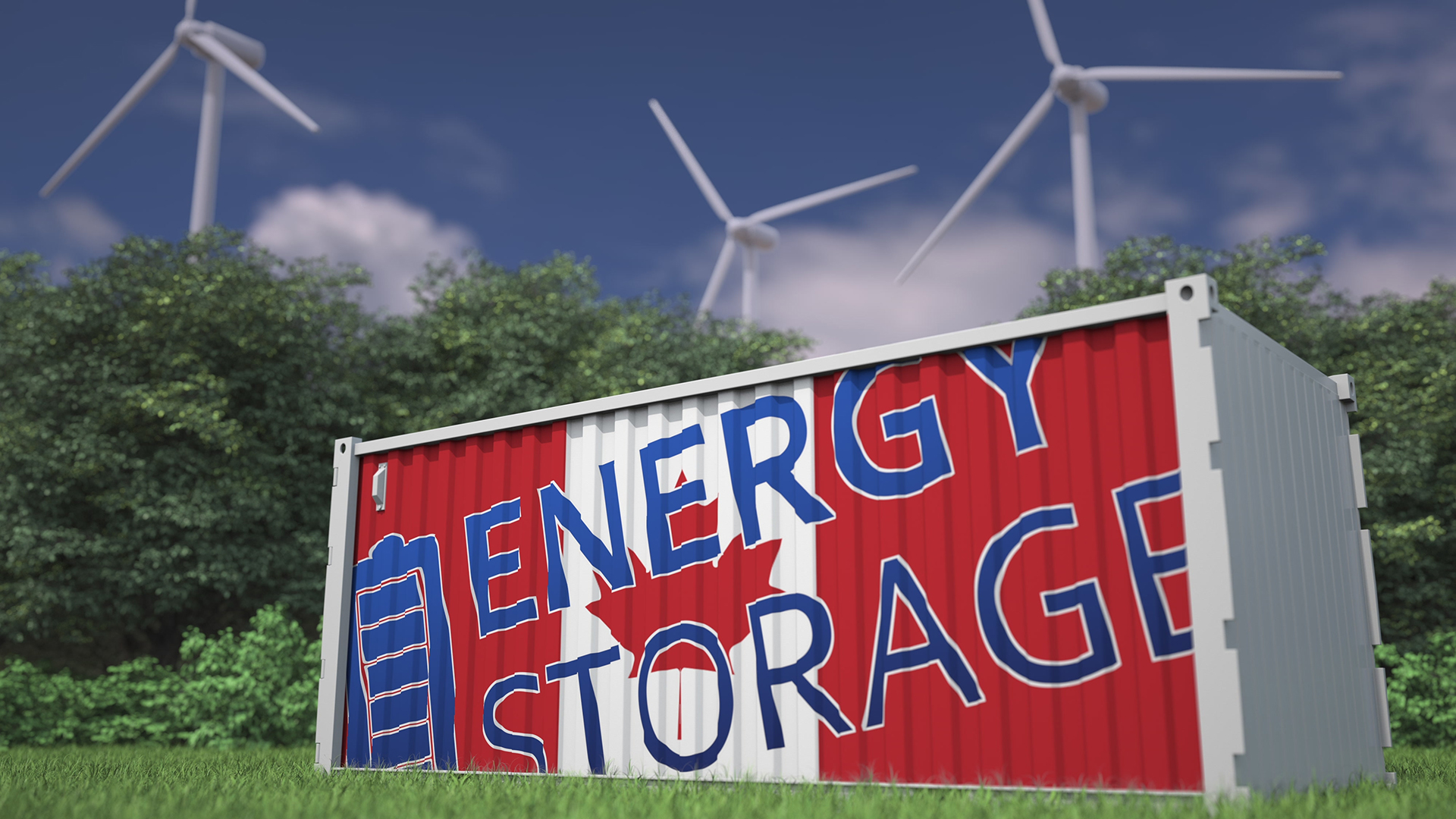
Energy Storage Canada outlines Canada’s potential to lead in the energy storage sector and emphasizes the need for stable trade policies and innovative industrial strategies to secure this future.
Canada has already emerged as a global leader in energy storage deployment. Whether the country turns its nascent leadership into lasting advantage will depend less on technology and more on innovative policy choices made regarding trade, supply chains, and industrial strategy.
Over the past decade, Energy Storage Canada has moved energy storage technology from the fringes of system planning to the core of grid modernization. States view storage not as a pilot technology or niche resource, but as essential infrastructure that supports reliability, peak capacity, and system flexibility. This shift is evident in procurement volumes, market reforms, and long-term resource planning across multiple jurisdictions.
Canada is moving beyond demonstration-scale deployment. Currently, more than 430 megawatts of energy storage facilities are in operation in Ontario. Alberta has about 200 megawatts, Nova Scotia will generate 100 megawatts near the end of 2025, and smaller projects of 20 megawatts or less are scattered across the country. In total, more than 700 megawatts of grid-connected energy storage facilities are already in operation in Canada, additional capacity is under contract, and gigawatt-scale storage resources are expected to be successfully brought online.
Current state of Canada’s energy storage capacity
Ontario and Alberta are leading the way in near-term adoption, reflecting rapid growth in demand, evolving market structures, and changing system needs in both provinces. In Ontario, storage is being procured to support the power system through a transition period that includes both asset retirement and refurbishment. As electrification accelerates, storage is playing an increasing role in replacing retired capacity, managing peak demand, and supporting anticipated load growth. In Alberta, market reforms and the operational realities of an energy-only market position storage as a critical resource for reliability, flexibility, and capacity. Meanwhile, elsewhere, from British Columbia to Atlantic Canada, there is growing interest in energy storage to strengthen grid resiliency, reduce reliance on diesel generation, integrate variable clean power, and support affordability.
The growth of this storage sector has established Canada as a modern and competitive energy supplier in trade and exports. As the country continues to invest in and export oil and gas, that reality highlights the importance of having a reliable, flexible, and globally competitive power system with diverse generation resources. Energy storage is becoming an important part of that infrastructure. It also creates real opportunities to build Canadian domestic industrial capacity in one of the world’s fastest growing energy sectors.
The importance of policy stability in energy storage
However, realizing this opportunity depends on more intangibles than project announcements and capacity goals. Innovative policies are needed to ensure supply chain and trade confidence in Canadian markets.
Energy storage projects rely on complex global supply chains. Batteries, inverters, power electronics, steel enclosures, thermal management systems, controls and balance-of-plant components must meet rigorous safety, performance, and warranty standards. These requirements are the basis for securing funding, guaranteeing assets, and obtaining system operator approval.
While Canadian companies have demonstrated leadership and innovation across this sector, the country does not yet have a manufacturing base of the scale needed to support near-term multi-gigawatt installations. Therefore, developers and utilities rely on established Tier 1 global suppliers to manage risk and meet bankability requirements. This reflects not a lack of interest in Canadian manufacturing, but the practical realities of building complex infrastructure quickly and at scale.
The global nature of energy storage supply chains makes policy stability as important as policy ambition. Storage projects are capital intensive and developed on multi-year schedules. Procurement commitments are often made years before construction begins. Financing decisions depend on predictable assumptions regarding equipment availability, cost, and regulatory framework. Sudden changes in trade policy or procurement rules can quickly alter project economics and schedules.
Recent and proposed trade measures, such as steel tariffs and expired tariff waivers, have made these risks more vivid. Many of the affected components cannot currently be sourced domestically at scale. In the short term, such changes are unlikely to shift demand toward Canadian suppliers without domestic supply chains in place. Rather, there is a risk of increased costs, delays and uncertainty in the financing of projects already under contract or procurement.
These impacts extend beyond individual projects. In a regulated market, higher costs ultimately flow to ratepayers. In a competitive market, these undermine the business case for projects that provide essential system services. Delays in storage deployment also create system-level risks as power demands increase and legacy assets are retired. None of these outcomes will strengthen Canada’s electricity system or economic competitiveness.
Domestic supply chain strengthening strategy
Across the energy storage sector, there is broad consensus that Canada should strengthen its domestic supply chain and diversify its international suppliers. Energy storage offers real opportunities in system integration, power electronics, enclosures, software, controls, operations and services. Over time, larger manufacturing investments may also become viable as deployment volumes increase. The challenge for policymakers is sequencing.
If domestic content requirements are introduced before sufficient capacity exists, there is a risk that projects will be delayed or canceled during the critical implementation period. These can undermine investor confidence and slow down infrastructure that system planners already consider essential to reliability and affordability. A more effective approach would be to utilize voluntary domestic content incentives to encourage Canadian manufacturing while maintaining flexibility for short-term deployment.
International experience provides clear lessons. The U.S. Inflation Control Act shows how predictable, long-term incentives can accelerate clean energy production while maintaining adoption momentum. The main driver is the belief that demand will exist long enough to justify building factories, training workers, and investing capital. Sudden policy changes or status quo policy frameworks that do not take into account changes in broader supply chains and the global economy risk undermining confidence in domestic industry, even if the intention behind the policy is to support domestic industry.
Future outlook
Canada is now in the multi-gigawatt phase of energy storage deployment. Capacity goals alone do not determine success. The pace, cost and reliability of implementation will depend on innovations in trade policy, procurement design and industrial strategy to provide an informed and transparent process with integrity and stability for growing industries.
Energy storage is not a future opportunity. This is a modern necessity for reliable, affordable and competitive power systems. Trade stability, coupled with realistic domestic content incentives and a credible long-term industrial strategy, will enable Canada to deploy storage at the pace its power system requires, while building resilient supply chains that support domestic development. The same stability allows Canadian companies to operate with confidence in global markets, with bankability dependent on predictable policies and proven infrastructure.
The window is open to get this right. It won’t stay open forever.
This article will also be published in the quarterly magazine issue 25.
Source link

