
How ESA’s extinction design guidelines mitigate space debris
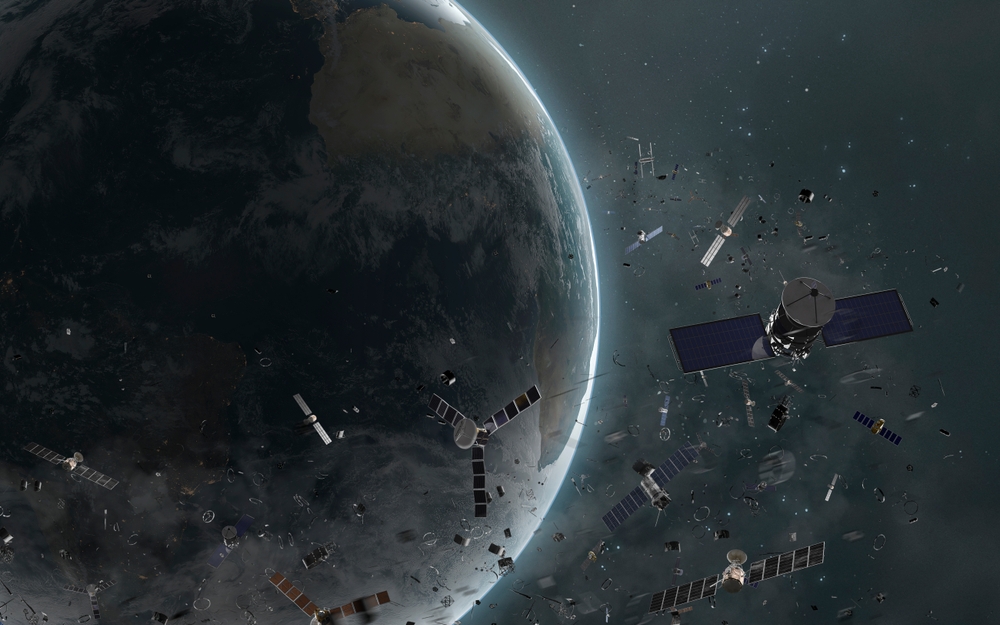
The European Space Agency has published Design for Demise Guidelines, an important step towards achieving zero debris.
The Design for Demise guidelines serve as the technical backbone for engineers tasked with ensuring that satellites leave only a single ray of light in the sky as they return to Earth.
By February 2021, more than 6,000 launches had sent more than 45,000 tons of debris into orbit, posing a serious risk to life on Earth when it entered the atmosphere.
Reentry events have become more common in recent years due to the increase in the number of LEO satellites. Design for Demise therefore aims to reduce the risk of casualties on Earth and to enable compliance with global efforts to reduce those risks.
Re-entry and security concerns are growing
For decades, standard procedure for satellites in low Earth orbit has been to let them spontaneously disintegrate and burn up in the atmosphere.
However, as satellites became larger and more heat-resistant materials (such as titanium and ceramics) were used, many components became able to withstand the intense heat of atmospheric reentry. These survivors pose a significant casualty risk to people on the ground.
ESA’s latest space debris mitigation requirements specify a threshold for casualty risk for a single re-entry of less than 1 in 10,000. If the mission cannot meet this through uncontrolled reentry, then an expensive controlled reentry into remote areas must be performed.
But Design for Demise offers a third method. It’s about designing a spacecraft so that it completely evaporates during a standard uncontrolled reentry, saving fuel and costs while ensuring safety.
Fundamentals of Design for Demise
The Design for Demise framework shifts the mindset of engineering from “structural integrity at all costs” to “deliberate vulnerability.”
This handbook outlines several core strategies to ensure that a spacecraft is thoroughly disassembled quickly enough to be consumed by the atmosphere.
material substitution
One of the main obstacles to the disappearance of space debris is the use of materials with high melting points. The handbook recommends replacing titanium and stainless steel with aluminum and other low melting point alloys when possible. For example, replacing a titanium propellant tank with an aluminum propellant tank could be the difference between a 50kg piece hitting the ground or completely vaporizing.
Mechanism of premature division
The document emphasizes that the sooner a satellite’s internal components are exposed to atmospheric reentry heat (plasma), the more likely they are to melt.
This is achieved by premature delamination of the external structure due to shape memory alloys and melting joints, exposing the satellite’s “innards” to extreme temperatures.
containment and relocation
If high-melting components (such as optical lenses or reaction wheels) must be used, the guidelines recommend placing the components where they experience the greatest heat flux, or designing the surrounding structure to eject the components so that they are not obscured by other debris.
DRAMA Software: Verifying New Satellite Disappearance
A key part of the Design for Demise guidelines addresses how engineers can verify that designs actually work, utilizing the DRAMA (Debris Risk Assessment and Mitigation Analysis) software suite.
The guidelines provide a standardized methodology for modeling reentry, from “object-oriented” models that track every nut and bolt to “spacecraft-oriented” models that simulate the aerodynamic tumbling of the entire ship.
The 2025 edition of the handbook provides updated thermal coefficient and aerodynamic drag models based on recent flight data. This ensures that a satellite’s “missibility” is not just a guess, but a mathematically verified certainty before the satellite leaves the launch pad.
How Design for Demise supports the Zero Debris Framework
Design for Demise is a key element of ESA’s Zero Debris Charter, which aims to halt the net increase in space debris by 2030. By making D4D a standard part of its procurement process, ESA is communicating to the global space industry that sustainability is now a requirement for flight.
The guidelines also mention the impact on astronomy. By fully guaranteeing the disappearance of satellites, the industry avoids leaving obliterated debris in orbit that could reflect sunlight and interfere with ground-based telescopes. This is a growing concern in the scientific community.
Aiming for a sustainable and debris-free orbit
The release of “Design by Demise” marks a turning point in space engineering and signals that the world is moving from an era of disposable space to an era of responsibility.
ESA provides a clear technology roadmap for Design for Demise, enabling engineers to build satellites that perform great during life and safely disappear when they die.
Looking ahead to 2030, these guidelines will likely become the global gold standard, ensuring that the final frontier remains open, safe and clear for future generations of explorers.
Source link

