
Green hydrogen or lost leadership? Europe must act now
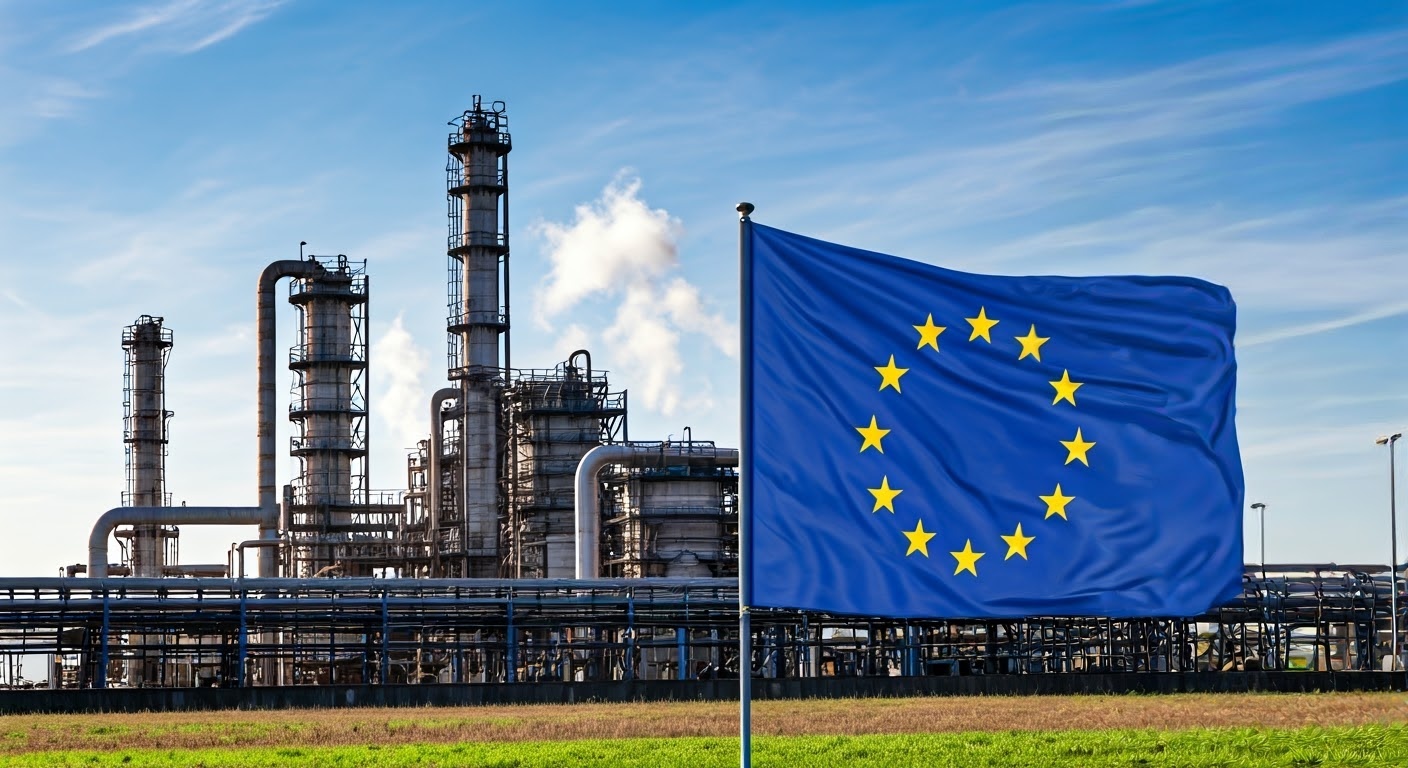
Dr. Thomas Hillig, EUUSEW Digital Ambassador, emphasizes that the EU needs to step up its efforts to accelerate a competitive hydrogen industry to stay ahead of the competition.
Europe’s hydrogen economy appears to be caught between lofty ambitions and the realities of a sluggish market. Demand is weak, prices remain high, and infrastructure is still years away. But green hydrogen is more than just a climate change tool. It is the industrial market of the future.
If the European Union wants a fair share of global value creation, it needs to shape its market design and build a competitive industry now.
The framework is in place, but momentum is lacking.
The European Union has laid important foundations through the European Hydrogen Strategy and the Hydrogen and Decarbonized Gas Market Package. Certification rules, infrastructure plans, and market forces are taking shape. However, implementation across member states remains uneven, and some directives have not yet been fully translated into national law.
Hydrogen systems require synchronized development of production, transportation, storage, and extraction. Building a dedicated pipeline alone can take five to seven years. Without early coordinated action at European level, the entire system risks being delayed. Market forces alone cannot adjust these complex moving parts quickly enough.
Economic reality: Facilitating decarbonization through price differentials and direct electrification
Green hydrogen is still much more expensive than gray hydrogen produced from natural gas. The International Energy Agency confirms that the cost of producing renewable hydrogen remains significantly higher than the cost of fossil fuel alternatives in most regions. As long as this gap continues, spontaneous demand will remain limited.
Moreover, direct electrification today often delivers faster and more cost-effective decarbonization results. For every kilowatt-hour of renewable electricity used directly in electric vehicles, heat pumps, or batteries, it typically reduces emissions more efficiently than converting it to hydrogen. Green hydrogen will therefore play a particularly important role in hard-to-abate sectors such as steel, chemicals, cement and heavy transport, especially as the transition progresses.
Competition with China means building European industry
Hydrogen doesn’t just mean climate neutrality. It is about industrial competitiveness and future value chains. According to the International Renewable Energy Agency, China accounts for more than half of the world’s installed electrolyzer capacity. This reflects coordinated national planning and long-term industrial policy.
If Europe does not actively shape its hydrogen market, large, state-led economies will dominate technology manufacturing, project development and supply chains. Individual member states are not strong enough to counter such scale. Relying purely on market incentives will not deliver the speed and amount of investment needed. There are too many changes.
However, for European companies, green hydrogen presents significant business opportunities, from electrolyser manufacturing and engineering services to project finance, transport infrastructure, storage technology and hydrogen-based applications. If Europe wants to secure its share in global value creation, it needs to build its industry now in a smart and collaborative way. This means fostering innovation, expanding domestic manufacturing, and creating a framework of predictable demand that businesses can invest in with confidence.
A strong European market design is therefore essential. Only instruments coordinated at European Union level can achieve sufficient scale, reduce fragmentation and provide long-term visibility for investors.
Hydrogen as diplomacy and strategic diversification
Hydrogen will also reshape Europe’s external energy relations. The expansion of domestic renewable energy is increasingly facing acceptance challenges, including debates over large-scale wind power projects in parts of Scandinavia. At the same time, solar and wind conditions enable more favorable production costs in regions such as North Africa and the Middle East.
Therefore, renewable hydrogen or its derivatives may be imported in the future. The experience of dependence on natural gas from Russia shows the risks of concentrated supply. Diverse hydrogen partnerships must become part of European diplomacy.
Mechanisms like the European Hydrogen Bank are important to bridge the price gap and stimulate the initial market. Over time, it can also foster sustainable import corridors that complement domestic production and strengthen the global presence of European companies.
what needs to happen now
In the short term, the European Union needs to close the price gap between green and gray hydrogen through coordinated financial instruments, carbon pricing and contracting for difference. Support should focus on sector-specific clusters that link renewable energy generation with application development within each sector. A dedicated ecosystem of green steel, green chemicals or sustainable fuels can accelerate technology learning and business model innovation.
At the same time, Europe needs to invest strategically in its industrial base. Electrolyser manufacturing capacity, system integration expertise, transport technology and certification services should be expanded within the European Union. Market design must reward first movers and provide long-term security for private capital.
Green hydrogen will become a growing global market. If Europe wants to benefit economically and strategically, it must take collective and decisive action. Building a hydrogen industry now is not just about climate change. It is a question of industrial sovereignty and future prosperity.
This opinion editorial was produced in collaboration with European Sustainable Energy Week (EUSEW), the largest annual event dedicated to renewable energy and efficient energy use in Europe. #EUSW2026 is in its 20th year, once again bringing together a community of people interested in building a safe and clean energy future for generations to come.
Check out current calls and join.
Recommended links
About the author: Dr. Thomas Hillig is the Founder and Managing Director of THEnergy, a specialist consulting firm founded in 2013 with a focus on innovations in the energy sector, including hydrogen, microgrids, energy storage, energy management, and e-mobility. THEnergy develops energy and sustainability concepts for industrial companies, combining experience in conventional and renewable energy with industry knowledge in consulting. THEnergy also advises investors and energy companies on clean technology opportunities in rapidly changing markets. Hillig has led several large-scale due diligence processes, helped pump numerous start-ups, and helped foreign companies enter key European markets.
Disclaimer: This article is contributed by our partners. Unauthorized reproduction is prohibited.
Neither the European Commission nor its representatives accept responsibility for the use of the information in the article. The opinions expressed are those of the authors only and should not be considered to represent the official views of the European Commission.
Source link

