
Artemis II mission sets stage for lunar return and beyond
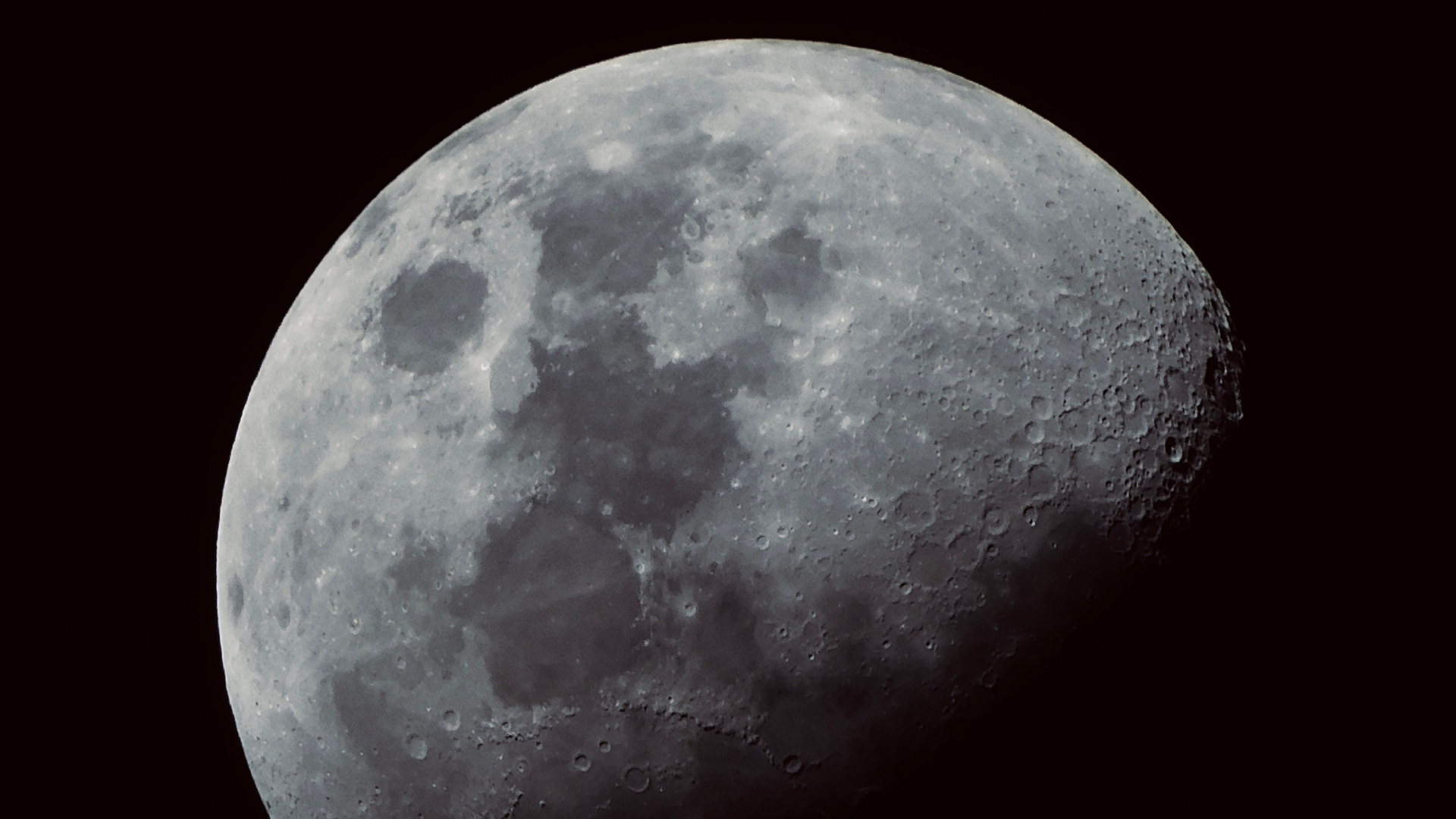
As NASA prepares for the launch of the Artemis II crewed lunar spaceflight mission, Christophe Bosquillon and Giuseppe Reibaldi from the Moon Village Association discuss the implications that a successful human return to the Moon could have for lunar exploration and beyond.
With the January 2026 North American winter storm, NASA had to delay a key fuelling test for the Artemis II mission. Between hydrogen leaks at the early February wet dress rehearsal, and later issues with the flow of helium to the rocket upper stage, forcing a rollback, NASA had to postpone the rocket launch twice, first to early March, then to early April. Administrator Jared Isaacman provided details on X.
When Artemis II eventually takes off, this will mark a pivotal moment in human spaceflight. While safety of the crew is paramount, Artemis II’s ‘success’ will be measured beyond their safe return. There will be implications for other missions, including outside of the Artemis program, in no small part considering the importance of international collaboration.
What is the Artemis program?
The Artemis program was initiated in 2017 in a spirit of US-led international collaboration, drawing on legacy technologies from NASA’s earlier Constellation program, with the Orion crew capsule and the Space Launch System (SLS) heavy-lift rocket.
Artemis’ core objective is to return humans to the Moon with a crewed lunar landing by the end of this decade. Aiming at sustainable exploration, Artemis will establish a lunar orbit Gateway space station infrastructure and surface habitation modules, using lunar achievements as a proving ground for future missions to Mars and other deep-space destinations.
The SLS capability is designed to lift heavy payloads beyond Earth orbit. Orion provides crew life support and deep-space travel capability. The Lunar Gateway is an international hub for science, staging of surface missions, and a platform for deep-space technology demonstrations.
SpaceX and Elon Musk with their Starship program, and Blue Origin and Jeff Bezos with their Blue Moon lander, were contracted by NASA to deliver the Human Landing System (HLS) on the Moon. Multiple partners including Canada, Japan, The United Arab Emirates, and Europe contribute; from robotic systems and scientific payloads to habitat designs and deep-space communications.
Why is the Artemis II mission pivotal?
Artemis II represents the first time since Apollo 17 (1972) that humans will travel beyond low Earth orbit. It ends a half-century hiatus in deep-space human flight.
The previous mission, Artemis I, was a 25.5-day uncrewed flight test (16 November – 11 December 2022) validating NASA’s Space Launch System (SLS) rocket and Orion spacecraft for deep space missions: the spacecraft had travelled a total one million kilometres (620,000 miles) toward the Moon and back, entering a distant retrograde lunar orbit to test systems, before returning to Earth with a high-speed splashdown.
This time around, Artemis II will be the first true end-to-end test of the NASA deep-space human spaceflight stack. Once astronauts complete a lunar flyby and return safely, Artemis II will have validated human-rated systems integration. This architecture will be demonstrated and repeatable as a deep-space human flight capability, where human presence remains central to the purpose of space exploration, even in an era of increasingly capable robotics and AI.
Safety first
Safety of the crew is paramount. Artemis II is prepared to deal with all worst-case scenarios, starting with launch and re-entry. Should there be a major system failure during the lunar flyby, NASA will put Orion on what is known as a ‘free return trajectory’. This means the spacecraft will naturally swing around the Moon and be tossed back towards the Earth by lunar gravity. This is the solution that provides a built–in safe return baseline if major propulsion fails.
While safe return of the crew is the non-negotiable baseline, Artemis II will be judged on a much broader set of criteria, starting with an assessment of systems performance under real human pressure: life-support systems, power, thermal control, navigation, and communications will have to function reliably over the ten-day deep-space mission with metabolic, psychological, and operational demands.
Operational maturity will be tested on how smoothly NASA executes mission operations: mission control, communications handovers, and any contingency including abort and recovery coordination. NASA has a good track record with human factor validation – such as crew performance, habitability, ergonomics, and psychological resilience, including sleep quality, noise, spatial constraints – and must maintain this. In other words, Artemis II must demonstrate that NASA has still got “The Right Stuff”.
A successful Artemis II mission should produce political, institutional, and public confidence toward Artemis III and its crewed landing on the Moon.
Implications for the next Artemis missions
This time around, returning to the Moon means that humanity is there to stay, and the Artemis program opens a path forward to more crewed lunar missions involving both government and commercial operators. Starting with the next Artemis missions, a key implication is that a successful Artemis II will fundamentally reshape the risk profile of the entire Artemis architecture. In comparison, Artemis III’s complexity is next level: it involves lunar orbit rendezvous, docking with a Human Landing System, descent to the surface, ascent, and return.

Artemis II will have derisked the Orion and SLS portions of that mission, allowing NASA to focus on lander readiness and surface operations. Gateway depends on reliable crew transport to lunar orbit. Artemis II validates Orion’s role as a crew taxi to cislunar space, enabling longer-term missions, international modules, and logistics planning.
While alternative options to Orion and Gateway will be studied, for now, the program benefits from budgetary and political stability, which is particularly important given the program’s cost and long timelines. In July 2025, a special mandatory appropriation of $9.995bn was voted into law, specifically designated for NASA’s Artemis missions II, IV, and V, with funds set to remain available until 30 September 2032.
Implications beyond Artemis
The ripple effects of Artemis II extend well beyond NASA’s own lunar plans. An Artemis II success will strengthen the business case for a return to the Moon relying on commercial deep-space services: life-support systems, radiation shielding, deep-space habitats, and logistics. It signals that markets beyond Earth orbit may exist: first the Moon, then Artemis II reopens the door to credible Mars mission planning with a demonstrated human deep-space transit capability.
Commercial deep-space services must still make the demonstration that reusable launchers combined with critical payload mass and propellant depots in orbit and beyond make commercial solutions competitive, compared with the costly SLS and Orion development.
Beyond specific hardware contributions, international collaboration extends toward the Artemis Accords. For states that are signatories of the Accords, Artemis II validates investments in human-rated hardware and training. For non-partner states, it raises the bar and clearly shows the technological and institutional gaps to be bridged for deep-space human participation.
The Artemis Accords
The Artemis Accords are a set of non-binding multilateral agreements initiated by NASA and the U.S. State Department in October 2020 to govern responsible, peaceful, and transparent exploration of the Moon, Mars, asteroids, and other celestial bodies. Grounded in existing space law, including the 1967 Outer Space Treaty, they provide practical principles tailored to 21st-century exploration.
As of early 2026, 61 countries had signed the Artemis Accords, including major spacefaring nations across the Americas, Asia, Africa, and Europe. The Artemis Accords stick to the core principles of peaceful exploration, transparency, and interoperability, especially with safety protocols. They further build over space law pillars such as emergency assistance to astronauts in distress, registration of space objects, and the preservation of lunar heritage by protecting historic lunar sites and artefacts.
But the key to sustainability beyond government-sponsored flags and footprints missions is the ability to utilise space resources starting with the Moon, by involving the commercial sector. This is where the Artemis Accords started to build guidelines for extracting and utilising space resources in ways consistent with international law. That further implies two practical concerns: mechanisms to prevent harmful interference and conflictual friction between missions, including so-called “safety zones”. And active mitigation of debris creation to protect a shared environment, from orbit to cislunar space, the Moon, and beyond. While the Artemis Accords affirm that resource utilisation can occur without violating the Outer Space Treaty, they do not settle all legal debates.
The Moon Village Association and international collaboration
The return to the Moon is economically motivated by the prospect of utilising its resources, including ice water for life support and propellant systems, various metals, rare earth elements, and Helium-3. Further, many of the technologies and systems developed can be used to solve problems back here on Earth. For these commercial markets to develop in a profitable and sustainable way, there is a need for clarity and agreement between friends and foes on how to proceed. Today, this doesn’t yet exist for the Moon, as the Outer Space Treaty approved in 1967 was not conceived to frame commercial space activities. While enabling public lunar policies, this balancing act should secure private interests and not constitute a showstopper for investors.
Further, many missions from commercial and government stakeholders aim to the same location: the lunar South Pole. This can create risks of accidents and therefore political problems, underscoring the need for political and legislative solutions. The United Nations as a whole, with its Committee on the Peaceful Uses of Outer Space (COPUOS), is the established organisation where discussions on defining how to behave on the Moon are taking place. Currently, COPUOS has more than 100 member countries and about 50 Permanent Observers.
To deal with this new lunar reality, the Moon Village Association (MVA) was founded in 2017 in Vienna, as a non-governmental organisation that aims to promote international collaboration in the exploration and settlement of the Moon. The MVA fosters cooperation between government space agencies, commercial space entities, and academia to advance humanity’s presence on the Moon. Its goal is the creation of a global forum for stakeholders like space agencies, governments, industry, academia, and the public interested in the peaceful exploration and utilisation of the Moon. The MVA is creating international, national, and regional networks to engage civil society around the world, and provides services from lunar technical and economic development to policymaking.
MVA provides regular inputs to COPUOS committees, where it is a permanent observer: in 2022, to define a much-needed implementation framework for lunar resources utilisation, a Working Group on Legal Aspects of Space Resource Activities was created within the COPUOS Legal Subcommittee. The output and deliverables of this working group that involves mainly states, but also industry and non-governmental organisations (NGOs), will be available in 2027. In 2024, COPUOS held the first Conference on Sustainable Lunar Activities and approved the creation of the Action Team on Lunar Activities Consultation (ATLAC). MVA, as it promotes activities to increase cooperation and consultation between countries, previously incubated the creation of ATLAC by working for a few years with the Global Expert Group on Sustainable Lunar Activities (GEGSLA), producing a reference framework. ATLAC is fully operational since 2025 as the focal point for operational discussions between delegations related to how to behave on the Moon, to which MVA keeps contributing.
To provide inputs and services to institutions, governments, and the private sector, MVA can rely on its network of institutional and professional members, and an array of working groups covering technical architectures, industrial and economic development, and governance and policymaking. MVA is founder and lead of GEGSLA and the proposer of the International Moon Day (IMD), approved by the United Nations General Assembly in 2021. In 2026, MVA choose Thailand to host its 10th Global Moon Village Workshop, a country that is a member of both the US-led Artemis Accords and the China-led International Lunar Research Station (ILRS). MVA, via GEGSLA, recently informed states on existing opportunities for collaboration on lunar missions, to encourage stakeholders to seek out such collaboration and grow connections between those nations and private operators who are or will be engaged in lunar activity.
From the Artemis program to the Accords and beyond with private sector and international initiatives, there is no shortage of opportunities and meaningful developments to share between space faring nations and new emerging stakeholders. To build a peaceful, safe, and sustainable future on the Moon, it takes, after all, a Village, that is a community rather than just one country.
This article will feature in our upcoming space Special Focus Publication.
Source link

