
Texas A&M’s optical propulsion technology could cut travel time to Alpha Centauri to 20 years
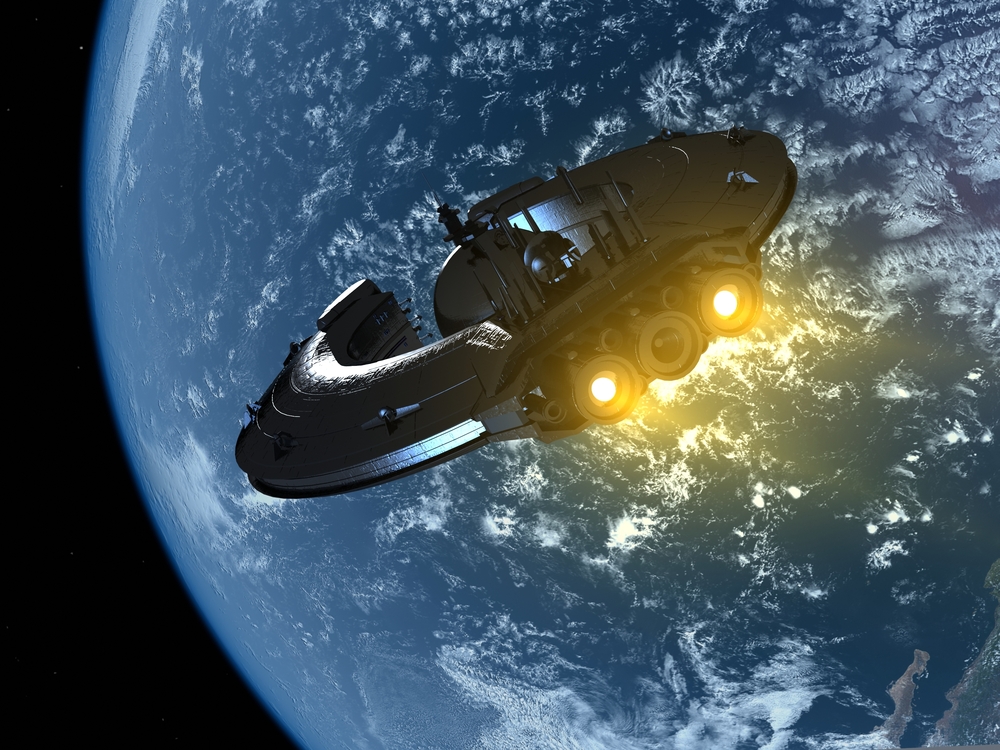
Researchers at Texas A&M University have demonstrated optical propulsion using a laser-driven “metajet” with full three-dimensional control.
Their laboratory-scale results suggest that a light-powered propulsion system could reduce travel time to Alpha Centauri, the closest star system to our own, to about 20 years.
With current space propulsion technology, this journey would take hundreds of thousands of years to complete, highlighting the immense potential of optical propulsion in guiding future endeavors to the final frontier.
What is optical propulsion and why is it attracting attention?
Optical propulsion uses light, usually from a laser, to generate force on an object without physical contact or onboard fuel. Although the physics has been understood for decades, practical control remains a barrier.
The latest research, led by Dr. Shoufeng Lan, assistant professor and director of the Advanced Nanophotonics Laboratory, provides a controlled demonstration of how light alone can direct movement in multiple dimensions.
The study, published in Newton, outlines a method for converting the momentum of a photon into a measurable mechanical force.
The reason for this is quite clear: it would take hundreds of thousands of years to reach Alpha Centauri using conventional rocket propulsion. In contrast, optical propulsion removes the need for fuel and instead relies on sustained external energy, potentially allowing much shorter journeys when scaled up.
How does MetaJet work?
The system revolves around micron-scale devices called metajets, which are built from metasurfaces – ultra-thin materials designed with nanoscale patterns that determine how light behaves when it hits it.
Several features define its behavior.
Transfer of momentum: When light reflects off a surface, it imparts momentum. Metasurface structures are channels that transmit forces in specific directions. Material-embedded control: Instead of adjusting the laser beam, control is built into the device itself through its geometry. Three-dimensional maneuverability: MetaJet can move laterally, vertically, and rotate under laser irradiation. Precision manufacturing: Each nanoscale feature is engineered in shape, orientation, and placement for predictable behavior.
Lan describes the effect as similar to a ping pong ball bouncing off a surface. Each photon provides a small thrust, but collectively they generate a controlled force.
The device was manufactured at the AggieFab nanofabrication facility, supported by the Texas A&M Engineering Experiment Station, and tested in a fluid environment to compensate for gravity and provide a clearer view of motion.
How is this different from previous optical propulsion research?
Previous optical propulsion experiments have typically had limited control, often restricted to movement in a single direction or relying on carefully shaped light fields. Texas A&M’s approach shifts that paradigm by building control within the material itself.
This distinction has practical implications. By decoupling control from the light source, this system allows for more flexible force generation and simplifies the requirements for an external laser system.
We also introduce a generalizable framework based on fundamental physics rather than narrow experimental settings.
Similar research is underway at institutions such as the California Institute of Technology, which is researching propulsion stability, and the Rochester Institute of Technology, which is researching diffraction grating platforms.
Lan’s team positions its contribution as a step toward integrating these efforts under a broader theoretical and experimental model.
Importantly, the researchers say, this is the first reported demonstration of full three-dimensional maneuverability using this class of optical system.
Can light propulsion be extended to spacecraft?
The current size of Metajet is only a few tens of microns, smaller than the width of a human hair. This places the work firmly in the experimental realm. However, the underlying physics suggests scalability.
The force generated depends primarily on the power of the incident light and not on the size of the object. In principle, increasing the laser intensity could extend the same scheme to larger systems, including spacecraft.
This concept underpins long-standing proposals for laser-powered sails and interstellar probes.
Significant engineering challenges remain, including:
Deliver sustained high-power laser energy over long distances Maintain beam accuracy and stability across space Manage heat and material stress under continuous illumination Verify performance in microgravity conditions
The research team is now seeking external funding to test the system in microgravity, where gravitational interference is minimized and operation more accurately reflects space conditions.
For now, the discovery represents an advance in a controlled laboratory rather than a deployable propulsion system.
Still, they contribute to a growing body of research suggesting that light, rather than fuel, may eventually power travel over long distances, from microscopic instruments to interstellar missions.
Source link

