


Close Menu
  • Home
  • Identity
  • Inventions
  • Future
  • Science
  • Startups
  • Spanish
What's Hot

Google AppSheet phishing campaign hacks 30,000 Facebook accounts

Cybercriminal groups exploit Vishing and SSO in rapid SaaS extortion attacks

China-linked hackers target Asian governments, NATO states, journalists, activists

Facebook X (Twitter) Instagram
  • Home
  • About Us
  • Advertise with Us
  • Contact Us
  • DMCA
  • Privacy Policy
  • Terms & Conditions
  • User-Submitted Posts
Facebook X (Twitter) Instagram
Fyself News
  • Home
  • Identity
  • Inventions
  • Future
  • Science
  • Startups
  • Spanish
Fyself News
Home » Fossil ruins in China reveal complex community of creatures that lived before the Cambrian explosion, including ‘dune’-like sandworms
Science

Fossil ruins in China reveal complex community of creatures that lived before the Cambrian explosion, including ‘dune’-like sandworms

By April 4, 2026No Comments3 Mins Read
Share Facebook Twitter Pinterest Telegram LinkedIn Tumblr Email Copy Link
Follow Us
Google News Flipboard
Share
Facebook Twitter LinkedIn Pinterest Email Copy Link

A newly discovered fossil trove in southwestern China is changing the timeline of how complex animals evolved.

Animal diversity and complexity are thought to have increased rapidly during an evolutionary explosion known as the Cambrian Explosion about 539 million years ago. But new fossil sites suggest that some of that complexity was already present at the end of the Ediacaran period (about 635 to 539 million years ago), millions of years before the Cambrian explosion.

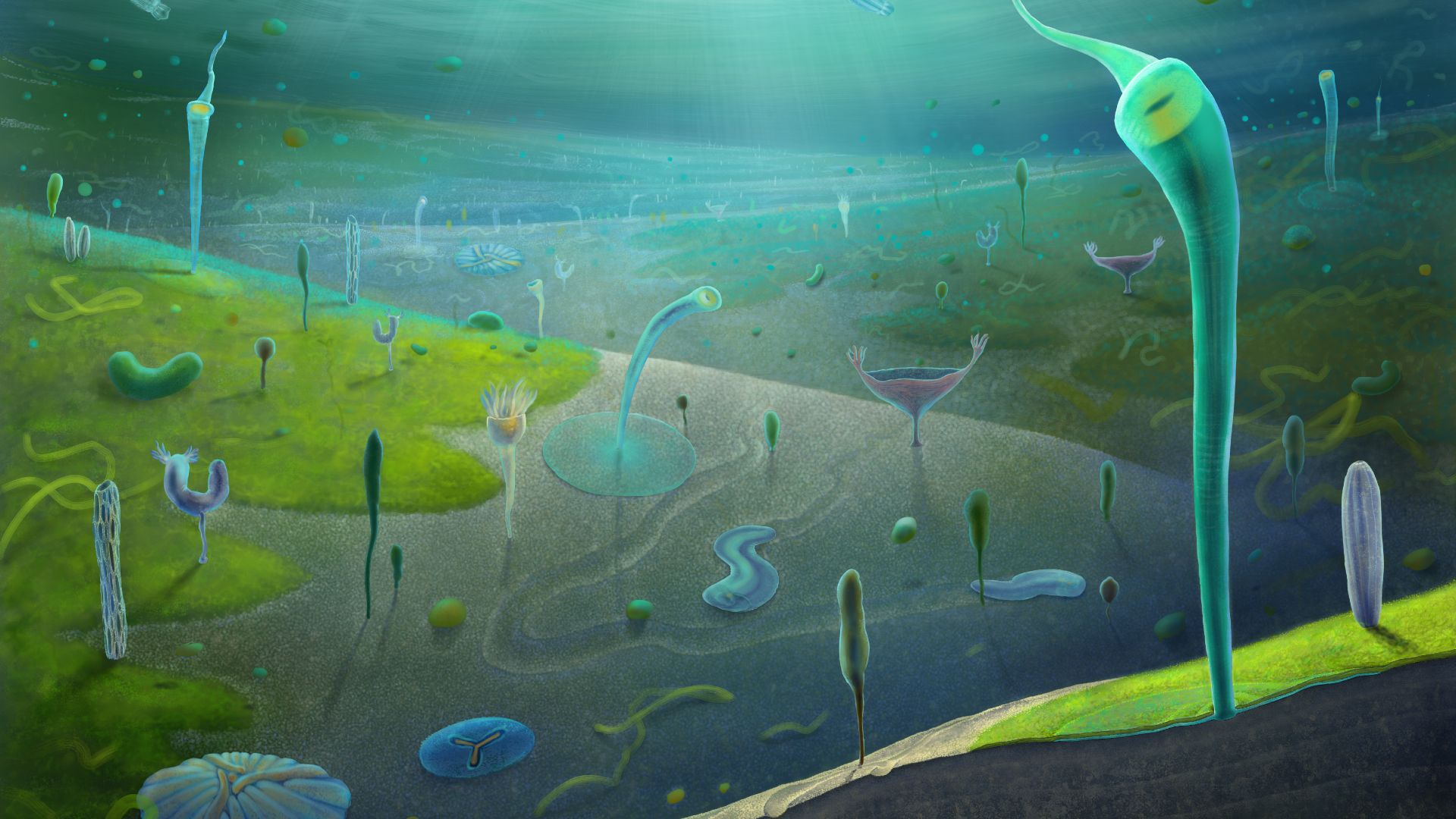
Fossil finds included bilateral worm-like animals that may have been anchored to the ocean floor, early comb jellyfish, and relatives of starfish and sea cucumbers that likely used tentacles on their heads to capture food. Other fossils bore little resemblance to modern animals or known Ediacaran or Cambrian species.

you may like

“One specimen looks very much like a sandworm in the sand dunes,” study co-author Frankie Dunn, a researcher on Ediacaran life at the University of Oxford’s Natural History Museum, said in a statement.

Some simple multicellular organisms, such as sponges, first appeared during the Ediacaran period. However, most modern animal phyla emerged during the subsequent Cambrian explosion, which spanned 13 to 25 million years. This includes the phylum Chordata, which includes humans and other vertebrates.
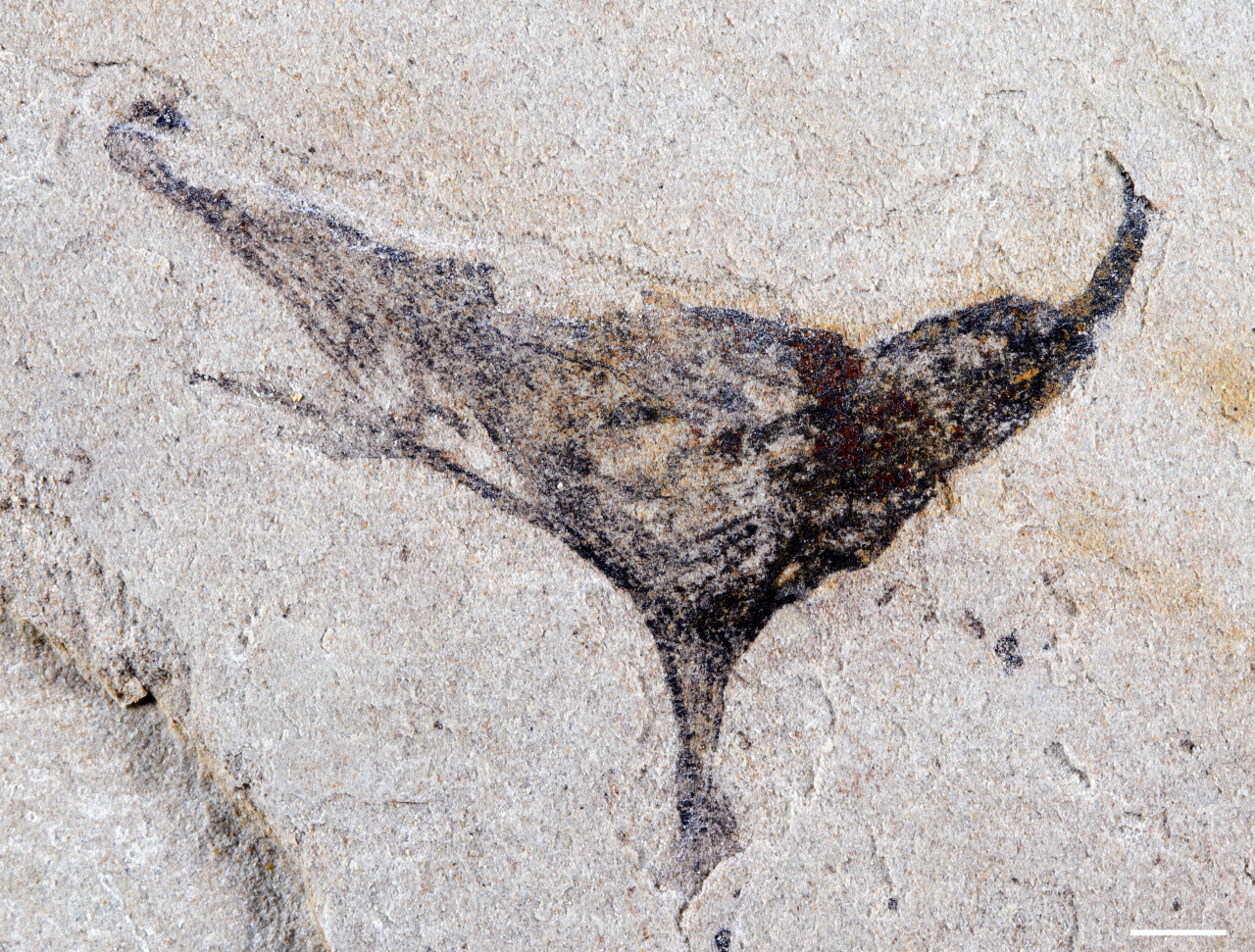
A V-shaped black fossil can be seen embedded in the white stone surface.

Haootia-like fossils (a phylum that includes early cnidarians, jellyfish, sea anemones, and corals) from the Egawa biota (approximately 554 to 539 million years ago). (Image credit: Gaorong Li and Xiaodong Wang.)

New fossil discoveries suggest that some of that complexity was already occurring by the Late Ediacaran. Discovered as part of the fossil collection of the Jiangchuan biota in southwestern China, the collection includes more than 700 fossilized animal and algal specimens dating from 554 to 539 million years ago. The researchers reported their findings in the journal Science on Thursday (April 2).

“When we first saw these specimens, it was clear that this was something completely unique and unexpected,” study co-author Luke Parry, a paleontologist at the University of Oxford, said in a statement.

Get the world’s most fascinating discoveries delivered straight to your inbox.

Most of the fossils from this site are flat traces of organisms on the surrounding rock, known as carbonaceous membranes. Unlike three-dimensional traces left by durable body parts such as bones and shells, carbonaceous films capture details of an organism’s soft tissues such as the intestines and mouthparts.

This less common preservation method may help explain why scientists have so far failed to find evidence of these more complex animals from the Cambrian.

“Our results show that the apparent absence of these complex fauna at other Ediacaran sites may reflect differences in preservation rather than a lack of true biological presence,” co-author Ross Anderson, a researcher who studies the evolution of complex life at Oxford University’s Natural History Museum, said in a statement. “Carbonaceous compactions like Egawa’s are rare in rocks of this age, meaning similar communities may not be preserved elsewhere.”

Gaorong Li et al., Dawn of the Phanerozoic: Late Ediacaran transitional fauna of southwestern China. Science 392,63-68(2026). DOI:10.1126/science.adu2291


Source link

#Biotechnology #ClimateScience #Health #Science #ScientificAdvances #ScientificResearch
Follow on Google News Follow on Flipboard
Share. Facebook Twitter Pinterest LinkedIn Tumblr Email Copy Link
Previous ArticleAnthropic says Claude Code subscribers will have to pay extra to use OpenClaw
Next Article Embattled startup Delve ‘parts ways’ with Y Combinator

Related Posts

The universe may end trillions of years sooner than we thought.

April 28, 2026

NASA Curiosity rover discovers rocks containing seven new organic molecules on Mars

April 27, 2026

New study suggests Neanderthals’ brains weren’t to blame for their deaths

April 27, 2026
Add A Comment
Leave A Reply Cancel Reply

Latest Posts

Google AppSheet phishing campaign hacks 30,000 Facebook accounts

Cybercriminal groups exploit Vishing and SSO in rapid SaaS extortion attacks

China-linked hackers target Asian governments, NATO states, journalists, activists

People are finally using Reddit search.

Trending Posts

Subscribe to News

Subscribe to our newsletter and never miss our latest news

Please enable JavaScript in your browser to complete this form.
Loading

Welcome to Fyself News, your go-to platform for the latest in tech, startups, inventions, sustainability, and fintech! We are a passionate team of enthusiasts committed to bringing you timely, insightful, and accurate information on the most pressing developments across these industries. Whether you’re an entrepreneur, investor, or just someone curious about the future of technology and innovation, Fyself News has something for you.

Castilla-La Mancha Ignites Innovation: fiveclmsummit Redefines Tech Future

Local Power, Health Innovation: Alcolea de Calatrava Boosts FiveCLM PoC with Community Engagement

The Future of Digital Twins in Healthcare: From Virtual Replicas to Personalized Medical Models

Human Digital Twins: The Next Tech Frontier Set to Transform Healthcare and Beyond

Facebook X (Twitter) Instagram Pinterest YouTube
  • Home
  • About Us
  • Advertise with Us
  • Contact Us
  • DMCA
  • Privacy Policy
  • Terms & Conditions
  • User-Submitted Posts
© 2026 news.fyself. Designed by by fyself.

Type above and press Enter to search. Press Esc to cancel.