Close Menu
  • Home
  • Identity
  • Inventions
  • Future
  • Science
  • Startups
  • Spanish
What's Hot

SystemBC C2 Server Reveals Over 1,570 Victims of Operation The Gentlemen Ransomware

Ex-Pinterest Team Redesigns Email with Extra — It’s Actually Better

Ransomware negotiator pleads guilty to aiding ransomware gang

Facebook X (Twitter) Instagram
  • Home
  • About Us
  • Advertise with Us
  • Contact Us
  • DMCA
  • Privacy Policy
  • Terms & Conditions
  • User-Submitted Posts
Facebook X (Twitter) Instagram
Fyself News
  • Home
  • Identity
  • Inventions
  • Future
  • Science
  • Startups
  • Spanish
Fyself News
Home » A giant ‘shadow’ has been crawling over Mars for 50 years, but scientists don’t know why
Science

A giant ‘shadow’ has been crawling over Mars for 50 years, but scientists don’t know why

By April 20, 2026No Comments3 Mins Read
Share Facebook Twitter Pinterest Telegram LinkedIn Tumblr Email Copy Link
Follow Us
Google News Flipboard
Share
Facebook Twitter LinkedIn Pinterest Email Copy Link

New photos show that a giant dark spot hidden inside a giant Martian crater has been creeping across the planet’s surface ever since the feature was first discovered 50 years ago. Scientists don’t know exactly why this is happening.

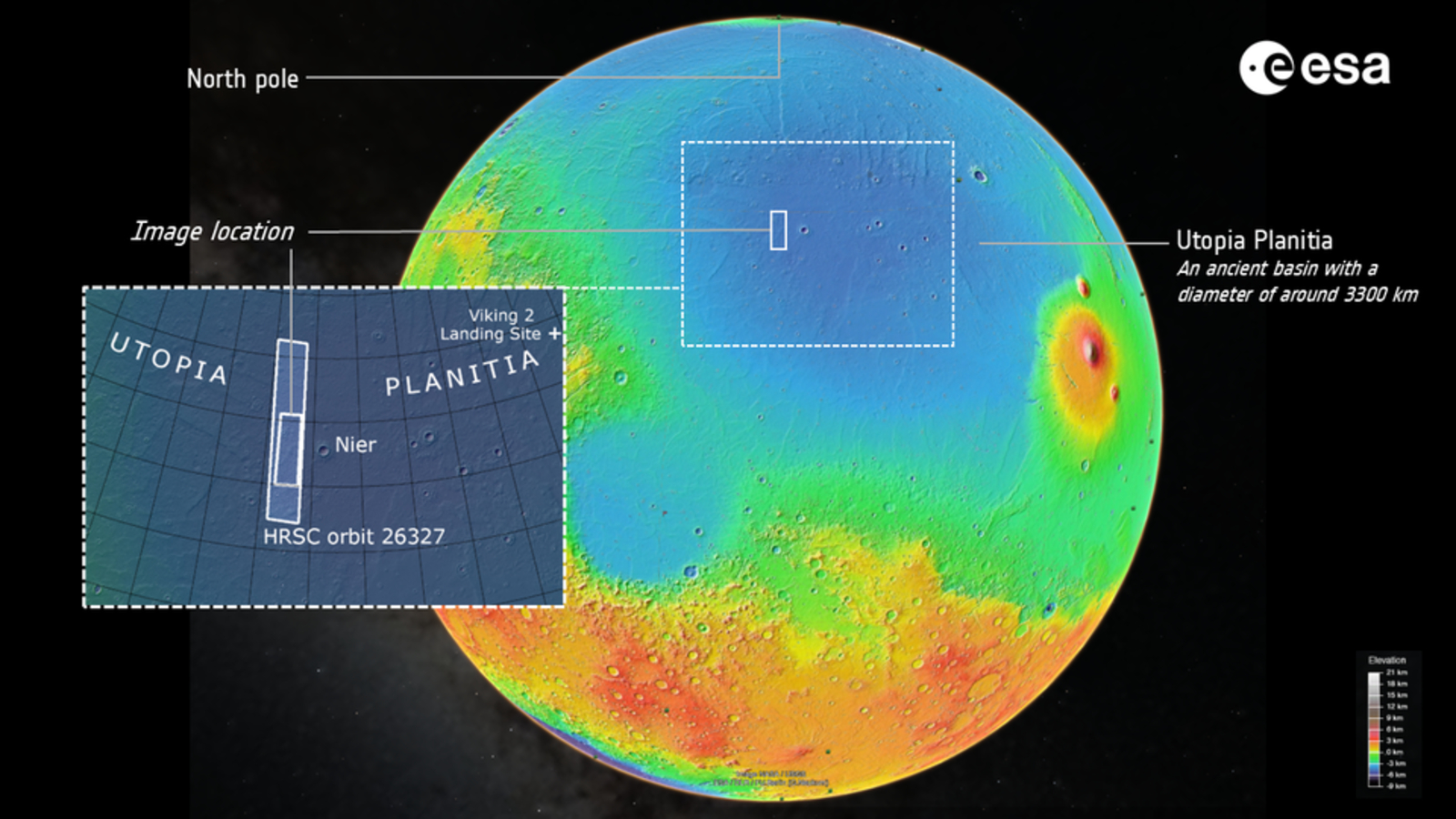
This shadow structure is part of the ground covered in ash and volcanic rocks such as olivine and pyroxene from ancient eruptions that occurred millions of years ago, before Mars was considered geologically dead. It is located on Utopia Planum, a plain approximately 2,000 miles (3,300 kilometers) wide in Mars’ northern hemisphere.

NASA’s Viking spacecraft first photographed the blackened surface of Mars in 1976, shortly after arriving on Mars. Since then, several photos have shown this formation expanding throughout the surrounding landscape. These include new images from the European Space Agency’s (ESA) Mars Express spacecraft taken in 2024 and released on April 15th.

you may like

It is unknown how large the shadow feature is. But parts of the patch’s southern boundary have moved at least 200 miles (320 kilometers) south, according to ESA’s latest photos. This suggests that the dark terrain is expanding by about 4 miles (6.5 km) per year.

Scientists believe the dark spot’s movement is related to Mars’ winds, which are known to scrape the surface and kick up ash and dust.
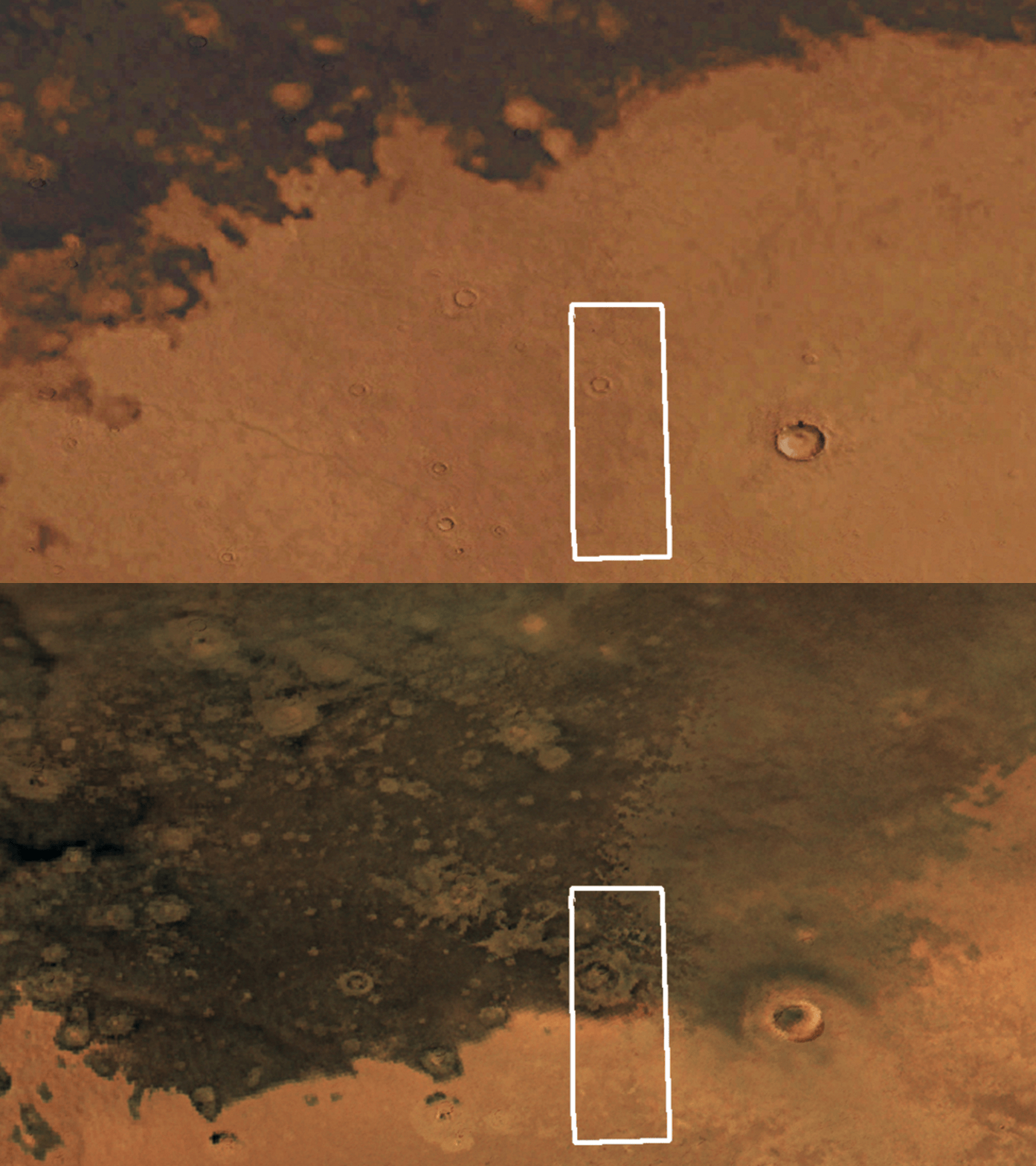
Loop comparison of two photos showing how far the dark part of Mars has moved over the past 50 years

Aerial photos show how much the dark patch has expanded since 1976. The white box shows the area captured in greater detail by ESA’s Mars Express spacecraft in 2024 (shown at the top of this article). (Image credit: NASA)

“There are two possible explanations for the spread of volcanic ash over the past 50 years: either it was picked up and moved by the Martian winds, or ocher dust that previously covered the black ash was blown away,” ESA representatives said in a statement.

However, they added that they currently have no clue as to which hypothesis is correct.

Get the world’s most fascinating discoveries delivered straight to your inbox.

Utopia Planitia

Map of Mars with dark spots highlighting parts of the Utopian plains

Utopia Planum is one of the largest and flattest plains on Mars. The smallest white box shows roughly where that dark “shadow” is. (Image credit: NASA/USGS, ESA/DLR/FU Berlin)

This region of Mars has been of great interest to scientists over the past half century. In 1976, the Viking 2 lander landed on Utopia Plains and conducted a series of “biological experiments” until its demise in 1980.

More recently, China’s Zhulong spacecraft also landed there in 2021, exploring the vast plain before going dark in 2023. Since then, Chinese scientists have used Zhu Rong’s data to show that Utopia Planitia was likely once covered by one of Mars’ largest oceans, and even mapped what may once have been a coastline. The rover may also have detected clues to a surprising “climate change” that occurred in the region about 400,000 years ago.

Utopia Planitia is home to several large cracks in the ground known as grabens, which are among Mars’ most unusual features and may provide clues to the tectonic movements that once rocked the planet, ESA said.

Additionally, researchers believe there is a significant amount of ice buried beneath this region, which could have a major impact on the search for extraterrestrial life.

Mars Quiz: Is your knowledge of the Red Planet out of this world?


Source link

#Biotechnology #ClimateScience #Health #Science #ScientificAdvances #ScientificResearch
Follow on Google News Follow on Flipboard
Share. Facebook Twitter Pinterest LinkedIn Tumblr Email Copy Link
Previous ArticleFAA orders investigation into Blue Origin New Glenn accident
Next Article North Korean hacker accused of $290 million cryptocurrency theft

Related Posts

Glowing rings of plankton surrounding New Zealand islands are linked to dangerous underwater plateaus — Earth seen from space

April 21, 2026

Scientists identify main cause of extreme nausea and vomiting during pregnancy

April 20, 2026

Altar of Sol: a rare 1,900-year-old monument dedicated to the Roman god of light and used in secret underground rituals

April 20, 2026
Add A Comment
Leave A Reply Cancel Reply

Latest Posts

SystemBC C2 Server Reveals Over 1,570 Victims of Operation The Gentlemen Ransomware

Ex-Pinterest Team Redesigns Email with Extra — It’s Actually Better

Ransomware negotiator pleads guilty to aiding ransomware gang

22 BRIDGE:BREAK flaw exposes thousands of Lantronix and Silex serial IP converters

Trending Posts

Subscribe to News

Subscribe to our newsletter and never miss our latest news

Please enable JavaScript in your browser to complete this form.
Loading

Welcome to Fyself News, your go-to platform for the latest in tech, startups, inventions, sustainability, and fintech! We are a passionate team of enthusiasts committed to bringing you timely, insightful, and accurate information on the most pressing developments across these industries. Whether you’re an entrepreneur, investor, or just someone curious about the future of technology and innovation, Fyself News has something for you.

Castilla-La Mancha Ignites Innovation: fiveclmsummit Redefines Tech Future

Local Power, Health Innovation: Alcolea de Calatrava Boosts FiveCLM PoC with Community Engagement

The Future of Digital Twins in Healthcare: From Virtual Replicas to Personalized Medical Models

Human Digital Twins: The Next Tech Frontier Set to Transform Healthcare and Beyond

Facebook X (Twitter) Instagram Pinterest YouTube
  • Home
  • About Us
  • Advertise with Us
  • Contact Us
  • DMCA
  • Privacy Policy
  • Terms & Conditions
  • User-Submitted Posts
© 2026 news.fyself. Designed by by fyself.

Type above and press Enter to search. Press Esc to cancel.