

Close Menu
  • Home
  • Identity
  • Inventions
  • Future
  • Science
  • Startups
  • Spanish
What's Hot

Malicious KICS Docker image and VS Code extension impact Checkmarx supply chain

Self-propagating supply chain worm hijacks npm packages and steals developer tokens

Cosmetics giant Rituals confirms data breach of customer membership records

Facebook X (Twitter) Instagram
  • Home
  • About Us
  • Advertise with Us
  • Contact Us
  • DMCA
  • Privacy Policy
  • Terms & Conditions
  • User-Submitted Posts
Facebook X (Twitter) Instagram
Fyself News
  • Home
  • Identity
  • Inventions
  • Future
  • Science
  • Startups
  • Spanish
Fyself News
Home » Neanderthal infants grew faster than modern humans, probably because they evolved in harsh environments
Science

Neanderthal infants grew faster than modern humans, probably because they evolved in harsh environments

By April 21, 2026No Comments3 Mins Read
Share Facebook Twitter Pinterest Telegram LinkedIn Tumblr Email Copy Link
Follow Us
Google News Flipboard
Share
Facebook Twitter LinkedIn Pinterest Email Copy Link

Neanderthal infants grew faster than modern human infants, perhaps as an adaptation to living in cold, harsh environments, a new study suggests.

The discovery, made using bones of young Neanderthals discovered in the Amdo Cave in northern Israel in the 1990s, suggests that Neanderthals and modern humans (Homo sapiens) followed different evolutionary paths after splitting from a common ancestor about 600,000 years ago, researchers reported April 15 in Current Biology.

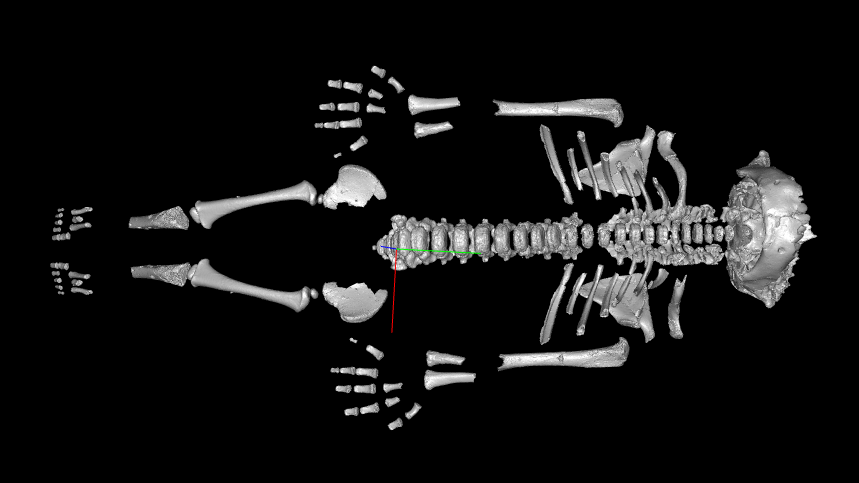
The partial skeleton of a Neanderthal child, known as Amdo 7, was placed in a gap in a cave wall, with the jaw of a red deer (Cervus elaphus) placed on top of it, probably as a burial gift. Based on the shape of stone tools and bones, archaeologists determined that the Amdo skeletons belonged to Neanderthals who lived between 51,000 and 56,000 years ago.

you may like

The Amdo Seven skeleton was found in more than 100 fragments, including fragments of the child’s arms, legs, chest, and skull, all of which showed characteristic Neanderthal anatomical features from the child’s early childhood. However, skeletons of Neanderthal infants are rarely discovered, making it difficult for researchers to determine Amdo VII’s actual age at death.

Archaeologists typically estimate the age of ancient children based on the growth and eruption of teeth and the size and completeness of various bones. While the bone and tooth growth curves of modern human infants are well-documented, Amdo 7 revealed that at least one growth stage in Neanderthals was much faster than in modern humans.

When the researchers compared the dental development of Amdo VII with that of modern humans, they found that the estimated age of the Neanderthal’s lower front teeth was about six months. But Amdo 7’s bones were more consistent with those of 14-month-old modern humans. This discrepancy is likely related to differences in developmental stages, the researchers wrote in their paper.

Neonatal Neanderthals were comparable to modern human neonates in tooth formation, tooth eruption, and arm and leg bone length, but their skulls were significantly larger. During the second stage of growth (infant, infant, toddler, or about 1 to 6 years of age), Neanderthal bodies grew significantly faster than teeth, whereas modern human infants’ teeth and bodies grew more proportionately. Then, in late childhood, Neanderthal body growth and dental development became more uniform, more closely matching the trajectory of modern human children, the researchers found.

“The results of this study suggest that the growth trajectory of Neanderthal infants may have differed from that of Homo sapiens,” the researchers wrote in the study. Specifically, the bodies of Neanderthal babies developed more rapidly than modern human bodies during the first few years of life, but then became uniform during early childhood. “This suggests an evolutionary strategy that focused on accelerated development early in life, which was probably advantageous in the harsh environment in which Neanderthals lived,” the researchers wrote.

Get the world’s most fascinating discoveries delivered straight to your inbox.

This new analysis of the Amdo 7 skeleton reveals important information about the growth and development of Neanderthal children, but the researchers cautioned that further data from other non-adult Neanderthal skeletons are needed. The researchers noted that larger sample sizes could reveal whether this pattern is widespread or a specific ecological adaptation.

Been, E., Hovered, E., Rak, Y., Le Cabec, A., Dean, C., Barash, A. (2026). Rapid growth of Neanderthal infant discovered in Israel’s Amdo Cave. Current Biology 36. https://doi.org/10.1016/j.cub.2026.03.054

How much do you know about our closest relatives? Test your knowledge with our quiz about Neanderthals!


Source link

#Biotechnology #ClimateScience #Health #Science #ScientificAdvances #ScientificResearch
Follow on Google News Follow on Flipboard
Share. Facebook Twitter Pinterest LinkedIn Tumblr Email Copy Link
Previous Article‘Countries need to prepare now’: Major Atlantic currents are much closer to collapse than scientists thought
Next Article New social media platform Bond hopes to use AI to help you kick your doomscrolling habit

Related Posts

NASA has shut down another Voyager 1 instrument as humanity’s most distant spacecraft prepares for a dangerous ‘big bang’ flight to conserve power

April 21, 2026

Florida is facing its worst drought in 15 years. Here’s how it got bad and how long it lasts.

April 21, 2026

‘Countries need to prepare now’: Major Atlantic currents are much closer to collapse than scientists thought

April 21, 2026
Add A Comment
Leave A Reply Cancel Reply

Latest Posts

Malicious KICS Docker image and VS Code extension impact Checkmarx supply chain

Self-propagating supply chain worm hijacks npm packages and steals developer tokens

Cosmetics giant Rituals confirms data breach of customer membership records

Harvester uses Microsoft Graph API to bring Linux GoGra backdoor to South Asia

Trending Posts

Subscribe to News

Subscribe to our newsletter and never miss our latest news

Please enable JavaScript in your browser to complete this form.
Loading

Welcome to Fyself News, your go-to platform for the latest in tech, startups, inventions, sustainability, and fintech! We are a passionate team of enthusiasts committed to bringing you timely, insightful, and accurate information on the most pressing developments across these industries. Whether you’re an entrepreneur, investor, or just someone curious about the future of technology and innovation, Fyself News has something for you.

Castilla-La Mancha Ignites Innovation: fiveclmsummit Redefines Tech Future

Local Power, Health Innovation: Alcolea de Calatrava Boosts FiveCLM PoC with Community Engagement

The Future of Digital Twins in Healthcare: From Virtual Replicas to Personalized Medical Models

Human Digital Twins: The Next Tech Frontier Set to Transform Healthcare and Beyond

Facebook X (Twitter) Instagram Pinterest YouTube
  • Home
  • About Us
  • Advertise with Us
  • Contact Us
  • DMCA
  • Privacy Policy
  • Terms & Conditions
  • User-Submitted Posts
© 2026 news.fyself. Designed by by fyself.

Type above and press Enter to search. Press Esc to cancel.