


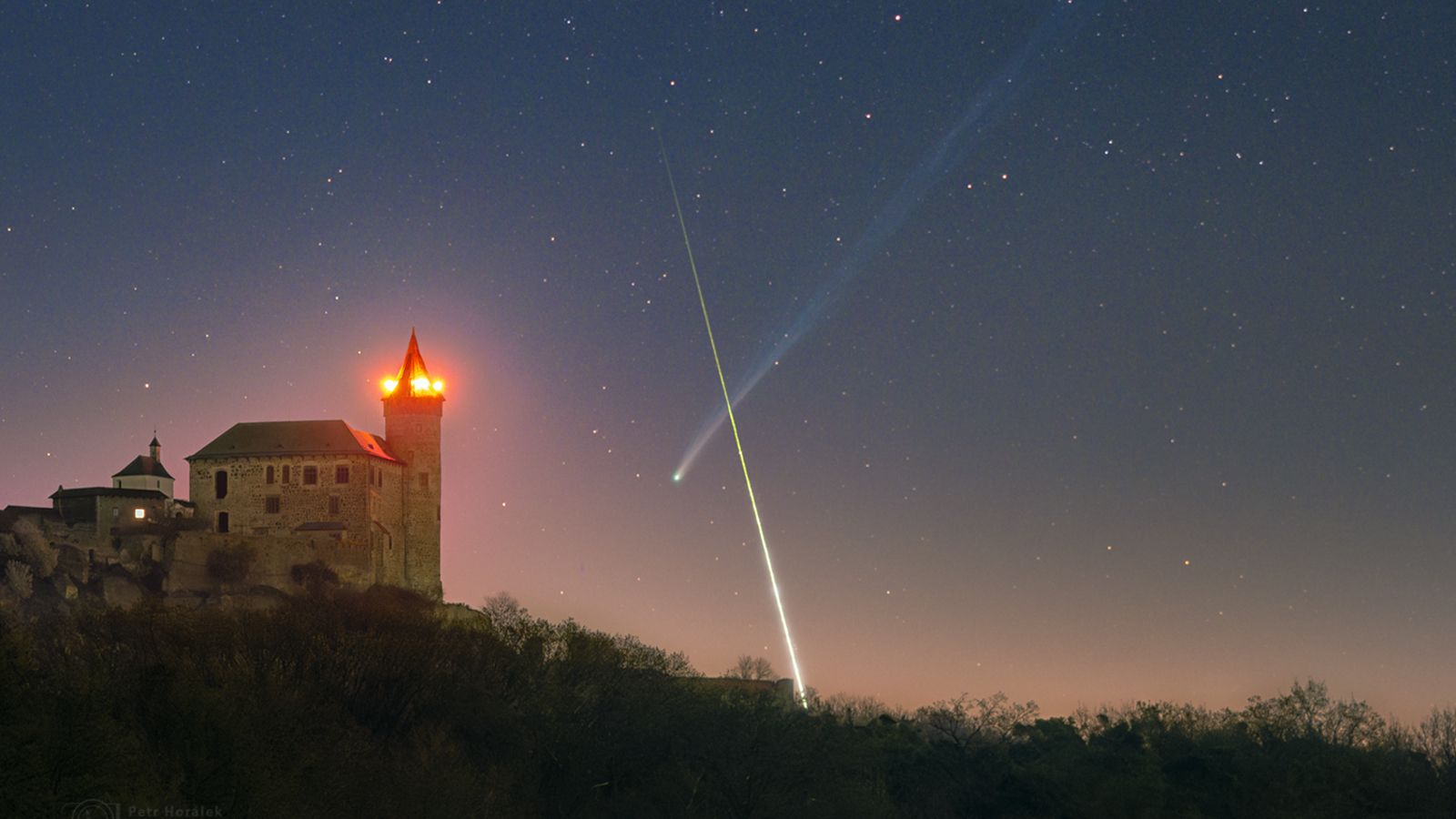
Dramatic photos show the highly unlikely moment a fiery fireball meteor photobombed a candidate for the ‘Great Comet of 2026’, shining in the night sky above a 500-year-old European castle.
Photographers Petr Horarek and Josef Kujar captured this moment of cosmic serendipity at around 4:15 a.m. local time on April 18, high above the ruins of the 15th-century Knytycka Hora Castle in central Czech Republic. They were initially trying to capture the long tail of comet C/2025 R3 (PanSTARRS) when a bright streak of light shot across the sky in front of their target.
Reports from the European Bolide Network later confirmed that the streaks of light were a bolide meteor caused by an asteroid that exploded over Belarus shortly after entering Earth’s atmosphere, Khorarek told Live Science. It’s currently unknown how big the space rock was, how fast it was moving, and how long it shone in the sky.
you may like
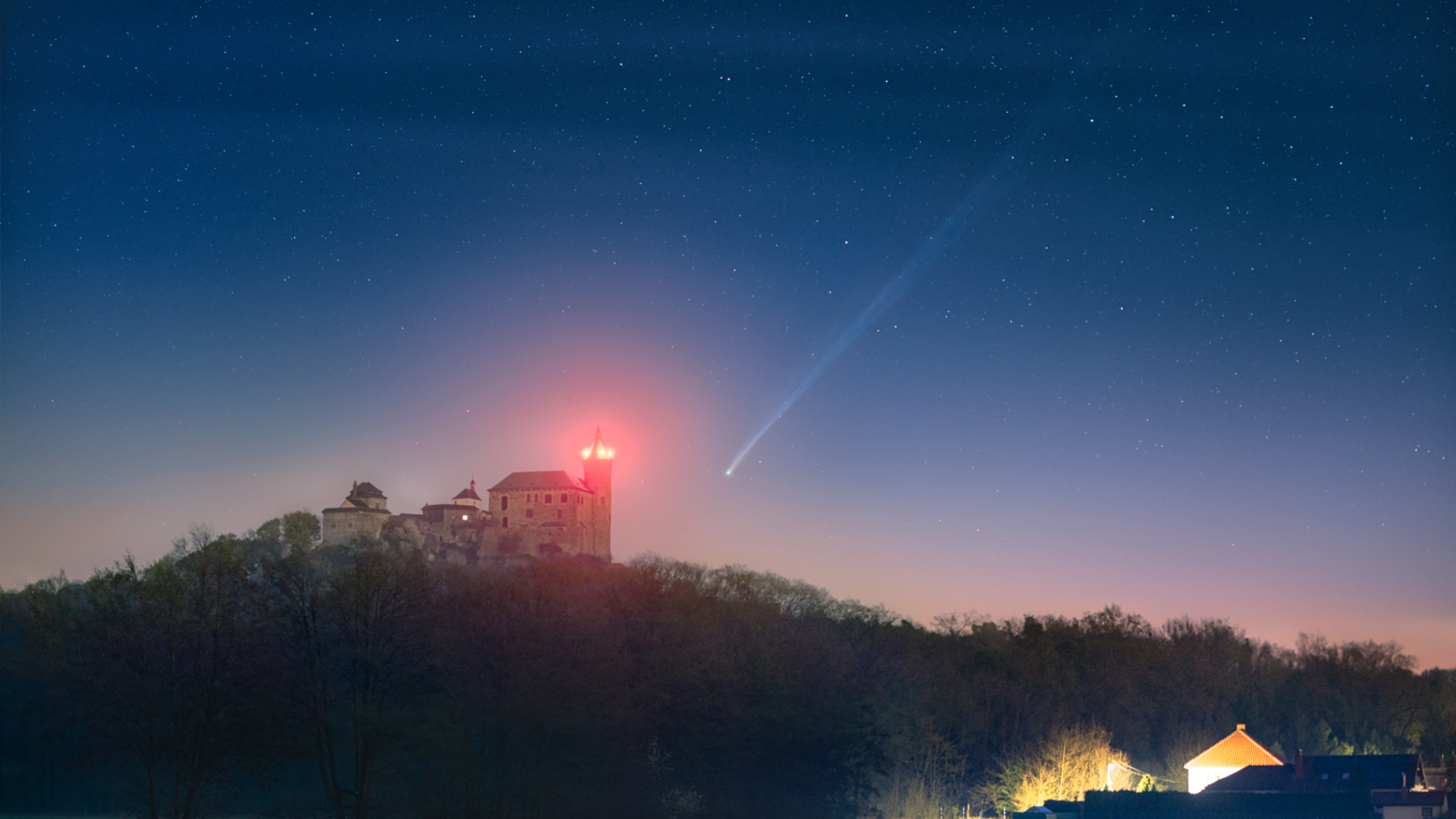
“What are the odds,” Horalek wrote in an Instagram post. Horarek added that he combined his photos with Kujar’s to create a time-lapse image that “shows the whole lucky moment.”
Horarek wrote on his website that the photo was even more incredible considering that due to bad weather the following night, this was “the last chance to catch the comet from central Europe.” If the incident had occurred just 15 minutes later, light from the morning sun would likely have obscured the comet’s tail, he added.
A similarly improbable photo was taken last October, in which Comet Lemmon’s tail appeared to be intertwined with a trail of smoke left by a “shooting star.” But in this case, the photographer was able to intentionally align the comet with the smoke trail left in the air after the meteor burns out, which no doubt makes the latest photo even more impressive.
The great comet of 2026?
Comet Panstars is a long-period comet, meaning it likely takes more than 200 years to orbit the sun. It likely originated from the Oort cloud, a huge reservoir of comets and other icy objects near the edge of the solar system.
The comet passed through its closest point to the Sun, or perihelion, on Sunday (April 19). From April 13th onwards, it was clearly visible with a decent telescope or stargazing binoculars, but now it is almost invisible.
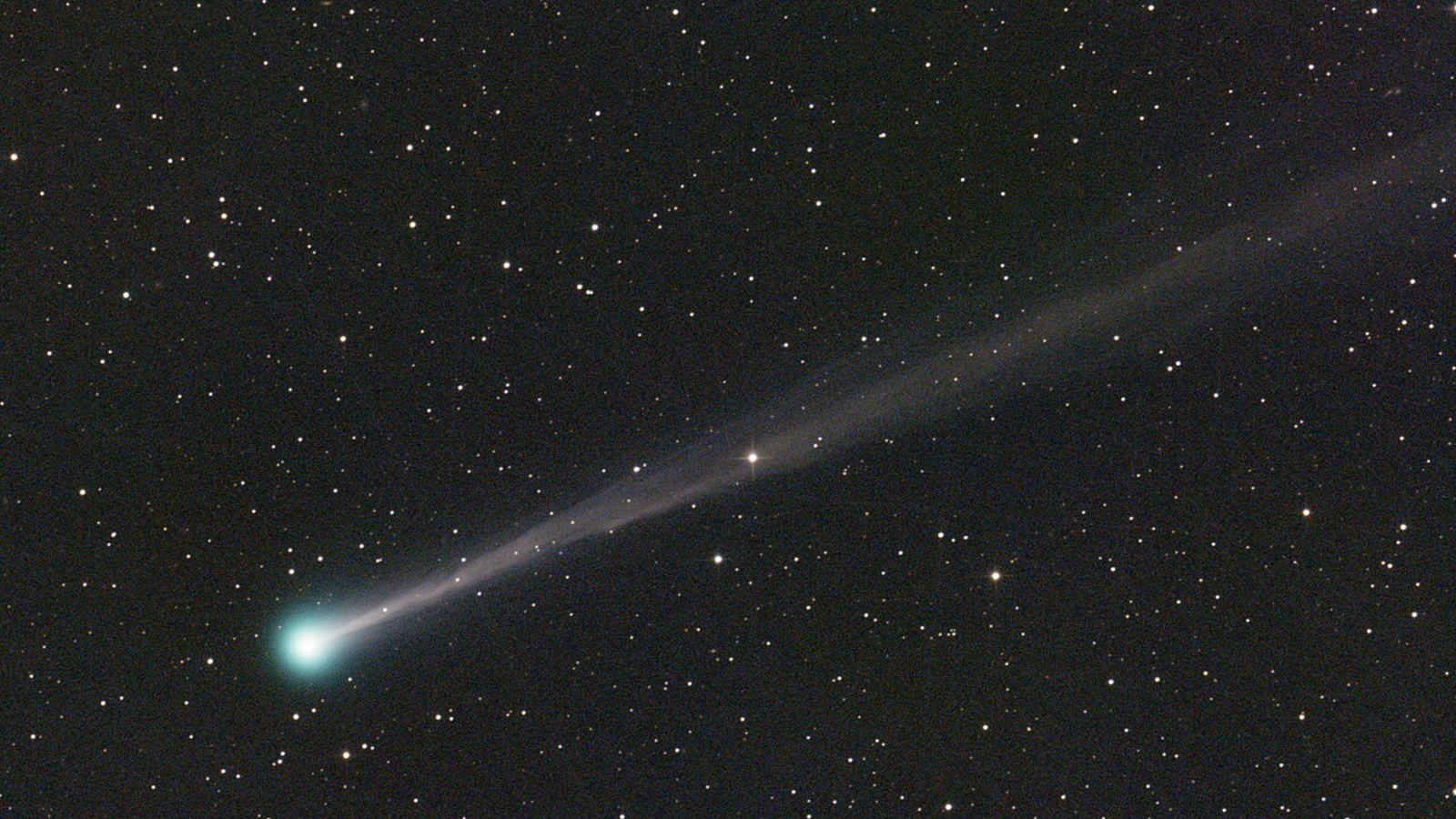
The comet was first discovered in September 2025, and some experts later suggested that it could become the most visible comet in 2026. So far, that prediction has held true, especially after its main competitor, Sungrazer Comet C/2026 A1 (MAPS), broke apart during a super-close approach to the Sun earlier this month before it had a chance to shine properly.
But there’s always the chance that a previously unknown comet will emerge and steal the show, like the interstellar comet 3I/ATLAS, discovered last July and one of the biggest space news stories of the year.
What to read next
“Fireball Season”
Fireball meteors occur when falling space rocks suddenly break apart due to surface distortion caused by friction with the atmosphere. This releases energy in the form of bright light, which can shine in different colors depending on the meteor’s chemical composition.
Fireballs are most likely to occur from February to April, also known as “bolide season,” when the number of exploding space rocks can increase by 10% to 30% compared to other times of the year, NASA said. This is likely due to the Earth’s position relative to the sun and other parts of the solar system. But experts still don’t fully understand why.
This year’s fireball season has been particularly eventful, with at least 10 large fireballs observed across the United States in March, the highest total for the month since 2012, according to AccuWeather.com. These included a shell-sized meteor that crashed through the roof of a Texas home and a rare daytime explosion that caused a powerful sonic boom over Ohio.
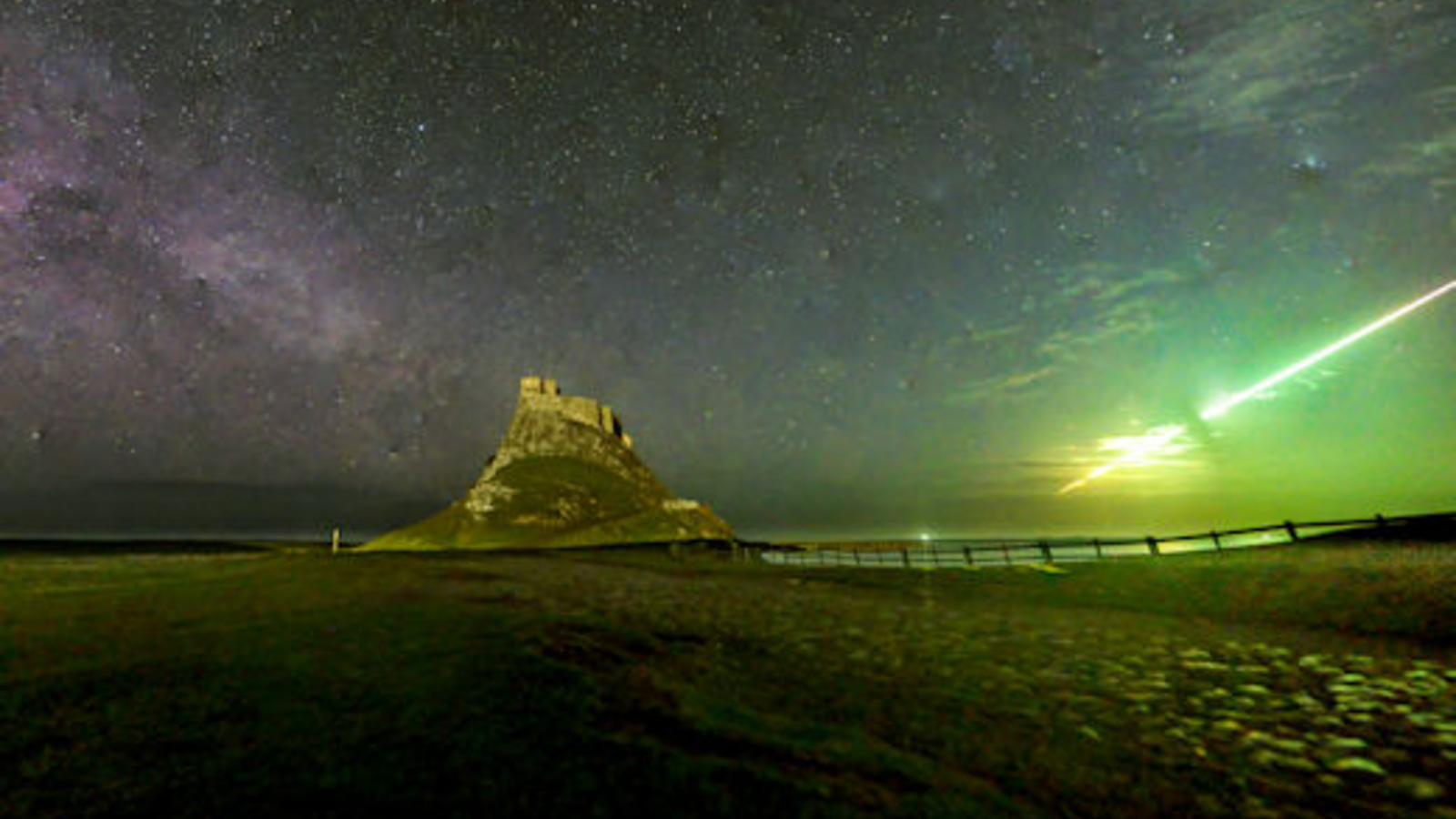
Last month, a bright fireball exploded over Europe, showering a German town with meteorites, one of which cut a football-sized hole in the roof of a house. And just last week, on April 13, a bright green fireball exploded in the North Sea and shattered into spectacular streaks over Lindisfarne Castle in northeast England.