


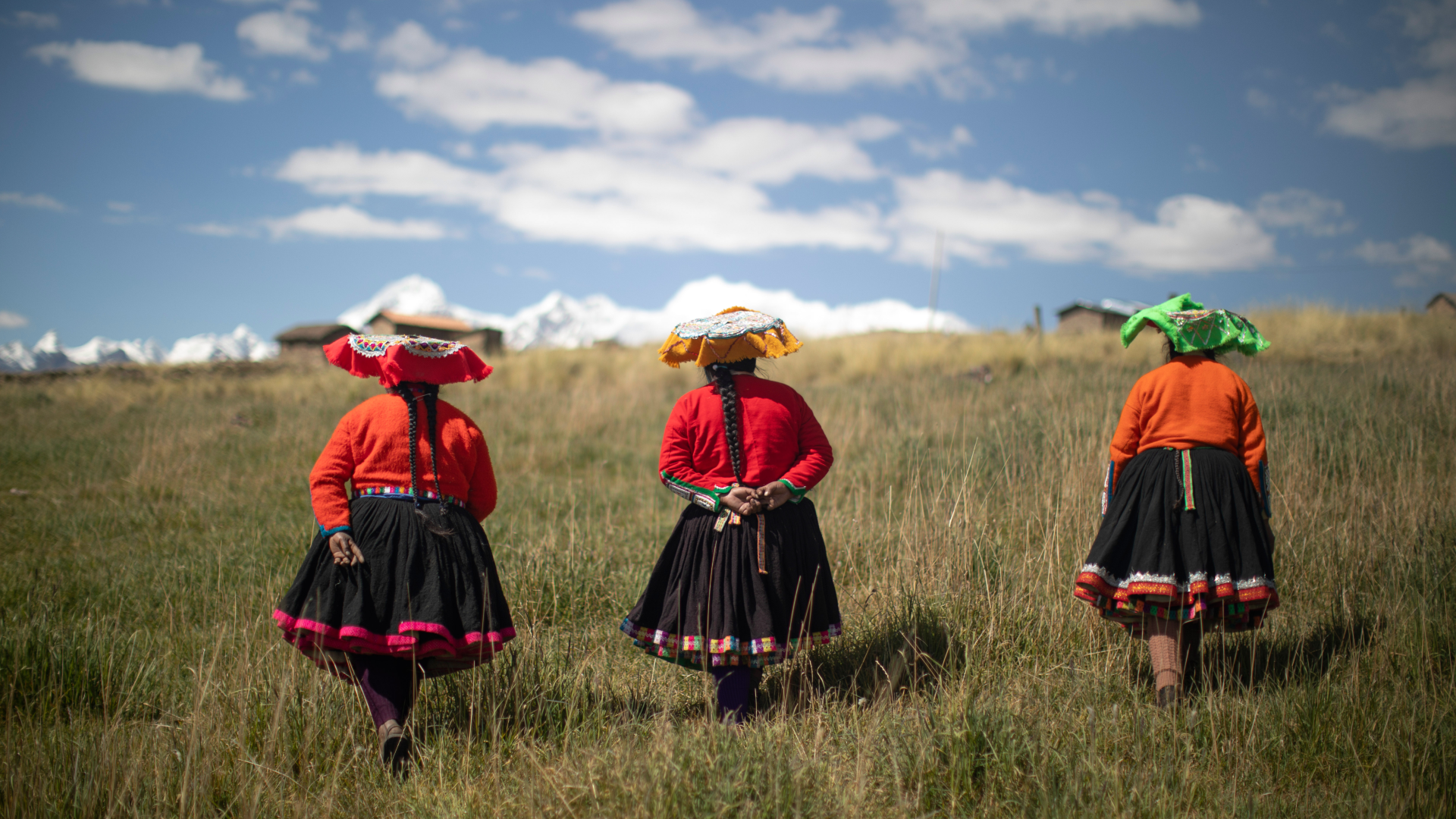
Humans migrated to South America in three distinct waves over thousands of years, a new large-scale analysis of Native American DNA reveals. The researchers also found that genes related to fertility, metabolism and immune responses help people adapt to their unique environments on the “last frontier” of human migration, the researchers said.
In a study published in the journal Nature on Wednesday (April 22), an international team of scientists detailed the results of the Native American Genome Diversity Project, which analyzed 128 genomes from people living in Argentina, Bolivia, Brazil, Colombia, Ecuador, Mexico, Paraguay, and Peru. The study included 45 populations and 28 language families. The researchers’ goal was to better understand when and how people arrived on the continent and the factors that shaped the genetics of these populations.
“Until now, only two Amazonian indigenous populations have been genetically characterized, making them poorly representative due to the specificity and isolation of their environment,” said study lead author Marcos Araújo Castro e Silva, a researcher at Spain’s National Research Council’s Institute of Evolutionary Biology (IBE) and Pompeu Fabra University in Spain, in a translated statement. The research team developed the study in collaboration with Indigenous communities and embedded its findings in Indigenous history, study co-author Tabitha Hünemeyer, director of the IBE Human Population Genomics Laboratory, said in a statement.
you may like
Analysis of 128 new genomes and 71 previously published indigenous genomes revealed two new findings and provided additional data supporting two previous findings.
Researchers have discovered that there are at least three waves in South America, one of which was previously unknown. Their genetic data suggests that the first wave of humans entered South America more than 9,000 years ago, followed by a distinct genetic lineage shared today by the Quechua people of Peru, who spread through Central America and into South America about 9,000 years ago.
But the genome also reveals a “previously unrecognized third dispersal into South America” by Mesoamerican-related populations, “probably occurring at least 1,300 years ago,” the researchers wrote in the study. While that period roughly coincides with the collapse of Mesoamerican cities like Teotihuacan, which declined between 650 and 750 AD, the genetic data do not point to a single event, Huenemeyer told Live Science in an email.
“What we are seeing is a more gradual and complex process, likely involving increased connectivity and gene flow between Mesoamerica, the Caribbean and South America over time,” Huenemeyer said.
Genetic analysis also revealed traces of a “ghost lineage” of ancient Asians that brought genes to both Native Americans and early Australians, who lived in a subregion of Oceania that includes modern-day Australia, New Zealand, and the Pacific Islands. This genetic signal, which researchers call Ipucuera (meaning “ancestor” in Brazil’s indigenous Tupi language), has been present at low but consistent levels in indigenous peoples for more than 10,000 years, the researchers said in the study. Ipicuela’s genetic signals have been found in modern humans, but no fossil evidence for this group has yet been discovered.
“Overall, both findings support the idea that humans in the Americas were more dynamic and complex than previously thought,” Huenemeyer said, “including contributions from ancestral populations not yet represented in the archaeological and fossil records.”
The American Indian Genome Diversity Project, which has nearly tripled the number of indigenous genomes that scientists have sequenced, also revealed that the indigenous peoples of the Americas are less genetically diverse than human populations on other continents, but they are also more genetically diverse than previously thought, including genes important for survival in the Americas’ new environments, such as the Amazon rainforest and the Andes.
What to read next
“Current genetic diversity is only a fraction of the original diversity. [European] “Colonization reduced Indigenous populations by 90 percent. Population collapse, fragmentation, and isolation, combined with epidemics, enslavement, and war, created major evolutionary bottlenecks and reduced Indigenous genetic diversity. Yet more than 9,000 years of genetic continuity have been observed in some regions,” Huenemeyer said in a statement.
The researchers wrote that some of the indigenous genes associated with immune function, energy metabolism, fertility, fetal development, and malaria protection revealed that a wide variety of biological processes in Native Americans were shaped by natural selection. Some of these genes were found to be shared with modern Australians, suggesting that some traits in ancient Ipicuela were actively selected for Native Americans to thrive in their new environment.
“Genetic information from Native Americans is essential because these populations have historically been underrepresented in genomic research, leaving significant gaps in our understanding of human diversity, evolution, and health,” study co-author Carlos Eduardo Amorim, an anthropologist at Arizona State University, said in a statement. “Our findings provide the most comprehensive view of the genomic diversity and evolutionary history of Native Americans to date.”
Araujo-Castro e Silva, M., Nunez, K., Ribeiro, MR, Passarelli-Araujo, H., Barbosa-Remes, R., Kimura, L., Saquena, P., Amorim, CEG, Bortolini, MC, Mir, JG, Guerreiro, JF, Barbieri, C., Hernández-Zaragoza, DI, Walter. , A., Chaudhry, T.N., Herrera-Macias, D., Lara-Riegos, J.C., del Castillo-Chavez, O., Zurita, C., Tito-Alvarez, A.M., Vázquez-Dominguez, E., Mu-Mezeta, Mayne, Torres-Romero, J.C., Aguilar-Campos, A., Serrano-Osuna, R., Parolin, M.L., Bravi, C.M., Ramallo, V., Bailet, G., Revollo, S., Sandoval, J.R., Fujita, R., Barquera, R., Santos, France, Comas, D., and Huenemeyer, T. (2026). The evolutionary history and unique genetic diversity of Native Americans. Nature. https://doi.org/10.1038/s41586-026-10406-w
How much do you know about the first people to reach the Americas? Find out with our First Americans Quiz!