
Turning CO2 from municipal waste into useful consumer products
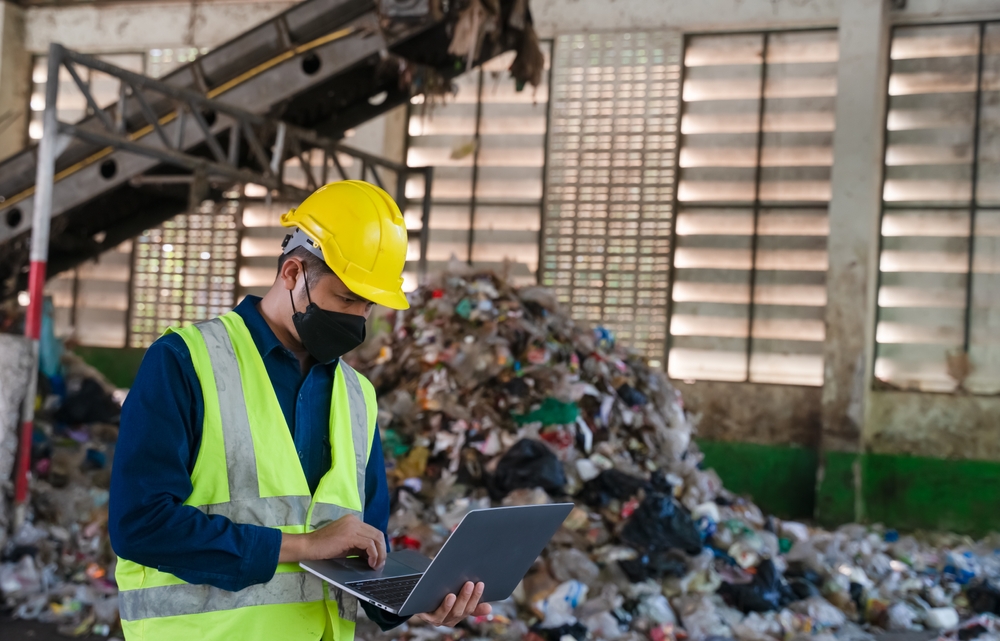
EU-funded researchers are converting carbon emitted from municipal waste into everyday household products, from detergents to leather.
European cities emit large amounts of greenhouse gases into the atmosphere. Waste incineration and sewage treatment, two important urban services, are among the largest contributors to urban CO2 emissions in the EU.
These systems are essential to public health and urban life, but they produce emissions that are difficult to eliminate completely. But what if you didn’t have to waste that CO2?
For an international group of researchers, urban carbon pollution presents an opportunity. We are collaborating on the EU-funded WaterProof initiative to develop ways to capture CO2 from these processes and convert it into formic acid. Formic acid is a simple and versatile chemical used in many industries.
This can convert emissions from waste incinerators and wastewater into detergent under the sink or even shoe leather.
Turn problems into resources
Tackling climate change is primarily focused on renewable energy, electrification, and increasing efficiency. However, some sources remain stubbornly difficult to eliminate.
“Some emissions are difficult to stop,” says Annelie Jongerius, an electrochemist and program manager at the Dutch chemical company Avantium, which is coordinating the study.
One option is to capture and store CO2 underground. But the Waterproof team is exploring more circular alternatives that keep carbon in use rather than locking it up.
“It would be even better if we could use that,” Jongelius said. “At the same time, we need alternatives to fossil raw materials for manufacturing chemicals.”
This challenge is particularly evident in facilities such as those operated by Dutch waste management company HVC, which operates two major waste incineration facilities in the Netherlands.
“We have to accept all the waste that society produces,” said Jan-Peter Born, waste-to-energy innovation manager at HVC. “There is no way to regulate CO2 emissions other than encouraging people to buy less and recycle more.”
HVC already captures some of the CO2 and sells it to greenhouse farmers, who use it to increase yields of crops such as tomatoes and cucumbers. However, this is only a partial solution.
“Most of the CO2 administered to the plants is released again through the roof of the greenhouse,” Vaughn explained. “From our legal perspective, this is delayed emissions. It is the farmers who achieve the emissions reductions because they avoid burning gas to produce CO2.”
Waterproof researchers aim to go one step further by turning captured carbon into a useful product that keeps it out of the atmosphere for long periods of time.
From CO2 to cleaning products
At the heart of WaterProof’s innovation is an electrochemical process that converts captured CO2 into formic acid using renewable electricity.
“This is one of the easiest conversions,” says Jongelius.
The electrical current stimulates a reaction in a special cell that reduces CO2 to formic acid. The system runs on renewable electricity and uses waste-derived carbon, reducing dependence on fossil-based raw materials.
This process may also have additional benefits. In an electrochemical cell, two reactions occur simultaneously, one at each electrode. Although the WaterProof team focused on converting CO2 to formic acid, they also considered combining this with a second reaction that produces hydrogen peroxide and related compounds.
These substances help break down stubborn contaminants in wastewater, such as pharmaceutical and pesticide residues. However, this part of the process is still in its early stages and has not been implemented in the current demonstration system.
The research team is testing CO2-derived formic acid in environmentally friendly cleaning products such as toilet and surface cleaners.
“It performs exactly the same as traditionally produced formic acid,” Jongerius said. “It’s the same molecule.”
In addition to cleaning, the project also explores the use of CO2-derived formic acid in leather tanning. Although this acid can be used on all types of leather, the team is currently working with Icelandic company Nordic Fish Leather to bring eco-friendly fish leather to market – a more sustainable alternative to traditional cow-based leather.
Scale up for real-world impact
The chemical reaction is promising, but scaling up is the next challenge.
Building on previous EU-funded research, the team is now working on developing a large-scale pilot unit in which multiple electrochemical cells can be stacked to increase the amount of CO2 that can be processed. If successful, it would pave the way for commercial-scale plants.
The modular design allows the system to adapt to a variety of sites, from sewage treatment plants to incinerators. The goal is to demonstrate a waterproof process in the summer of 2026 and show that a fossil fuel-free production chain can operate under real-world conditions.
Such systems could eventually be integrated into urban infrastructure, turning cities into hubs for circular chemical production rather than sources of emissions.
Recovering valuables from waste
The potential of the work being carried out goes beyond carbon recycling. Researchers are also studying how formic acid can be used to recover valuable materials from waste streams.
By combining this with other compounds, they are developing deep eutectic solvents, low-toxicity liquids that can dissolve and bind metals in waste and extract them.
Many valuable substances are found in incineration ash and wastewater sludge, including copper, lithium, cobalt and even small amounts of gold, all of which are important for modern technology and the green transition.
HVC already uses a mechanical process to recover the metal, separating heavy particles from the ash in a process similar to gold screening. However, this produces a mixed metal stream of low value. New solvents may allow for more precise separations.
“These eutectic solvents can be tailored to target specific metals,” Born said. “This means you can recover individual materials rather than mixtures, increasing their value.”
But economic realities remain a barrier. Gold is the only recovered metal that has a decent price, Bourne explained. For many other resources, including rare earths, market prices are still too low to justify the costs.
This raises broader questions about policy and priorities, especially as demand for critical materials continues to grow. These include how much society is willing to subsidize recovery from waste, and whether strategic values should be prioritized over purely market-driven decisions.
close the loop
This kind of ‘waste-to-resource’ thinking is gaining momentum across Europe. New EU rules planned for 2026 aim to make recycled materials more widely available and more widely used.
If successful, it could help turn circular ideas like the one behind waterproofing into everyday reality, supporting Europe’s ambition to lead the world in circular production by 2030.
Researchers are bringing together multiple elements of that vision into a single system by linking carbon capture, chemical production, water treatment, and material recovery.
For Jongerius, this concept is both practical and symbolic.
“If you take the CO2 out of the wastewater, turn it into a product, use that product to clean the toilets, and put it back into the wastewater system, you have a complete loop,” she said. “This is the ultimate example of a circular economy.”
This article was originally published in Horizon, EU Research and Innovation Magazine.
Source link

