
ESA expands scout mission program with two EO satellites
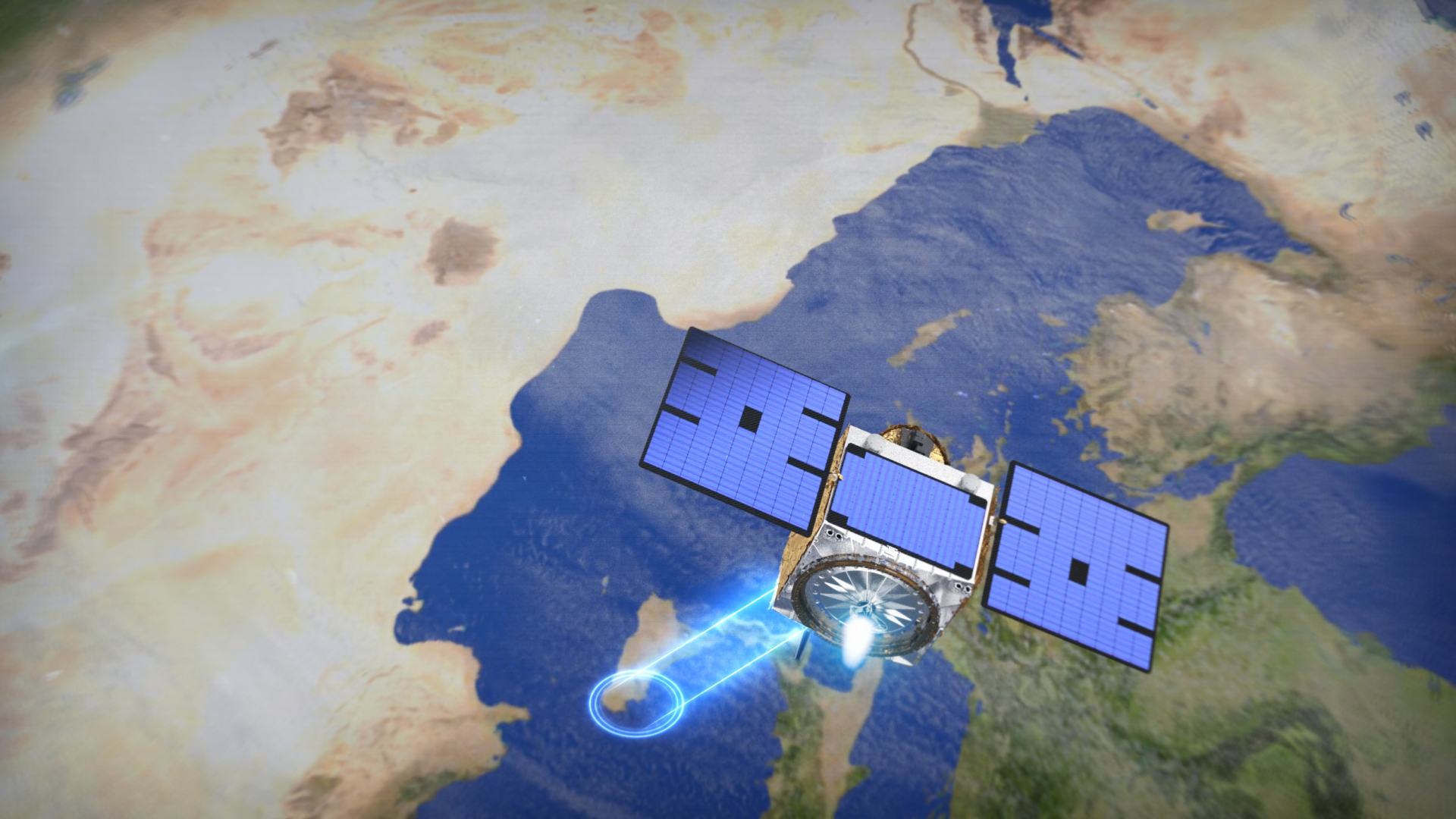
The European Space Agency (ESA) has selected two new Earth observation scout missions, Hibidis and SOVA-S, to join its growing fleet of low-cost scientific satellites.
The mission was approved by ESA’s Earth Observation Program Committee following a 10-month evaluation process and will focus on biodiversity monitoring and atmospheric research.
Hibidis will use hyperspectral imaging techniques to study ecosystems hidden beneath forest canopies, and SOVA-S will investigate gravity waves in the upper atmosphere.
Together, these missions strengthen ESA’s strategy to use agile satellite programs to address climate, environmental and Earth system science challenges.
The result is a further expansion of ESA’s fast-paced Scout mission program, which is designed to deliver scientific data more quickly and at lower cost than traditional large-scale satellite projects.
The two satellites currently participate in existing Scout missions including HydroGNSS, NanoMagSat, and Tango.
Commenting on the new mission, Simonetta Celli, ESA’s Earth Observation Program Director, said:
“These missions demonstrate how by acting quickly, embracing innovation and empowering new ideas, agility and creativity can accelerate progress and deliver impactful science and technology in an incredibly short period of time.
“Nevertheless, the decision to greenlight Hibidis and SOVA-S was not taken lightly and the final decision was made after a rigorous evaluation of the four concepts. We congratulate the Hibidis and SOVA-S teams and now look forward to bringing them to fruition.”
ESA accelerates Scout mission program
ESA created the Scout Mission Initiative as part of its FutureEO program to develop small, low-cost satellites capable of delivering high-value scientific research.
Unlike the large-scale Earth Explorer mission, the Scout satellite is designed with a shorter development cycle and a more flexible engineering approach.
The program reflects a broader “New Space” movement that prioritizes rapid innovation, technology miniaturization and lower mission costs.
ESA says its goal is to test new observation methods while producing data that has important scientific and operational value.
Recent Scout missions already in development include HydroGNSS, which will launch in late 2025 to monitor hydroclimatic variables, and Tango, which is designed to track industrial emissions of methane, carbon dioxide, and nitrogen dioxide.
Hividis targets biodiversity hidden beneath the forest canopy
In the newly selected Scout mission, Hividis will focus on measuring biodiversity in the forest understory, an area that remains difficult to observe accurately from space.
The name stands for Hyperspectral Biodiversity Scout, and the satellite will carry a hyperspectral imager that can observe the Earth’s surface from three different viewing angles. This approach allows scientists to distinguish between the dense forest canopy and the ecosystem beneath it.
Researchers hope the mission will improve measurements of essential biodiversity variables (EBVs), which are important for understanding ecosystem health, species distributions, and environmental change.
Italian aerospace company SITAEL was selected as the prime contractor for the mission.
Scientists believe this data could improve conservation planning and deepen our understanding of how forests respond to climate change and human activity.
SOVA-S studies atmospheric gravity waves
The second of the newly approved Scout missions, SOVA-S, will investigate atmospheric gravitational waves and their impact on Earth’s upper atmosphere.
The mission, which stands for “Satellite Observation of Waves in the Atmosphere – Scout,” will use a shortwave infrared imager to record daily near-global observations at altitudes between 80 km and 120 km.
The satellite measures “airglow” in the atmosphere, a faint amount of natural light produced by chemical reactions in the atmosphere.
By analyzing changes in this glow, scientists can better understand the gravitational waves that transport energy from the lower atmosphere to the upper atmospheric layers.
Although invisible to the naked eye, atmospheric gravity waves play a major role in atmospheric circulation and climate behavior. Current climate models still struggle to fully account for its effects.
ESA says data from this mission could improve climate predictions, enhance space weather predictions and improve the accuracy of Global Navigation Satellite System (GNSS) positioning used in sectors such as aviation.
Strengthening Europe’s Earth Observation Portfolio
The expansion of ESA’s Scout mission program highlights a growing shift in space science towards smaller, faster and more specialized satellite systems.
Rather than relying solely on billion euro flagship missions, ESA is increasing its investment in targeted spacecraft that can answer focused scientific questions in shorter time frames.
With Hibidis and SOVA-S now in development, ESA’s Scout mission portfolio continues to expand its role in monitoring biodiversity, climate systems, and atmospheric processes from orbit.
Source link

