
My password is about to disappear. Biometric security will replace it.
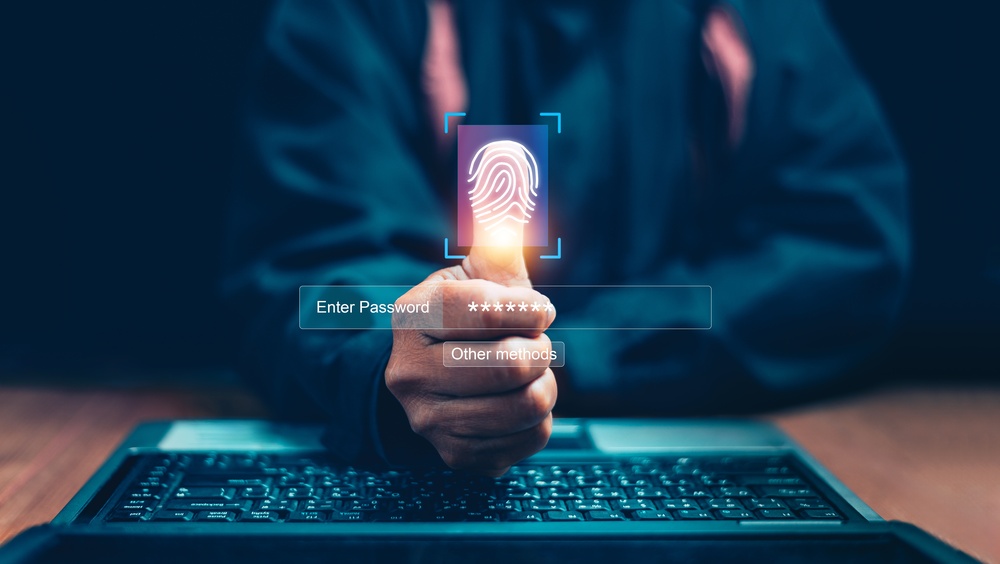
For decades, passwords have been the foundation of digital security. From online banking and email accounts to work systems and social media platforms, passwords have become the default way to prove who you are online.
Cybersecurity experts now believe this model is breaking down.
Rising levels of phishing, credential theft, ransomware attacks, and AI-powered fraud are exposing the limitations of password-based security systems designed for a simpler internet age. In response, technology companies, banks, and governments are accelerating the transition to biometric security, which uses fingerprints, facial recognition, voice recognition, and behavioral analysis to verify identity.
This shift is already changing the way people access devices, financial services, and digital platforms. Smartphones unlock with a glance instead of a PIN. Airports are using facial recognition gates to replace manual document checks. Banks are increasingly relying on biometrics to detect fraud.
Proponents argue that biometric security provides a more seamless and secure alternative to passwords. Critics warn that it could also create new privacy risks in a world where personally identifying data is becoming one of the most valuable forms of information.
What is becoming increasingly clear is that the era of passwords may be entering its final stages.
Why my password stopped working
Traditional password systems were built on the simple premise that users can create and remember unique secret credentials for each service they use.
That assumption has long since collapsed.
Most people today manage dozens or even hundreds of online accounts. As a result, password reuse becomes widespread, creating significant vulnerabilities if credentials are compromised in a data breach. Cybercriminals routinely exploit these breaches through automated “credential stuffing” attacks that test stolen passwords across multiple platforms.
Phishing attacks have also become dramatically more sophisticated. Scam emails, fake login pages, and social engineering schemes are increasingly targeting users directly rather than attacking the systems themselves. Artificial intelligence is accelerating this trend, allowing fraudsters to generate more convincing fake messages, cloned voices, and spoofing attempts at scale.
Two-factor authentication systems based on text messages have also revealed weaknesses, particularly through SIM swapping attacks and phishing campaigns aimed at intercepting verification codes.
The cybersecurity industry has spent years improving password security through stronger complexity rules, password managers, and multi-factor authentication. But many experts now argue that the core problem remains: passwords rely heavily on human behavior.
Cybersecurity analysts frequently point out that “humans are consistently the weakest link in authentication systems.” Weak passwords, reused credentials, and phishing risks continue to drive the majority of successful cyber attacks around the world.
The rise of biometric security
Biometric security attempts to solve this problem by moving authentication from what the user knows to who the user is.
Instead of entering a password, biometric systems verify physical or behavioral characteristics, such as:
Fingerprints Facial features Iris patterns Voiceprints Typing movements Device interaction patterns
This technology has rapidly moved from professional security environments into mainstream consumer life.
The introduction of smartphone facial recognition systems has standardized biometric authentication for millions of users. Devices from companies like Apple, Samsung, and Google now routinely use fingerprint scanners or facial recognition as their primary login method.
Financial institutions are also proactively implementing biometric authentication systems as fraud prevention becomes a growing priority. Many banking apps already use fingerprint or facial recognition, but some institutions are experimenting with voice recognition systems for customer support and transaction authorization.
Biometric gates are increasingly replacing manual passport checks at airports. Government and border officials claim the system will improve efficiency and security by automating the identity verification process.
Behind much of this change is simple math. This means biometric identifiers are much harder to steal, reuse, and share than passwords.
Stolen passwords can be copied endlessly. Fingerprints and facial scans are much more difficult to reproduce at scale.
AI fraud is accelerating that change
The rise of generative artificial intelligence is further accelerating the shift away from passwords.
Cybersecurity researchers warn that AI tools are making fraud more convincing and more scalable than ever before. Attackers can now generate realistic phishing emails, clone audio, and create deepfake videos impersonating executives, employees, and family members.
This has raised concerns about traditional identity verification systems.
In an environment where personal information is widely available online and AI systems can convincingly mimic human communication, knowledge-based authentication such as security questions and passwords are becoming increasingly vulnerable.
Biometric security is increasingly seen as one of the few scalable ways to strengthen identity verification against AI-powered fraud.
Many technology companies are now promoting passwordless authentication systems built around biometrics and cryptographic passkeys. Instead of remembering credentials, users authenticate through their trusted devices using facial recognition, fingerprints, or hardware-based verification.
Proponents argue that this approach could dramatically reduce phishing attacks because users would no longer submit passwords that could be intercepted or stolen.
This change has become one of the clear strategic priorities for the entire cybersecurity industry.
privacy dilemma
However, the rise of biometric security has also raised serious concerns about privacy and surveillance.
Unlike passwords, biometric data is persistent. If your password is compromised, it may be changed. If a facial scan, fingerprint, or iris pattern is stolen, the results can be much harder to reverse.
Privacy advocates have warned that large biometric databases could become attractive targets for hackers, governments and companies looking to collect sensitive personal information. There are also growing concerns about how facial recognition systems will be implemented in public spaces, workplaces, and law enforcement.
Critics argue that biometric technology has the potential to blur the line between authentication and surveillance.
For example, facial recognition systems could improve airport efficiency and smartphone security, while expanding the ability of governments and businesses to monitor individuals in real time.
There are also concerns about bias and accuracy. Research shows that the performance of some facial recognition systems is uneven across demographic groups, raising questions about their fairness and reliability in high-stakes situations such as police and border patrol.
Regulators are increasingly seeking to balance the security benefits of biometrics with civil liberties concerns. The European Union has proposed stricter rules governing the use of AI-powered biometric systems, while privacy regulators in several countries are scrutinizing how companies store and process biometric data.
Beyond fingerprints and faces
The next generation of biometric security could become even more discreet.
Many cybersecurity companies are investing in behavioral biometrics, a system that continuously analyzes how a user interacts with a device, rather than relying on a single login event. These tools may track:
Typing speed Touchscreen pressure Mouse movements Navigation habits Gait patterns Voice rhythms
The goal is to create a continuous authentication system that can detect suspicious behavior even after a user has logged in.
Proponents argue that behavioral biometrics has the potential to make privacy protection more seamless and adaptive. Critics counter that continuous behavioral surveillance introduces a new layer of data collection into an already expanding digital ecosystem.
At the same time, advances in AI are creating a technological arms race between authentication systems and attackers seeking to circumvent them. Deepfake technology and synthetic biometric fraud are already forcing companies to develop stronger “biometric detection” systems designed to ensure that a real person, rather than an AI-generated imitation, is present during authentication.
The future of personal information protection
Moving away from passwords is no longer just a theory.
Technology companies, financial institutions, and governments increasingly see biometric security as central to the future of digital identity protection. The convenience factor alone is powerful. People are more likely to use security systems that don’t require them to remember complex passwords or carry physical tokens.
But this shift also reflects a deeper reality about the modern Internet.
As cybercrime becomes more sophisticated and AI-powered impersonation tools become more persuasive, traditional methods of proving one’s identity online are under increasing strain. Biometrics offer a potential solution because they closely tie authentication to unique human characteristics rather than reusable information.
The challenge now is to ensure the security of these systems is improved without creating new forms of surveillance, exclusion, or privacy risks.
Passwords don’t disappear overnight. However, that advantage is clearly waning.
The next era of cybersecurity is likely to increasingly depend on who people are, rather than what they know.
Source link

