
Creator strategies that work even on an AI-saturated internet
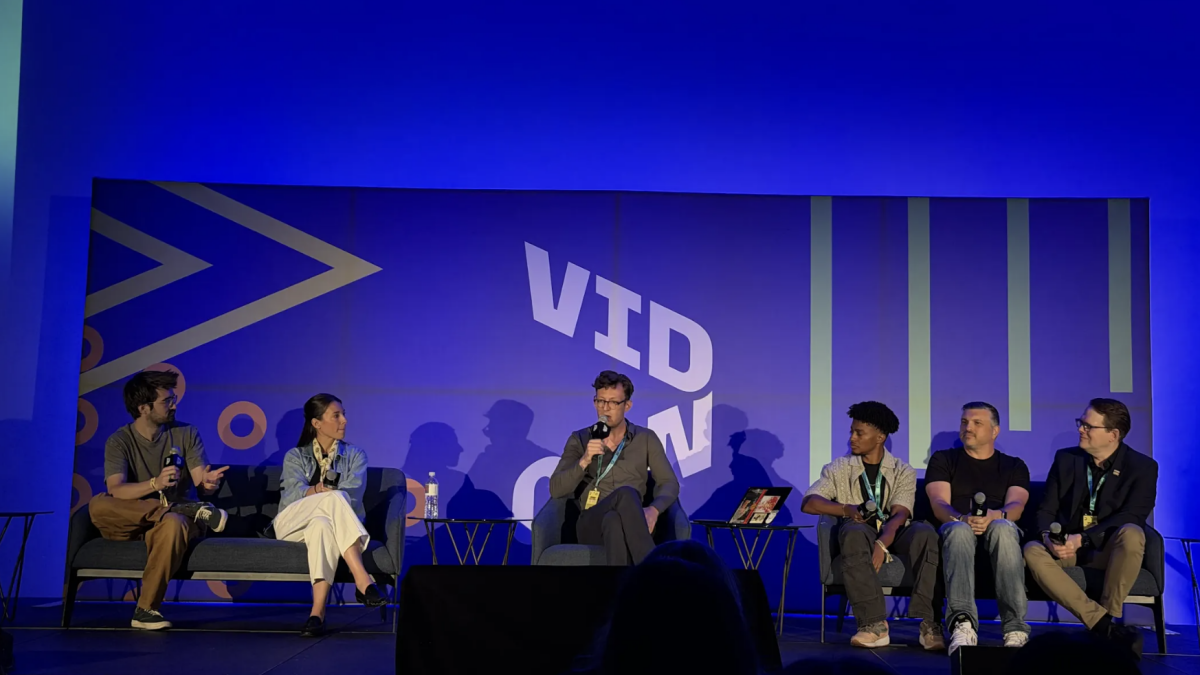
Creators are facing new questions as generative AI makes it easier than ever to create videos, images, music, and entire social media accounts with just a few prompts. How can you stand out when everyone suddenly has the tools to create content?
This question was at the center of a VidCon panel titled “AI, Reliability, and the Slop Problem: What Can We Actually Do Now?” Rather than treating AI as an existential threat, the panel, which included creators, investors, media executives, and labor leaders, argued that the creators most likely to succeed are those who lean into qualities that AI still struggles to replicate: authentic expertise, creative intent, and real community.
What is AI Slop?
The conversation started with a deceptively simple prompt: Please define “AI slop.” The answer wasn’t as simple as you might expect.
For Duncan Crabtree-Ireland, SAG-AFTRA’s national executive director and chief negotiator, slop is content that lacks “human creativity and human values.” The legendary Jay, whose cinematic editing has won him millions of followers online, described the film as a work that was “completely devoid of purpose”. Venture capitalist Megan Lightcap argued that slop doesn’t even need to be generated by AI. Humans can rely so heavily on AI tools that the results simply feel “soulless,” she said.
Linguist and creator Adam Aleksik took the definition even further.
“The better question is not what is slop, but in what circumstances slop is produced,” he said. His answer wasn’t AI itself. It was the incentive structure of the internet.
Platforms value speed, scale, and engagement. AI simply makes it dramatically easier to create content that satisfies these incentives, flooding our feeds with material designed to perform rather than connect.
VidCon 2026: The Internet’s Biggest Weekend Live Updates
Several speakers argued that AI is not inherently the problem. Crabtree-Ireland cited musicians experimenting with AI during the creative process as an example of technology that supports artistry, rather than replacing it. His concern wasn’t about artists using AI to amplify their work, but about people using it to impersonate creators, replicate caricatures, and churn out derivative content that overwhelms platforms.
For creators wondering how to compete, the panel had a surprisingly optimistic answer.
Create work that others could not create
The legendary Jay argued that as AI-generated content becomes more and more common, it will become easier, not harder, to recognize true original work.
Mashable Trend Report
“When something really special comes out of that kind of ordinariness, it really lowers the foundation for the diamond in the rough to shine above,” he said.
VidCon Hall of Fame Award: Markiplier and Trailblazers Receive the Award with Emotions
Alexik cautioned against chasing authenticity just because viewers perceive it as valuable. He argued that it creates a different performance. Instead, they encouraged creators to follow their own interests instead of optimizing for what the algorithm currently has.
“Follow your natural inclination to do what you want to do,” he said. “It’s both the actual real thing and the weird pseudo-real thing that you can smell from a mile away.”
Panelists also suggested that creators may need to collectively rethink how they measure success. As bots, engagement farming, and AI-generated accounts proliferate across social platforms, likes, views, and comments are becoming less and less reliable.
Instead, Lightcap encouraged creators to focus on a signal that’s much harder to fake: Would I leave my house to attend an event? Will they pay for the product? Are they willing to be part of a real community?
Keith Soljacic, executive vice president and head of innovation at Publicis Media, echoed that idea from a business perspective. He encouraged creators to diversify their revenue streams through products, live experiences, and businesses that won’t disappear even if recommendation systems change overnight, rather than relying entirely on platform algorithms.
“The internet always wins,” he said. “If you can diversify, you can protect yourself.”
Protecting creators themselves was also a recurring theme.
Crabtree-Ireland highlighted continued efforts to strengthen legal protections for AI-generated likenesses, citing bills such as the Anti-Fake Act, which would give people greater control over the use of their faces, voices and likenesses online. He also urged creators to take advantage of platform tools designed to detect fraudulent AI-generated content before it spreads.
Although the discussion focused on AI, the panel repeatedly returned to more familiar truths about the internet: changing technology, evolving incentives, and shifting algorithms.
Creators that survive tend to be those who offer something that can’t be easily automated, have a unique perspective, expertise gained through experience, and a community built on trust rather than clicks.
As generative AI continues to lower the barrier to content creation, these human qualities could become creators’ biggest competitive advantage.
Mashable is reporting live from VidCon 2026 in Anaheim. Follow our coverage of creator interviews, panel highlights, the biggest moments from the convention floor, and more.
Source link

