
Boise State researchers develop portable PFAS detector
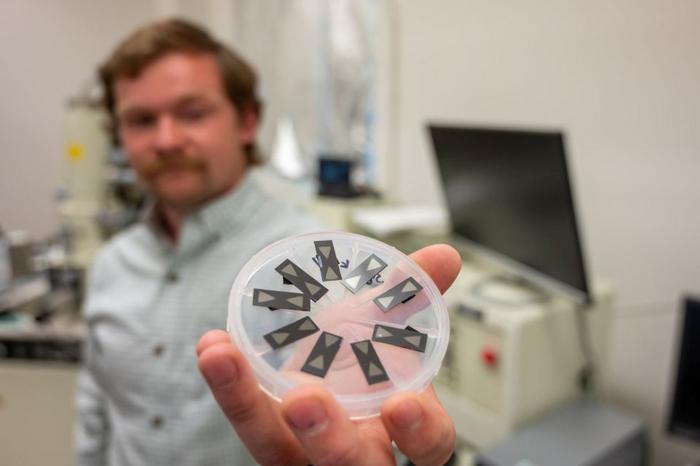
A team led by researchers at Boise State University and Idaho-based Pearl Hill Technologies LLC has developed a portable PFAS detector that can identify permanently toxic chemicals in water samples within minutes.
The device was developed by electrical engineering professor Chris Campbell and Pearl Hill Technologies president Bamidele Omotowa with support from the National Institutes of Health (NIH) Small Business Technology Transfer Grant.
The new system, known as ENVIR-OGT, is designed to detect PFAS compounds at concentrations as low as parts per trillion, meeting current U.S. Environmental Protection Agency (EPA) drinking water standards.
Unlike traditional clinical tests that cost hundreds of dollars and take weeks to complete, handheld devices provide near real-time results directly at the testing site.
This breakthrough could revolutionize the way governments, utilities, and manufacturers monitor water pollution.
By reducing the cost and complexity of testing, PFAS detectors have the potential to allow communities to more quickly identify PFAS contamination and respond before the contamination spreads to public water systems.
Growing need for PFAS detection technology
PFAS stands for per- and polyfluoroalkyl substances, and they are synthetic chemicals used in a wide range of products, from nonstick cookware and waterproof clothing to food packaging and industrial manufacturing.
Often referred to as permanent chemicals, these do not easily break down in the environment and can accumulate in soil, water, and the human body over time.
Health researchers have linked some PFAS compounds to serious medical conditions, including cancer, fertility problems, developmental delays in children, and weakened immune systems.
Increasing concerns about exposure have led regulatory authorities around the world to tighten monitoring requirements for drinking water and industrial waste.
Despite the urgency, testing remains difficult and expensive. Current EPA-approved methods rely on sophisticated laboratory equipment such as liquid chromatography-mass spectrometry systems.
A single test costs about $300 and results can take several weeks to return.
How the new PFAS detector works
The ENVIR-OGT system takes a different approach. Portable PFAS detectors use a combination of specially designed transistors and machine learning algorithms to identify chemical signatures within water samples.
Researchers say the device can detect two of the most highly regulated PFAS compounds, PFOS and PFOA, at trace levels that meet current federal safety standards.
The technology also demonstrated 97% accuracy in identifying the ultrashort-chain PFAS chemical PFPrA.
Because the device can be used directly in rivers, sewage treatment plants and industrial facilities, researchers believe it could dramatically expand access to testing.
Utilities, environmental authorities and manufacturers may be able to conduct regular on-site monitoring without sending samples to specialized laboratories.
A chance discovery sparked innovation
The origins of the PFAS detector began unexpectedly within Campbell’s laboratory.
An engineering student working with transistor technology noticed unusual fluctuations during an experiment. Researchers later realized that the device reacted to chemicals in human breath.
This observation led the team to investigate whether the same transistor technology could detect harmful substances in water.
Boise State graduate student Jacob Jackson became the first researcher to integrate machine learning into the detection process, allowing the system to differentiate between specific compounds.
The research group spent several years honing their technology at the Idaho Microfabrication Laboratory in Boise, ultimately turning their early-stage experiments into a commercially viable environmental monitoring platform.
NIH funding supports commercial development
This project was supported through an NIH Business Technology Transfer Award administered by the National Institute of Environmental Health Sciences. Boise State University also received a $101,000 research subaward related to its commercialization efforts.
The University’s Office of Technology Transfer supported researchers with patent protection and industry partnerships to help move the technology beyond the laboratory stage.
Stake increases as Idaho expands semiconductor business
The timing of the PFAS detector development is especially important for Idaho’s growing semiconductor sector.
Semiconductor manufacturing is considered one of the major industrial sources of PFAS contamination, as PFAS are widely used during the chip manufacturing process.
Boise State researchers plan to use funding from the UPWARDS initiative to begin testing the device in semiconductor wastewater systems in 2026.
The goal is to help industry and local governments develop more effective pollution monitoring and mitigation strategies.
Additional research involving Boise State chemistry and environmental science teams is also underway to better understand how the detector performs under complex real-world water conditions.
As PFAS regulations tighten across the United States, affordable field testing technology becomes increasingly important.
A PFAS detector developed by Boise State could provide a faster, cheaper and more accessible way to monitor one of the world’s most persistent environmental threats.
Source link

