

Close Menu
  • Home
  • Identity
  • Inventions
  • Future
  • Science
  • Startups
  • Spanish
What's Hot

$13.74 million hack shuts down authorized Grinex exchange after tip-off

Mirai Variant Nexcorium exploits CVE-2024-3721 to hijack TBK DVR and attack DDoS botnet

Stripe and Airwallex came close enough to an acquisition, but now they’re chasing each other

Facebook X (Twitter) Instagram
  • Home
  • About Us
  • Advertise with Us
  • Contact Us
  • DMCA
  • Privacy Policy
  • Terms & Conditions
  • User-Submitted Posts
Facebook X (Twitter) Instagram
Fyself News
  • Home
  • Identity
  • Inventions
  • Future
  • Science
  • Startups
  • Spanish
Fyself News
Home » Bright green fireball meteor spotted exploding over Lindisfarne Castle, site of famous Viking raid in Britain
Science

Bright green fireball meteor spotted exploding over Lindisfarne Castle, site of famous Viking raid in Britain

By April 16, 2026No Comments4 Mins Read
Share Facebook Twitter Pinterest Telegram LinkedIn Tumblr Email Copy Link
Follow Us
Google News Flipboard
Share
Facebook Twitter LinkedIn Pinterest Email Copy Link

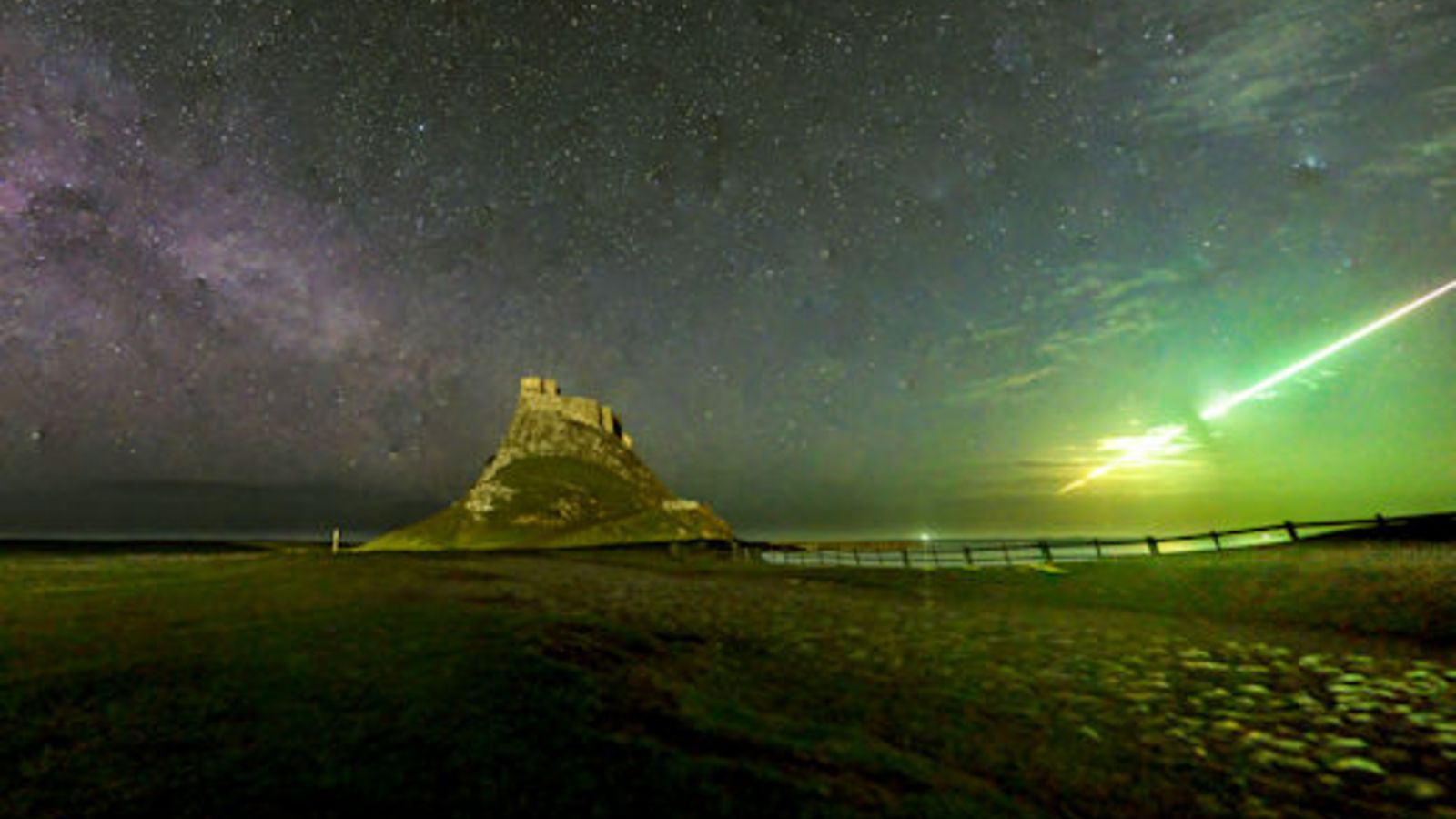
A photographer has captured a bright green fireball streaking across a starry sky above an iconic castle and famous Viking raid site in northeast England after a meteorite smashed apart as it entered Earth’s atmosphere.

A meteorite exploded over the North Sea off the east coast of England just after midnight local time on Monday (April 13). The space rock, which was traveling at about 20,000 miles per hour (about 32,000 km), was small, probably weighing about 0.4 ounces (12 grams), but it left a big impression, according to the BBC.

At least 230 people from all over the UK, as well as parts of Belgium, the Netherlands and Germany, reported seeing the fireball to the American Meteor Society, a nonprofit organization that tracks meteor sightings around the world. This streak of light was also captured by multiple doorbell cameras (see below) and lasted up to seven seconds, according to eyewitness reports.

you may like

Photographer Ian Sproat witnessed the fireball from Lindisfarne, also known as ‘Holy Island’. Lindisfarne is a small landmass off the coast of Northumberland that is cut off from the mainland at high tide. It was the site of a brutal Viking raid in 793, when the raiders sacked the monastery and killed or enslaved many of the Christian monks who lived there.
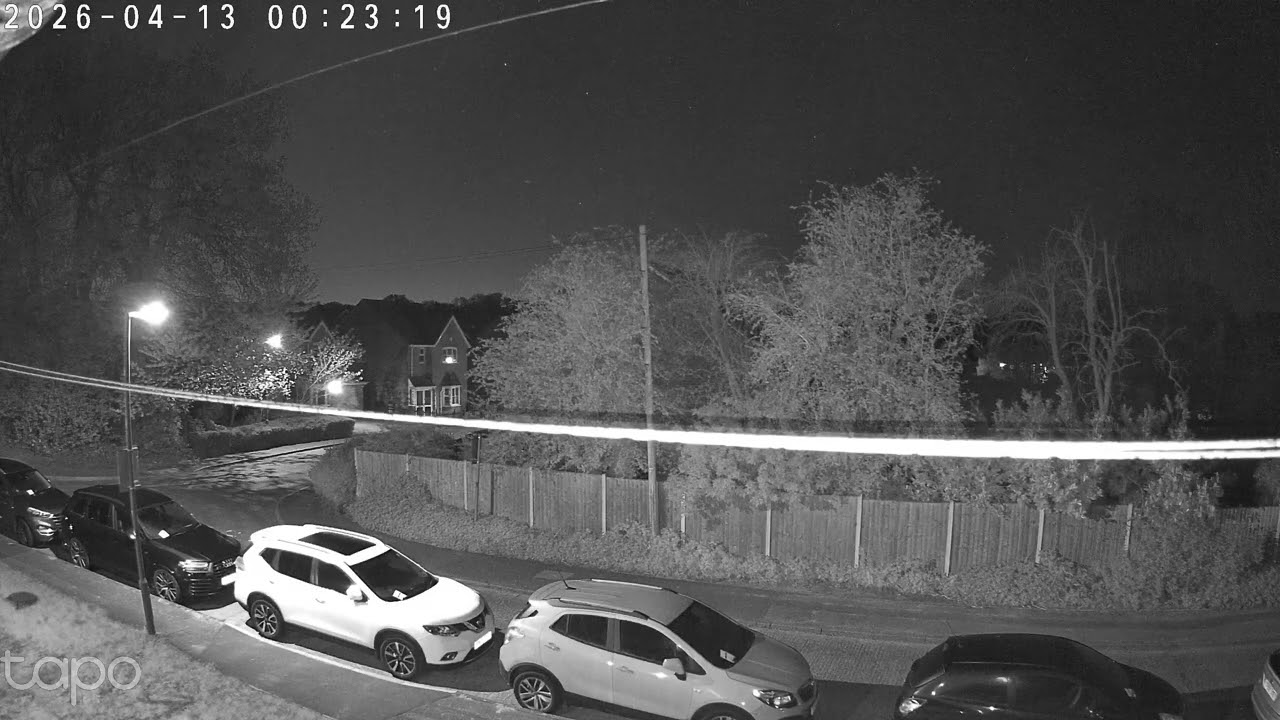
Catch AMS Event #2685-2026 from Epsom GB – YouTube
Catch AMS Event #2685-2026 from Epsom GB - YouTube

watch on

Sproat and his friends were trying to photograph the starry swath of the Milky Way above Lindisfarne Castle (built in the 16th century, long after the historic raid) when a fireball blazed overhead, allowing them to capture time-lapse images of the meteor.

“We all screamed when it happened,” Sproat told Spaceweather.com. “I was so excited!”

“Fireball Season”

Fireball meteors occur when falling space rocks suddenly break apart due to friction with the atmosphere, releasing energy in the form of bright light. It can have multiple potential shades based on the chemical composition of the rock itself. In this case, the meteor’s green glow is likely the result of magnesium and nickel, according to Spaceweather.com.

Get the world’s most fascinating discoveries delivered straight to your inbox.

In some cases, fragments of these exploding space rocks survive to reach the ground and become meteorites. But even if small fragments of modern meteorites had remained intact (which is unlikely), they would have fallen into the ocean.
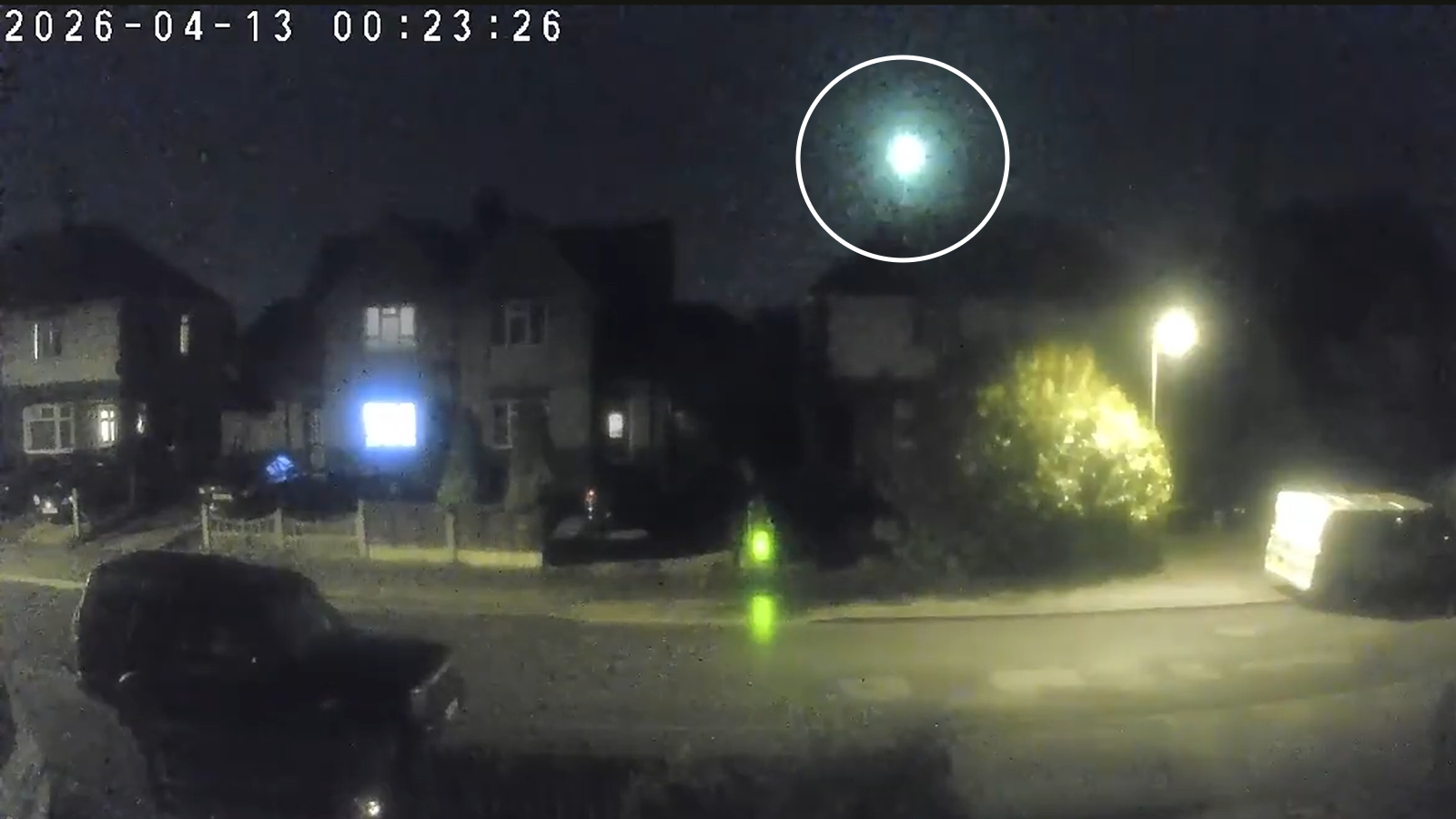
Screenshot of a doorbell recording that shows a bright green flash in the night sky above a house

The fireball was captured by multiple doorbells and security cameras, including this one in Warsop, Nottinghamshire. (Image credit: Joanna Staniforth, via AMS)

Some fireballs can create sonic booms so loud that they can be heard for miles, but no such noise was reported during this event.

Monday’s emerald explosion was one of several similar phenomena seen around the world in recent months, including a space rock crashing through the roofs of some people’s homes. March was particularly eventful. According to an X post on AccuWeather.com, at least 10 large fireballs have occurred in the United States in the last month. This is the highest monthly total since 2012. These include a shell-sized meteor crashing through a roof in Texas and a rare daytime eruption in Ohio.

Last month, a bright fireball exploded over Europe, showering German towns with meteorites, some of which punched holes the size of footballs in the roofs of houses.

It is not unusual to see many fireballs at this time of year. According to NASA, the number of fireballs between February and April, also known as “bolide season,” can increase by 10% to 30% compared to other times of the year. This is likely due to the Earth’s position relative to the sun and other parts of the solar system.

But researchers still don’t fully understand why or how this happens. (A similar trend may occur in the Southern Hemisphere between September and November, but this is more difficult to prove because fewer people witness fireballs.)


Source link

#Biotechnology #ClimateScience #Health #Science #ScientificAdvances #ScientificResearch
Follow on Google News Follow on Flipboard
Share. Facebook Twitter Pinterest LinkedIn Tumblr Email Copy Link
Previous ArticleEverything we like is awesome
Next Article Newly discovered PowMix botnet uses randomized C2 traffic to attack Czech workers

Related Posts

The Colorado River may have pooled and overflowed to form the Grand Canyon, solving a long-standing mystery – but not everyone agrees

April 16, 2026

Northern lights could be visible in several U.S. states on Friday and Saturday as a giant hole opens in the sun’s atmosphere

April 16, 2026

Hackers used AI to steal hundreds of millions of Mexican government and civilian records, one of the largest cybersecurity breaches ever

April 16, 2026
Add A Comment
Leave A Reply Cancel Reply

Latest Posts

$13.74 million hack shuts down authorized Grinex exchange after tip-off

Mirai Variant Nexcorium exploits CVE-2024-3721 to hijack TBK DVR and attack DDoS botnet

Stripe and Airwallex came close enough to an acquisition, but now they’re chasing each other

Sam Altman’s Project World aims to expand his human verification empire. First stop is Tinder.

Trending Posts

Subscribe to News

Subscribe to our newsletter and never miss our latest news

Please enable JavaScript in your browser to complete this form.
Loading

Welcome to Fyself News, your go-to platform for the latest in tech, startups, inventions, sustainability, and fintech! We are a passionate team of enthusiasts committed to bringing you timely, insightful, and accurate information on the most pressing developments across these industries. Whether you’re an entrepreneur, investor, or just someone curious about the future of technology and innovation, Fyself News has something for you.

Castilla-La Mancha Ignites Innovation: fiveclmsummit Redefines Tech Future

Local Power, Health Innovation: Alcolea de Calatrava Boosts FiveCLM PoC with Community Engagement

The Future of Digital Twins in Healthcare: From Virtual Replicas to Personalized Medical Models

Human Digital Twins: The Next Tech Frontier Set to Transform Healthcare and Beyond

Facebook X (Twitter) Instagram Pinterest YouTube
  • Home
  • About Us
  • Advertise with Us
  • Contact Us
  • DMCA
  • Privacy Policy
  • Terms & Conditions
  • User-Submitted Posts
© 2026 news.fyself. Designed by by fyself.

Type above and press Enter to search. Press Esc to cancel.