
DESI completes the largest space map in history
The Dark Energy Spectroscopy Instrument (DESI) has reached a decisive milestone in modern cosmology, completing an initial five-year study and providing the most detailed map of the universe ever constructed.
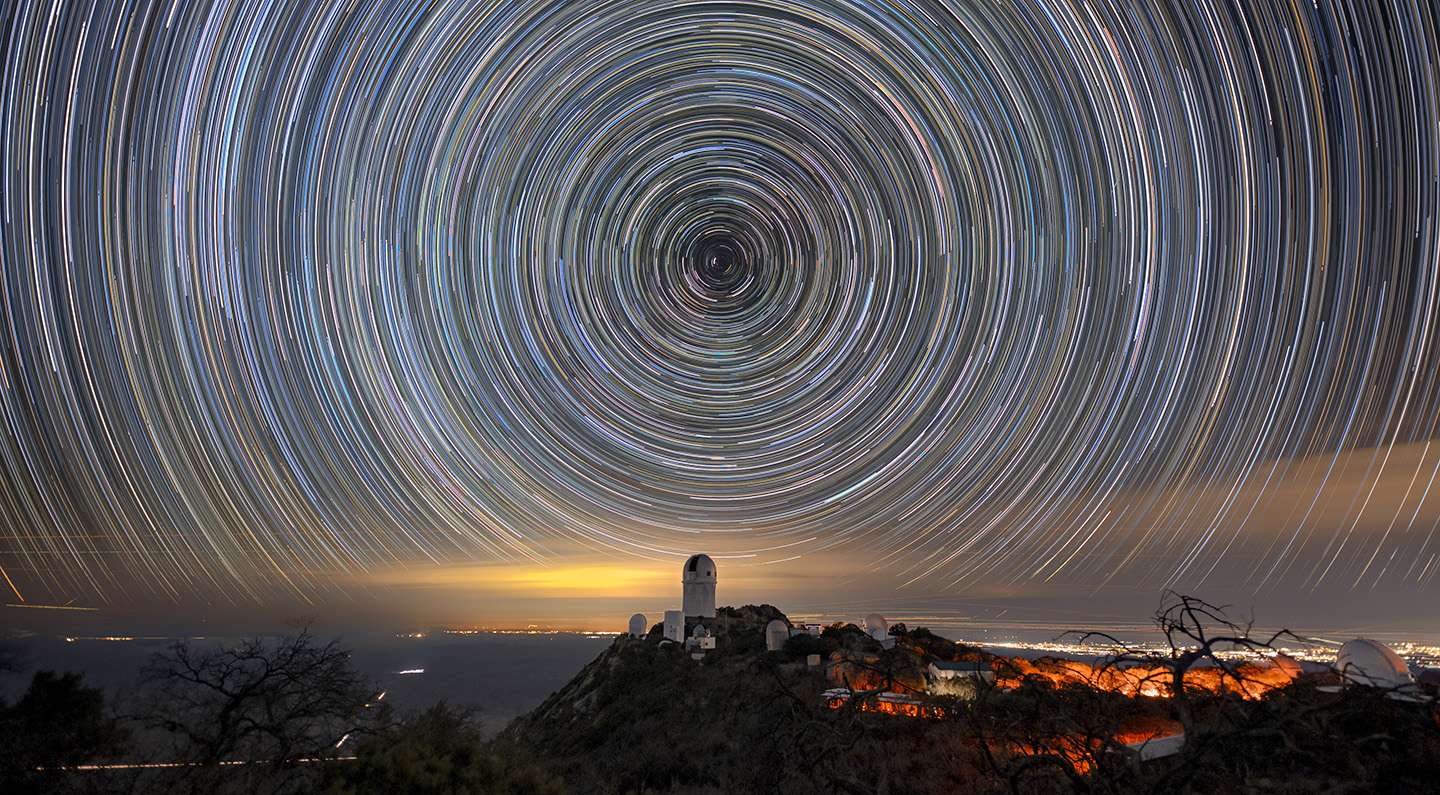
DESI operates out of the Kitt Peak National Observatory in Arizona and charts more than 47 million galaxies and quasars in three dimensions.
The result is a high-resolution map of the universe spanning billions of years, providing scientists with an unprecedented data set to investigate how the universe evolved.
Originally planned to be a five-year mission, the project exceeded expectations in both speed and scale.
Its success has ensured an extension until 2028, with plans in place to expand and improve the already vast space map.
How DESI mapped the universe
On April 15, DESI quietly reported the completion of the primary investigation.
Its 5,000 fiber-optic “eyes” scanned the area near the Big Dipper, repeatedly tracking distant light sources. Each observation captured a photon that traveled billions of years to reach Earth.
At the heart of DESI is a highly tuned system. A robotic positioner aligns the optical fiber to an accuracy narrower than the width of a human hair, and a spectrometer splits the incoming light into its component wavelengths.
This allows researchers to determine the distance, movement, and configuration of each object observed.
Each night, approximately 80 gigabytes of data is sent to the supercomputer for processing. This continuous pipeline enables near real-time analysis and adjustments to ensure investigation efficiency and accuracy.
Maps that reshape our understanding
The newly completed cosmic map is more than just a visual achievement, it’s a scientific tool designed to tackle one of physics’ biggest questions: the nature of dark energy.
Dark energy is thought to make up about 70% of the universe and is responsible for the accelerated expansion of the universe.
DESI allows scientists to trace how this mysterious force has behaved over the 11 billion year history of the universe by comparing the way galaxies assemble today with their distribution billions of years ago.
Initial analysis from the first three years of data suggested something unexpected. Dark energy, long thought to be constant, can actually evolve over time. Now that they have a complete five-year data set, the researchers plan to test whether this signal strengthens or disappears.
If confirmed, the implications would be severe. It will challenge standard cosmological models and reshape predictions about the ultimate fate of the universe.
global scientific effort
DESI is not a single agency project. It brings together more than 900 researchers from more than 70 institutions around the world, including hundreds of doctoral students.
The experiment was led by Lawrence Berkeley National Laboratory and funded by the Department of Energy’s Office of Science. The telescope is powered by the Nicholas U. Mayall Telescope, an important instrument for wide-field astronomical surveys.
Despite facing significant obstacles, including pandemic-related disruptions during final testing and the 2022 Contreras Fire that hit Kitt Peak, the project not only continued, but exceeded its original goals.
exceed expectations
DESI’s original goal was to measure 34 million galaxies and quasars. Instead, more than 47 million stars and an additional 20 million stars were cataloged. This means the survey has collected more than six times the amount of cosmological data than all previous efforts combined.
Efficiency gains played a big role. Improvements in software, observing strategies, and instrumentation have enabled the team to make further passes through the sky.
The survey ultimately covered about two-thirds of the northern sky, and multiple overlapping scans were conducted to improve data quality.
These optimizations have made it possible to conduct “light-time surveys” in parallel, which are carried out when moonlight restricts observation of dark objects.
What happens next on the space map?
The project will be extended until 2028, further expanding the map of the universe.
Coverage expands from 14,000 square degrees to 17,000 square degrees, pushing into more difficult regions of the sky, such as the Milky Way’s dense near-star-plane region and views further south through thicker layers of Earth’s atmosphere.
DESI will also re-examine previously mapped regions, focusing on dimmer and more distant galaxies, particularly bright red galaxies. This will create a denser and more detailed map of the universe and improve measurements of large-scale structures.
Beyond dark energy, the researchers plan to use the expanded dataset to investigate dark matter by studying nearby dwarf galaxies and stellar streams (the remnants of small galaxies torn apart by gravity).
Datasets still yielding discoveries
Although the entire five-year data set is complete, the analysis is just beginning. Scientists continue to refine the results of the first three years, and expect further research into the structure and evolution of the universe in the near future.
The first major dark energy discovery from the complete dataset is expected in 2027.
In parallel, new observations for the extended survey are already underway and will be seamlessly integrated into DESI’s night operations to maximize efficiency.
A new era of space mapping
The completion of DESI’s first survey marks a turning point in the way scientists build and use maps of the universe.
Due to its scale, accuracy, and depth, this dataset provides the foundation for answering some of the most fundamental questions in cosmology.
And with years of observations to come, that map will only get bigger.
Source link

