



Patient: Female in her 40s living in the UK
Symptoms: One day, a woman was reading a book when she heard an unfamiliar voice say, “Don’t be afraid. I know it’s shocking for you to hear me telling you this, but this is the easiest way I can think of. My friend and I worked at the Children’s Hospital on Great Ormond Street, and we want to help you.”
Article continues below
you may like
“This request was initially denied on the basis that there was no clinical justification for such an expensive study,” he said in the report. “It was also implied that I went a little too far in believing what the patient’s hallucinatory voices were telling her.”
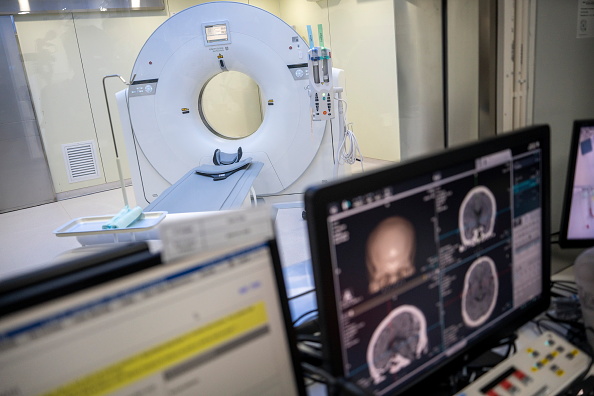
However, the scan was eventually approved and the results were consistent with the hallucination statement. The woman has a type of tumor called a parafalcin meningioma, which grows between the two hemispheres of the brain. These growths occur in the meninges, the tissue layers that cover the brain and spinal cord.
What to read next
The report said her psychiatrist and consultant neurosurgeon recommended surgery to remove the tumor and “informed her that they were in complete agreement with the decision.” Surgeons removed the tumor, which was 2.5 inches (6.4 centimeters) long and 1.5 inches (3.8 centimeters) wide.
When she regained consciousness after the surgery, a voice delivered her final message: “We’re glad we could help you. Goodbye.”
The patient recovered without complications. She discontinued thioridazine immediately after surgery, but her voice did not return. Twelve years after the surgery, the woman called her psychiatrist to wish her a happy holiday season and said she had been symptom-free since the surgery.
Features of this case: Brain lesions, including tumors, have long been associated with psychiatric disorders and mental health problems, including anxiety disorders, cognitive dysfunction, depression, and schizophrenia. Lesions have also been linked to visual and auditory hallucinations, and in one unusual case, for example, brain lesions contributed to a woman perceiving human faces as dragon-like.
However, the patient’s doctor said that prior to the British woman’s case, there were no other known reports of hallucinatory voices diagnosing previously unknown medical conditions while providing comfort and treatment guidance.
“This is the first and only example I have come across where a hallucinatory voice attempted to reassure the patient that it had a genuine interest in his welfare, offered a specific diagnosis (there were no clinical signs to notice the tumor), directed him to the type of hospital best suited to deal with his problem, expressed his joy at finally receiving the treatment he had hoped for, said goodbye, and then disappeared,” the psychiatrist said in his report.
He presented the case at a conference, where some colleagues suggested that the tumor was so large that the patient felt something and subconsciously suspected something was wrong. (Notably, the brain itself has no pain-sensing nerves, but the meninges that cover the brain do.)
Perhaps her anxiety manifested itself in voices that seemed to know more than she did, but were actually just drawing her attention to information she didn’t realize she already knew, the conference attendees mused.
The fact that the voice disappeared after the removal of the tumor “indicates that these symptoms are at least directly related to the presence of the lesion and may in fact be caused by the lesion itself,” the psychiatrists wrote.
For more interesting medical cases, check out our Diagnostic Dilemma archives.
This article is for informational purposes only and does not provide medical advice.