


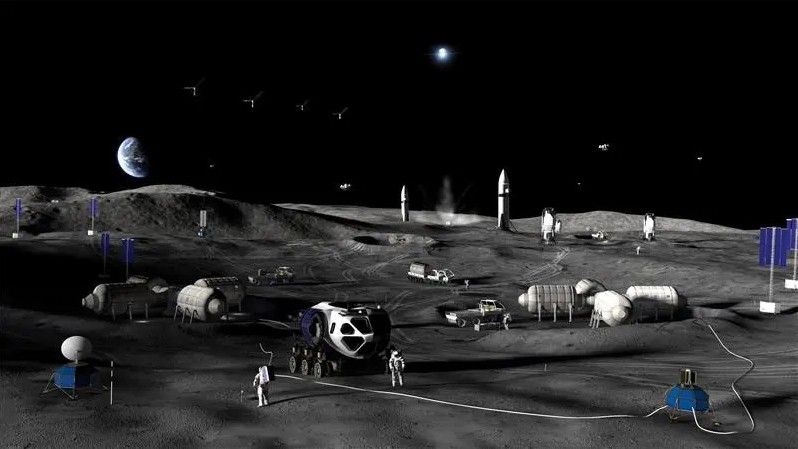
NASA has published a Lunar Base User’s Guide detailing the many challenges NASA will need to overcome in order to complete the 73 planned moon landings and build a permanent moon base.
The document, released April 6, is a nine-page bare-bones list of what NASA needs to accomplish the “nearly impossible” space mission it announced March 24 at the agency’s Ignition event.
NASA hopes to launch a slew of unmanned robotic lunar exploration missions – 21 moon landings over the next three years alone – to lay the groundwork for a $20 billion lunar base and prepare for the first manned mission in 2028. NASA also announced that it will launch a nuclear-powered “Freedom” spacecraft to Mars by 2028.
you may like
While last week’s splashdown of the Artemis II manned lunar flight proved that NASA is still capable of sending humans to the moon, the Lunar Base User’s Guide clearly highlights the many gaps in NASA’s current capabilities. These limitations include aspects of the landing system, habitation system, and power system. This is basically everything humans would need to land and live on the moon.
It may sound fanciful, but NASA Administrator Jared Isaacman seems to agree, telling attendees at the 2026 Space Symposium in Colorado Springs on April 14 that the agency is at its best “when we tackle and accomplish the near-impossible,” Space.com reported.
“We want to land a lot of stuff, and we’re okay if some of it breaks,” he added. “We learn.”
The Lunar Base User’s Guide is part of a major overhaul of America’s space program. In recent years, NASA has struggled to return astronauts to the moon and thereby prepare to send humans to Mars. Despite Artemis II’s success, the Artemis program is over budget (costing more than $100 billion to date) and behind schedule, with NASA originally targeting a 2024 manned moon landing.
Isaacman, who has been in the role since December 2025, is ramping up efforts on the lunar surface to help realize NASA’s goals for the moon and Mars. The review includes halting work on the Lunar Gateway, humanity’s first lunar space station, to focus on establishing a presence on the moon. To accomplish this, the Artemis program has been restructured to include a second manned moon landing mission in 2028, as well as enhanced launch and landing capabilities.
Following this guide, an April 14 White House memo states, “Within 30 days of this memorandum, NASA will begin a program to develop a medium-power space reactor with a lunar fission surface power (FSP) variant ready for launch by 2030 and a space-based option for nuclear electric propulsion (NEP) demonstration.”
Besides Artemis’s escalating costs and delays, the new space race is behind the chaos. China is aiming to overtake the United States as the leader in space exploration, with plans to land its own astronauts on the moon by 2030. And both countries are eyeing an Antarctic landing site on the same moon, which is rich in hydrogen fuel.
What to read next
How to make a moon base
According to the Lunar Base User’s Guide and previous ignition documents, NASA’s planned 73 moon landings will occur in three phases. It’s unclear how many of those will become crew members, but NASA said it is starting with a rapid series of initial unmanned missions with robots, and that rotation of lunar crews will occur regularly by Phase 3.
Phase 1 consists of 25 launches and 21 landings to establish frequent and reliable access to the lunar surface. This phase is expected to be completed by 2029, according to NASA’s plan to build a lunar base announced on March 24.
Phase 2, planned between 2029 and 2032, will consist of 27 more launches and 24 landings to establish initial lunar base infrastructure and biannual crewed missions. Phase 3 will include 29 more launches and 28 landings from 2032 to an undisclosed future date to establish unmanned cargo return technology and a continued human presence on the moon.
Of course, this is easier said than done. NASA famously landed humans on the moon as part of the Apollo program more than 50 years ago. But building a base on the moon’s south pole involves many more challenges, starting with establishing the basics, such as a stable power source.
“Elements and development of the lunar base will take place in the lunar south pole region, which has an incredibly different lighting environment than the equatorial maria and highlands visited by Apollo,” NASA said in the document. “At a lunar base, the sun would remain low on the horizon, casting dramatic shadows that would prevent solar power generation and expose the system to extreme cold and darkness for long periods.”
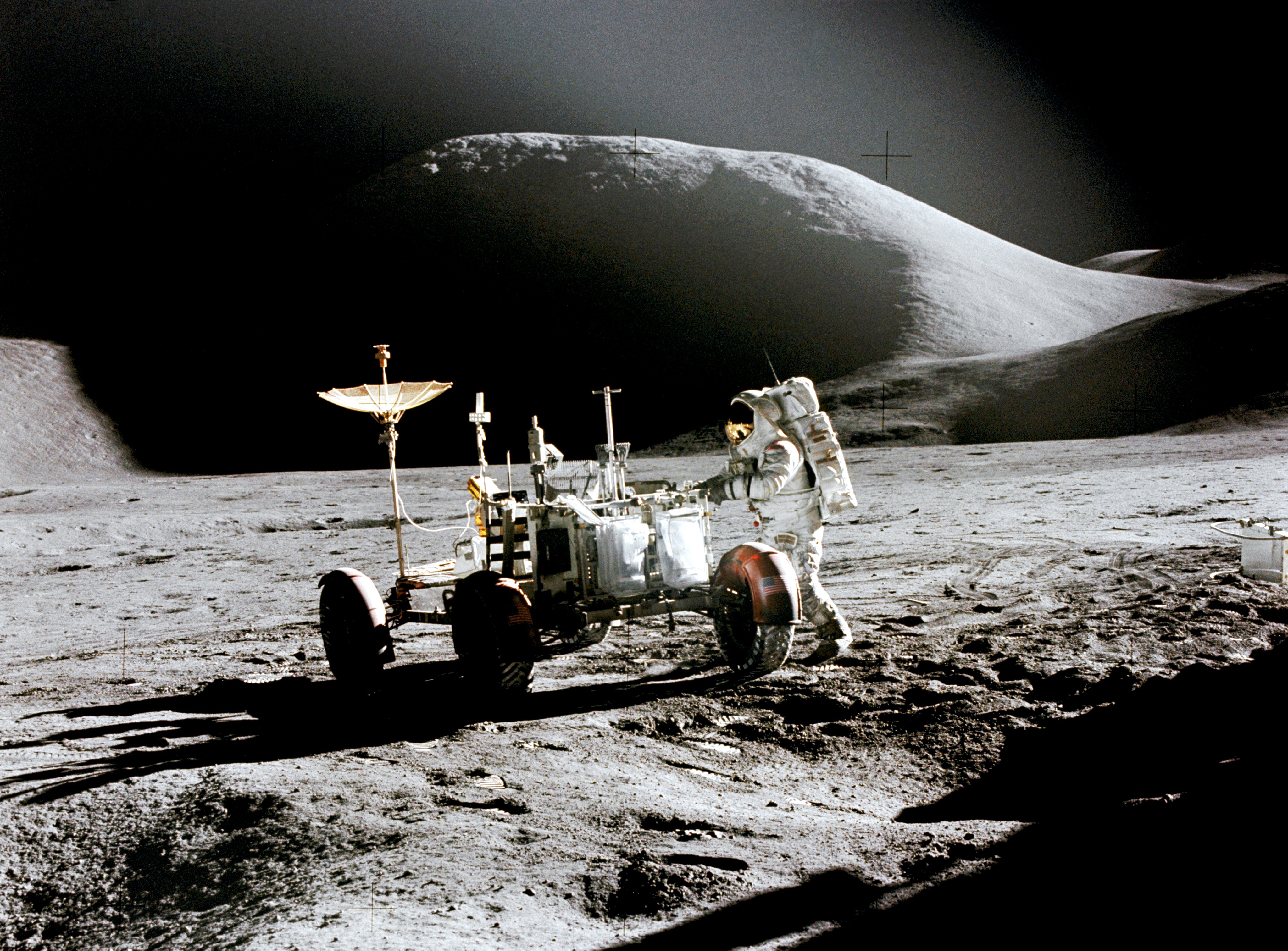
To develop suitable solar power options, NASA needs precise knowledge of lighting conditions and solar array performance, and they also need to be robust enough to withstand contact with razor-sharp, electrically charged lunar dust.
The document also said that NASA needs detailed knowledge of the lunar environment and the systems that can operate there in order to use radioisotope heat generators (nuclear batteries that generate heat and electricity). NASA’s long-term power plans include building a nuclear reactor on the moon.
Even just landing on the moon as often as NASA plans will raise the bar. For example, the document states that NASA needs to develop a high-precision landing system that can accurately measure altitude in low-visibility terrain, as well as a hazard avoidance system. Some of the power and landing gaps are reported as architecture-driven technology gaps, which require “completely new technology or significant performance advances” in current technology, according to the guide.
There are also other unknowns, such as the human body’s response to long-term stay in the lunar environment, which is rarely mentioned in the document. These include the effects of lunar dust, microgravity, and carcinogenic cosmic rays, as well as logistical challenges regarding life support, exercise, and nutrition.
NASA writes that it is working to fill many of the technology and data gaps highlighted in the document. It also highlights the “Mars forward” considerations that NASA will need to develop in its lunar program to achieve its ultimate goal of landing humans on Mars.
Mars considerations included data on the health of astronauts in deep space and the development of nuclear power systems on the moon. The documents say these nuclear systems could help build similar systems on Mars and also benefit NASA’s planned development of nuclear-powered spacecraft.
Only time will tell whether NASA can achieve its ambitious plans, but recent history has not been on the space agency’s side. Just two days after Artemis II’s historic launch on April 1, the White House released a budget proposal that would cut NASA’s budget by 23% to a total of about $5.6 billion.
NASA says it will build a lunar base on a budget of $20 billion, but the average estimated cost of a Space Launch System rocket is $2.5 billion.