

Close Menu
  • Home
  • Identity
  • Inventions
  • Future
  • Science
  • Startups
  • Spanish
What's Hot

Google rolls out AI ‘flight ticket’ tool globally, adds new travel features to search

New Assessment ClickFix Campaign Offers Amatera Stealer and NetSupport RAT

PowerLattice attracts investment from former Intel CEO Pat Gelsinger for power-saving chiplets

Facebook X (Twitter) Instagram
  • Home
  • About Us
  • Advertise with Us
  • Contact Us
  • DMCA
  • Privacy Policy
  • Terms & Conditions
  • User-Submitted Posts
Facebook X (Twitter) Instagram
Fyself News
  • Home
  • Identity
  • Inventions
  • Future
  • Science
  • Startups
  • Spanish
Fyself News
Home » The next Carrington-level solar superstorm could wipe out ‘all the satellites’, new simulation reveals
Science

The next Carrington-level solar superstorm could wipe out ‘all the satellites’, new simulation reveals

userBy userOctober 30, 2025No Comments5 Mins Read
Share Facebook Twitter Pinterest Telegram LinkedIn Tumblr Email Copy Link
Follow Us
Google News Flipboard
Share
Facebook Twitter LinkedIn Pinterest Email Copy Link

A solar storm comparable to the infamous Carrington event could wipe out all the satellites orbiting Earth, leaving us in an unstable and costly predicament, according to an alarming new simulation. And experts say such powerful solar storms are inevitable and will hit Earth sooner or later.

On September 1, 1859, British astronomer Richard Carrington observed a brilliant flash of light emanating from a giant sunspot, about the size of Jupiter. He had witnessed the most powerful solar flare in recorded history, followed by a major disruption to the Earth’s magnetic field known as a geomagnetic storm that raged for almost a week and colored the sky with widespread aurora borealis.

Now, a new series of simulations conducted by the European Space Agency (ESA) reveals that if a similar phenomenon were to occur today, the impact would be even more devastating because of the dependence on technology both on Earth and in space.

you may like

The simulation was part of a tabletop exercise conducted by researchers from multiple ESA divisions at the European Space Operations Center in Darmstadt, Germany. The simulation was conducted in preparation for the launch of ESA’s Sentinel-1D radio imaging satellite, currently scheduled for November 4.

In a hypothetical scenario, an X45-sized solar flare, about five times more powerful than the most powerful solar flare in the current solar cycle, would suddenly erupt from the Sun, showering Earth with a powerful wave of radiation without warning. About 15 hours later, after another wave of radiation, a giant cloud of fast-moving plasma known as a coronal mass ejection (CME) slams into Earth at more than 4.4 million miles per hour (7.1 million km per hour), creating a Carrington-like magnetic storm.
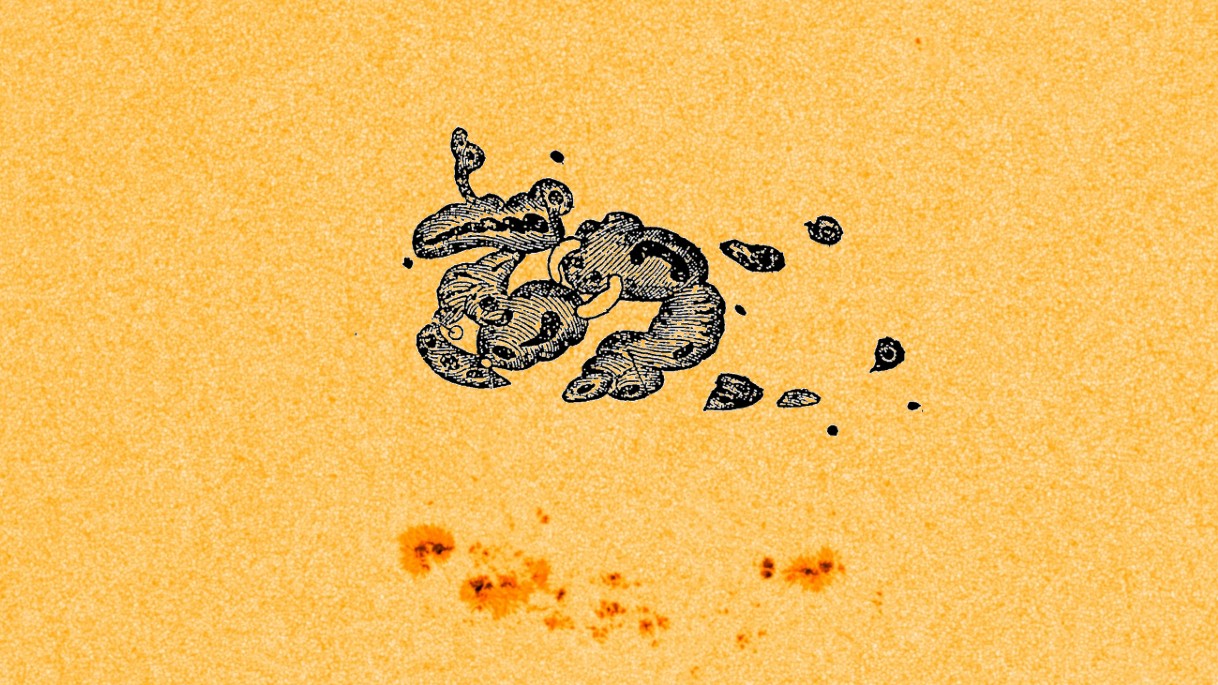
A fiery yellow sun with mottled orange sunspots, below a blurred sketch of an even larger sunspot, recorded by Richard Carrington in 1859

Richard Carrington’s 1859 sketch of a “monstrous” sunspot reveals the dark region to be about the size of Jupiter. In this image, his painting is superimposed on a modern photograph of the surface of the sun. (Image credit: Richard Carrington/NASA Solar Dynamics Observatory/SpaceWeather.com)

While researchers’ reactions to this scenario focused on how to protect Sentinel 1D, the simulation also demonstrated how a global constellation of orbiting spacecraft would respond in such an event.

ESA’s Space Weather Modeling Coordinator Jorge Amaya said in a statement: “The huge flow of energy emitted by the Sun has the potential to damage all satellites in orbit.” “Satellites in low Earth orbit are usually better protected from the hazards of space by their atmosphere and magnetic fields, but when an explosion on the scale of the Carrington event occurs, no spacecraft is safe.”

Get the world’s most fascinating discoveries delivered straight to your inbox.

There were three main threats the satellite faced during the exercise. The first is the first wave of radiation from a solar flare. This could permanently or temporarily disable satellites that are too far from Earth’s internal magnetic field. Second, the trailing radiation wave confused navigation systems, increasing the likelihood of a collision. The third was a CME, which absorbed energy from solar storms and caused the upper atmosphere to bulge outward.

Atmospheric expansion is perhaps the most dangerous aspect of this triple threat, increasing the drag on the satellite by up to 400%, dragging the spacecraft towards Earth, and potentially causing the satellite to burn up in the atmosphere or crash into the Earth’s surface.
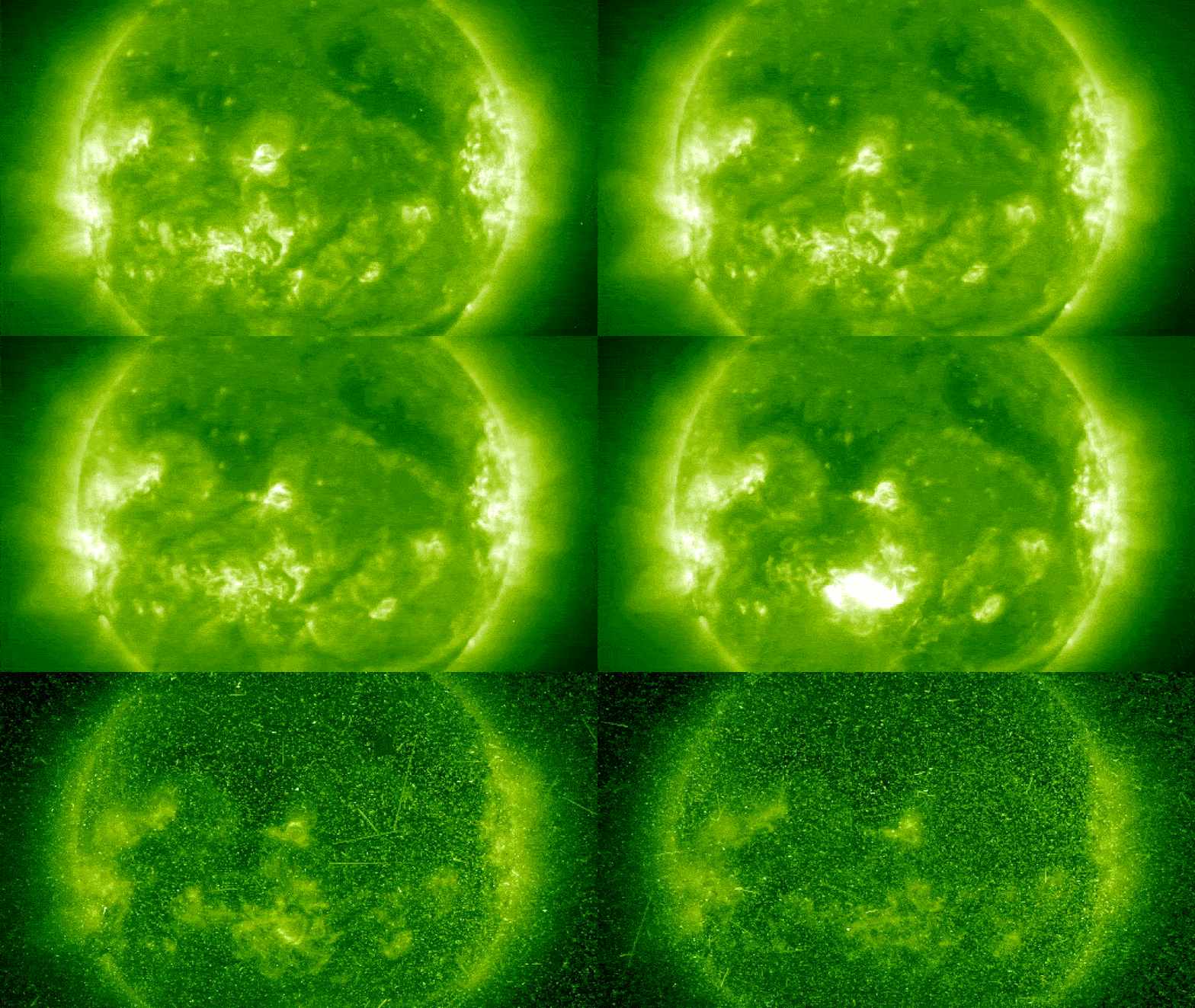
Looped video footage showing interference to sun-trained satellites during solar flares

Solar flares emit powerful waves of radiation that travel close to the speed of light and attack satellites without warning. This ultraviolet wavelength image shows how this radiation hit the Solar Heliospheric Observatory (SOHO) spacecraft shortly after a 2003 solar flare. (Image credit: ESA/NASA)

We got a glimpse of what the effects of such an event would be like during May 2024’s record geomagnetic storm, which was the most powerful of its kind in 21 years and caused widespread auroral displays.

you may like

In addition to knocking a small number of satellites out of low-Earth orbit, the 2024 storm significantly disrupted GPS systems, resulting in farm machinery failures and approximately $500 million in losses for U.S. farmers.

But that’s just a drop in the bucket compared to the damage caused by storms like Carrington. A 2013 study analyzing the impact of such an event on North America’s power grid found that the United States could suffer up to $2.6 trillion in damage, while the Planetary Society said the true global cost is “beyond our understanding.”

Not “if” but “when”

Tabletop exercises like this are important because storms like Carrington could happen again.

“The important question is not if this will happen, but when,” Gustavo Baldo Carvalho, a spacecraft operations expert who led the Sentinel 1D simulation, said in a statement.
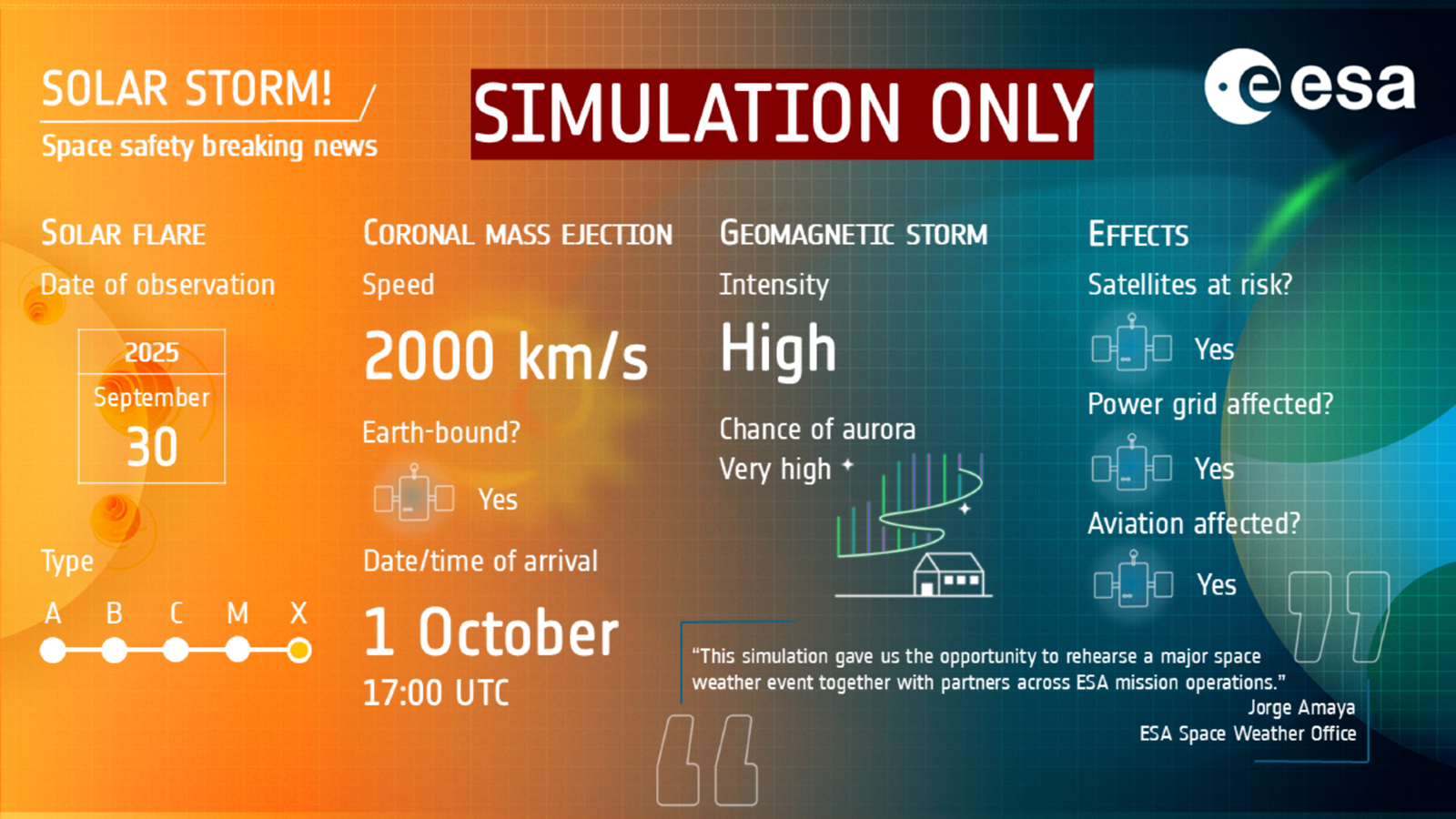
Infographic displaying new simulation parameters

Tabletop exercises play an important role in teaching professionals how to respond in worst-case scenarios. (Image credit: ESA)

Experts believe that a Carrington-class storm occurs on average every 500 years, giving the probability of such an event occurring this century about 12%.

The training is further evidence that we are currently not equipped to handle this kind of extreme scenario, but researchers hope that with continued training for this eventuality, we will be better able to cope with it.

“Simulating such effects… [an] “This event is similar to predicting the impact of a pandemic. We only realize the real impact on society after it happens, but we need to be prepared and have plans in place to respond immediately,” Amaya said.

But the number of satellites orbiting Earth is expected to increase at least tenfold by 2050, so the longer we have to wait for the next big storm, the more expensive it will be.


Source link

#Biotechnology #ClimateScience #Health #Science #ScientificAdvances #ScientificResearch
Follow on Google News Follow on Flipboard
Share. Facebook Twitter Pinterest LinkedIn Tumblr Email Copy Link
Previous ArticleNew ‘brazen’ exploit instantly crashes Chromium browser with a single malicious URL
Next Article Bevel raises $10M Series A from General Catalyst for AI health companion
user
  • Website

Related Posts

How did metamorphosis evolve? |Live Science

November 17, 2025

Vera Rubin Observatory’s first image reveals hidden structure leading up to the Milky Way trailing behind nearby galaxies — Space Photo of the Week

November 16, 2025

Were there female gladiators in ancient Rome?

November 16, 2025
Add A Comment
Leave A Reply Cancel Reply

Latest Posts

Google rolls out AI ‘flight ticket’ tool globally, adds new travel features to search

New Assessment ClickFix Campaign Offers Amatera Stealer and NetSupport RAT

PowerLattice attracts investment from former Intel CEO Pat Gelsinger for power-saving chiplets

Luminal raises $5.3 million to build a better GPU code framework

Trending Posts

Subscribe to News

Subscribe to our newsletter and never miss our latest news

Please enable JavaScript in your browser to complete this form.
Loading

Welcome to Fyself News, your go-to platform for the latest in tech, startups, inventions, sustainability, and fintech! We are a passionate team of enthusiasts committed to bringing you timely, insightful, and accurate information on the most pressing developments across these industries. Whether you’re an entrepreneur, investor, or just someone curious about the future of technology and innovation, Fyself News has something for you.

Meet Your Digital Twin: Europe’s Cutting-Edge AI is Personalizing Medicine

TwinH: The AI Game-Changer for Faster, More Accessible Legal Services

Immortality is No Longer Science Fiction: TwinH’s AI Breakthrough Could Change Everything

The AI Revolution: Beyond Superintelligence – TwinH Leads the Charge in Personalized, Secure Digital Identities

Facebook X (Twitter) Instagram Pinterest YouTube
  • Home
  • About Us
  • Advertise with Us
  • Contact Us
  • DMCA
  • Privacy Policy
  • Terms & Conditions
  • User-Submitted Posts
© 2025 news.fyself. Designed by by fyself.

Type above and press Enter to search. Press Esc to cancel.