


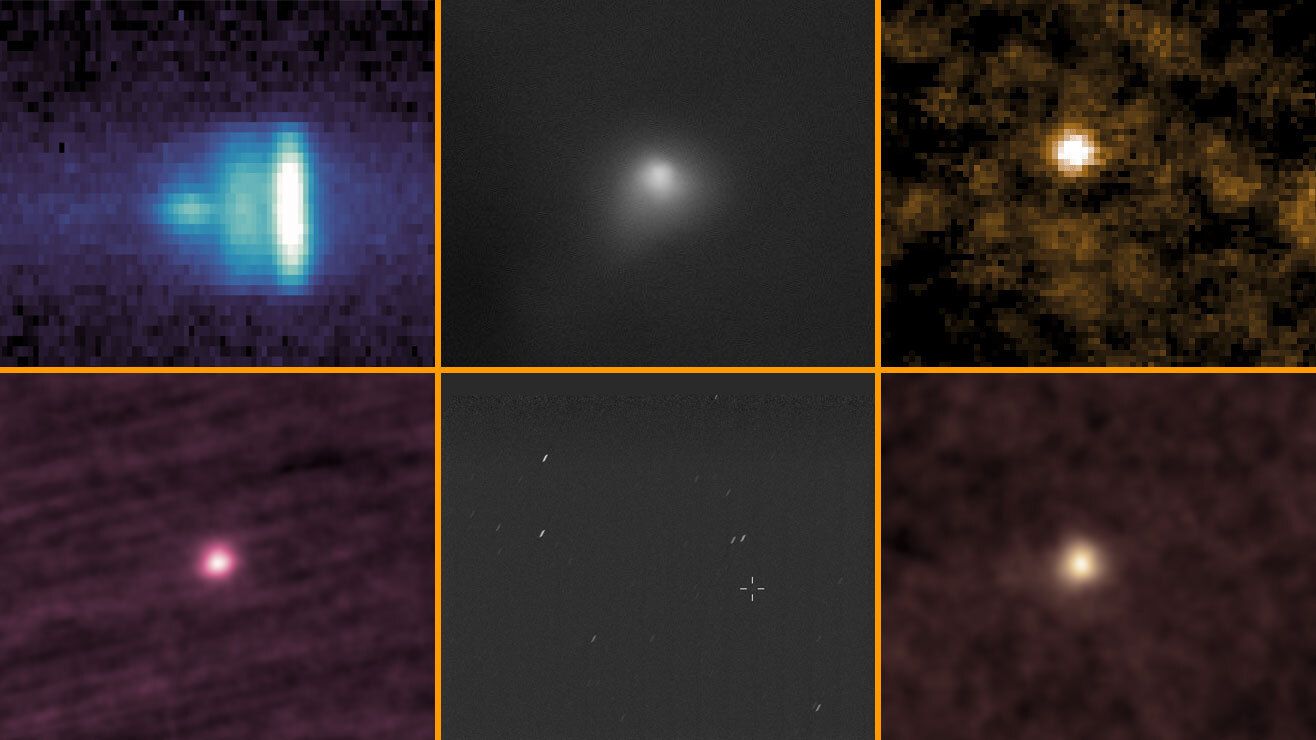
NASA has released a treasure trove of 3I/ATLAS images of comets, giving us our closest look yet at an interstellar visitor.
The U.S. government shutdown, which lasted from Oct. 1 to Nov. 12, delayed the release of much-anticipated images, including snapshots taken by instruments around Mars and the Sun over the past few months.
you may like
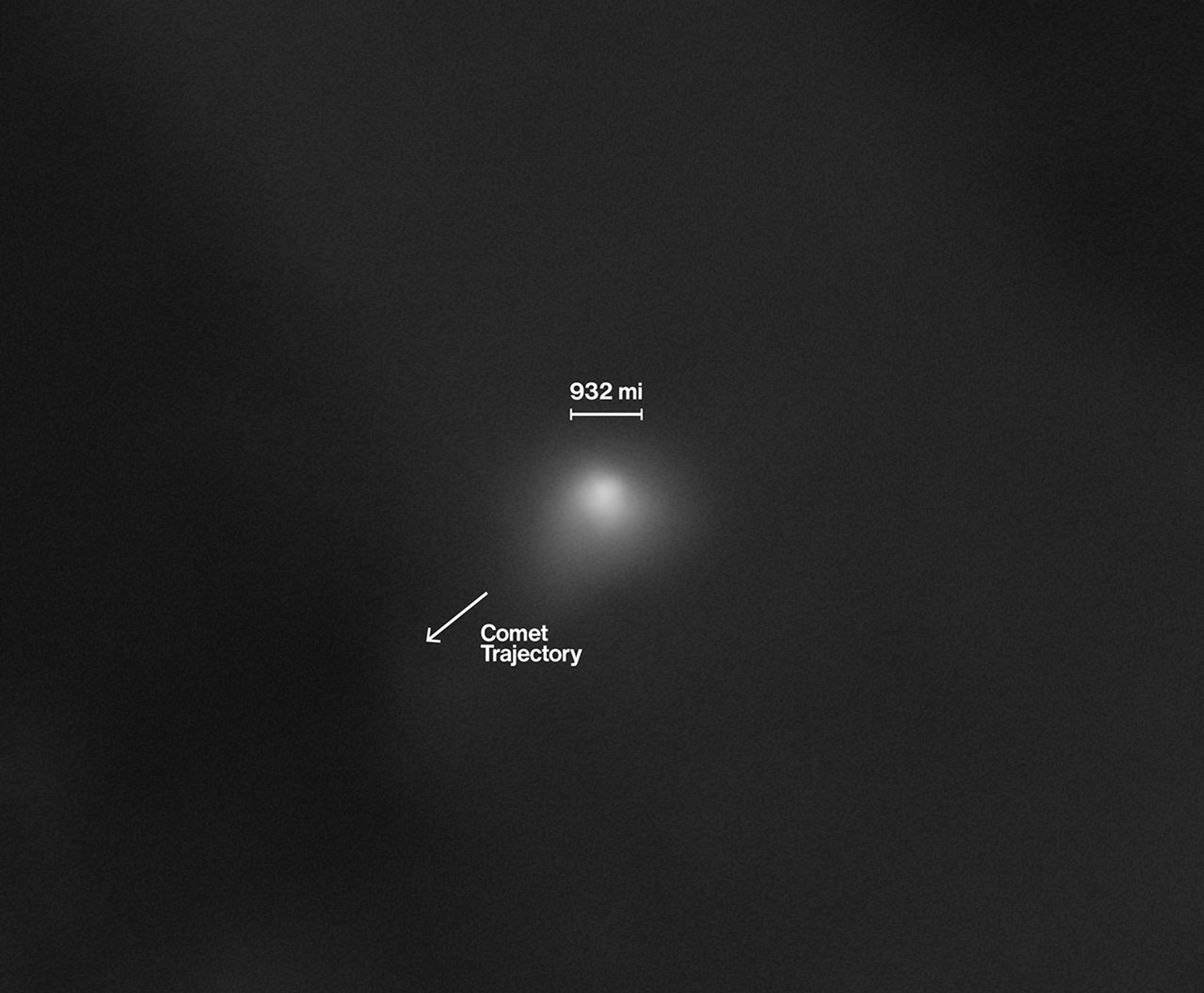
The High Resolution Imaging Science Experiment (HiRISE) captured images of the comet from NASA’s Mars Reconnaissance Orbiter (MRO). Imagers captured comet 3I/ATLAS as the comet passed Mars in a rapid approach in early October.
The comet came much closer to Mars than it did to Earth in October, but still not that close. This image was taken when the comet was about 19 million miles (30 million kilometers) from MRO. For reference, the average distance from Earth to the Moon is approximately 239,000 miles (384,000 km). The bright dot represents the comet’s main body, or core, and the particle cloud surrounding it is the 3I/ATLAS coma. This is a characteristic of most comets, which are heated by the Sun while flying through the solar system.

The Mars Atmospheric Volatile Evolution (MAVEN) spacecraft acquired a trippy ultraviolet image of comet 3I/ATLAS on September 28th (relatively) close to Mars. According to NASA, MAVEN’s Imaging Ultraviolet Spectrometer uses the ultraviolet portion of the light spectrum to decipher the chemical composition of objects.
The blue color in the image is hydrogen. The blue dots on the left represent hydrogen released from comet 3I/ATLAS, and the bright blue dots on the right represent hydrogen released from Mars. The dim blue oval in the center is background hydrogen flowing through the interplanetary solar system. Researchers hope to use observations like this one to better understand the composition of comets.

NASA has released a GIF of comet 3I/ATLAS created using images taken by the Polarimeter Unifying Corona and Heliosphere (PUNCH) mission between September 28 and October 10. The PUNCH mission consists of four small satellites in low Earth orbit focused on the Sun. Comet 3I/ATLAS is the white dot in the center image that moves through a blurred stream of light from the star. The bright blob that flashes past the comet is Mars.
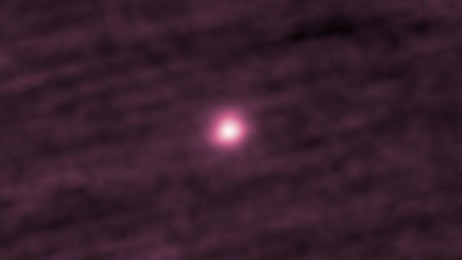
In this observation, comet 3I/ATLAS appears quite pink, thanks to color images from the Solar-Earth Relationship Observation Satellite (STEREO-A). NASA said the Heliocentric Imager-1 (H1) instrument aboard STEREO-A captured the images in visible light, which were then colored to distinguish them from images from other spacecraft.

Another image taken by a solar orbiting satellite. This time it’s from the European Space Agency and NASA’s Solar-Heliospheric Observatory (SOHO). The SOHO mission was launched in 1995 and is the longest-running solar satellite ever, according to NASA. SOHO took 3I/ATLAS images of the comet from October 15 to October 26 while it was brightening on its way to its closest approach to the Sun.
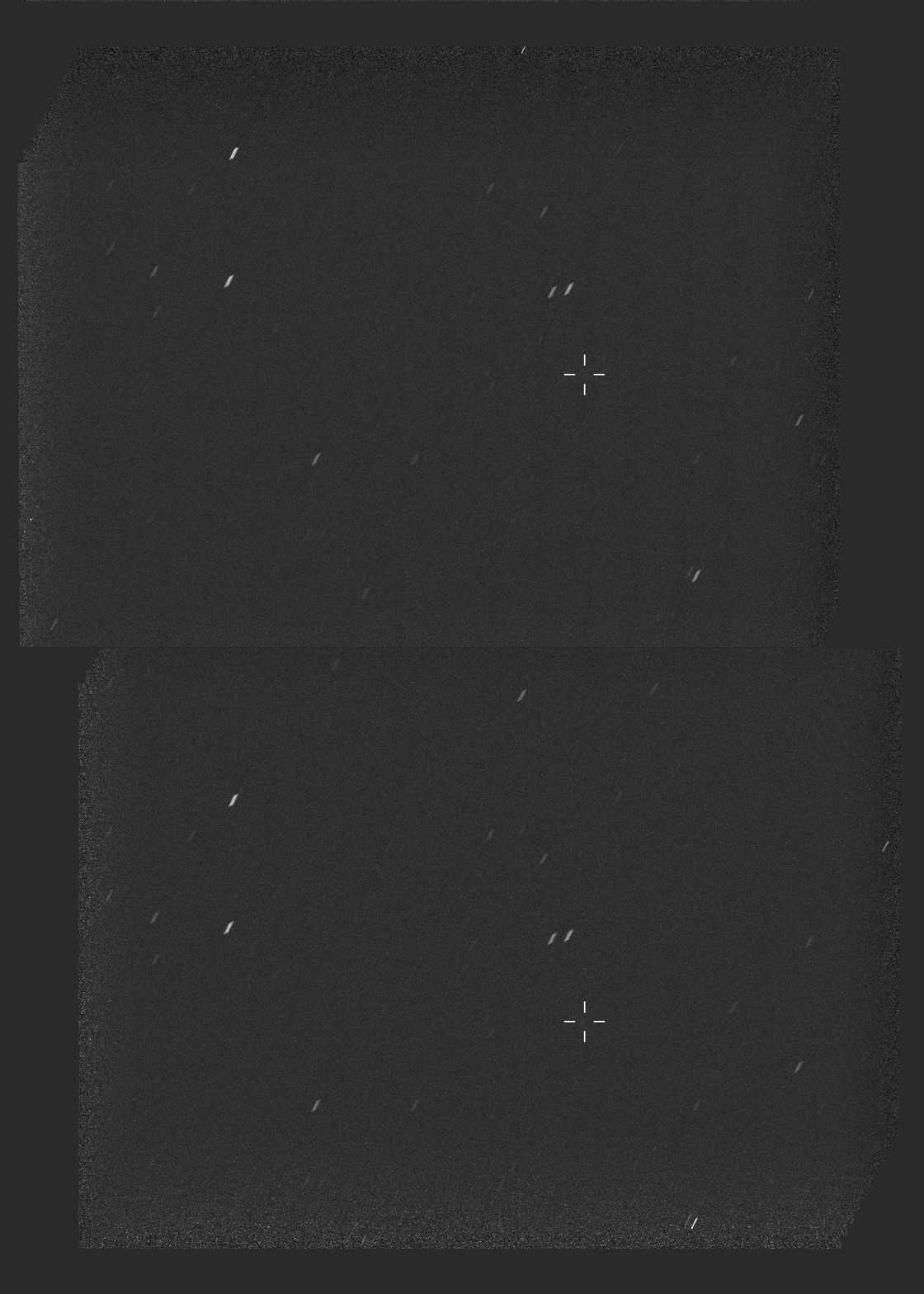
This last GIF isn’t particularly impressive to look at, but it was taken from the surface of Mars, and it’s pretty cool if you ask us. NASA’s Perseverance spacecraft looked up to watch a comet pass close to Mars on October 4. At the time, Perseverance was exploring Jezero Crater, searching for signs of ancient life.
Since the discovery of Comet 3I/ATLAS in July, there has been speculation that the interstellar visitor could be an alien spacecraft. However, most astronomers are convinced that 3I/ATLAS is a natural comet from an unknown star system. NASA was keen to emphasize the comet’s natural origin when it presented new images during a broadcast on Wednesday (November 19).
“This object is a comet,” NASA Deputy Administrator Amit Kshatriya said during the broadcast. “It looks and behaves like a comet…and all the evidence points to it being a comet. But this one comes from outside our solar system, which is what makes it fascinating and exciting and so scientifically important.”