

Close Menu
  • Home
  • Identity
  • Inventions
  • Future
  • Science
  • Startups
  • Spanish
What's Hot

Consumer watchdog warns about Google’s AI agent shopping protocols — Google says she’s wrong

Doctors think AI can play a role in medicine, but maybe not as chatbots

Long-running web skimming campaign steals credit cards from online checkout pages

Facebook X (Twitter) Instagram
  • Home
  • About Us
  • Advertise with Us
  • Contact Us
  • DMCA
  • Privacy Policy
  • Terms & Conditions
  • User-Submitted Posts
Facebook X (Twitter) Instagram
Fyself News
  • Home
  • Identity
  • Inventions
  • Future
  • Science
  • Startups
  • Spanish
Fyself News
Home » Astronomers may have already discovered the “Great Comet of 2026,” and it may soon be visible to the naked eye.
Science

Astronomers may have already discovered the “Great Comet of 2026,” and it may soon be visible to the naked eye.

userBy userJanuary 12, 2026No Comments5 Mins Read
Share Facebook Twitter Pinterest Telegram LinkedIn Tumblr Email Copy Link
Follow Us
Google News Flipboard
Share
Facebook Twitter LinkedIn Pinterest Email Copy Link

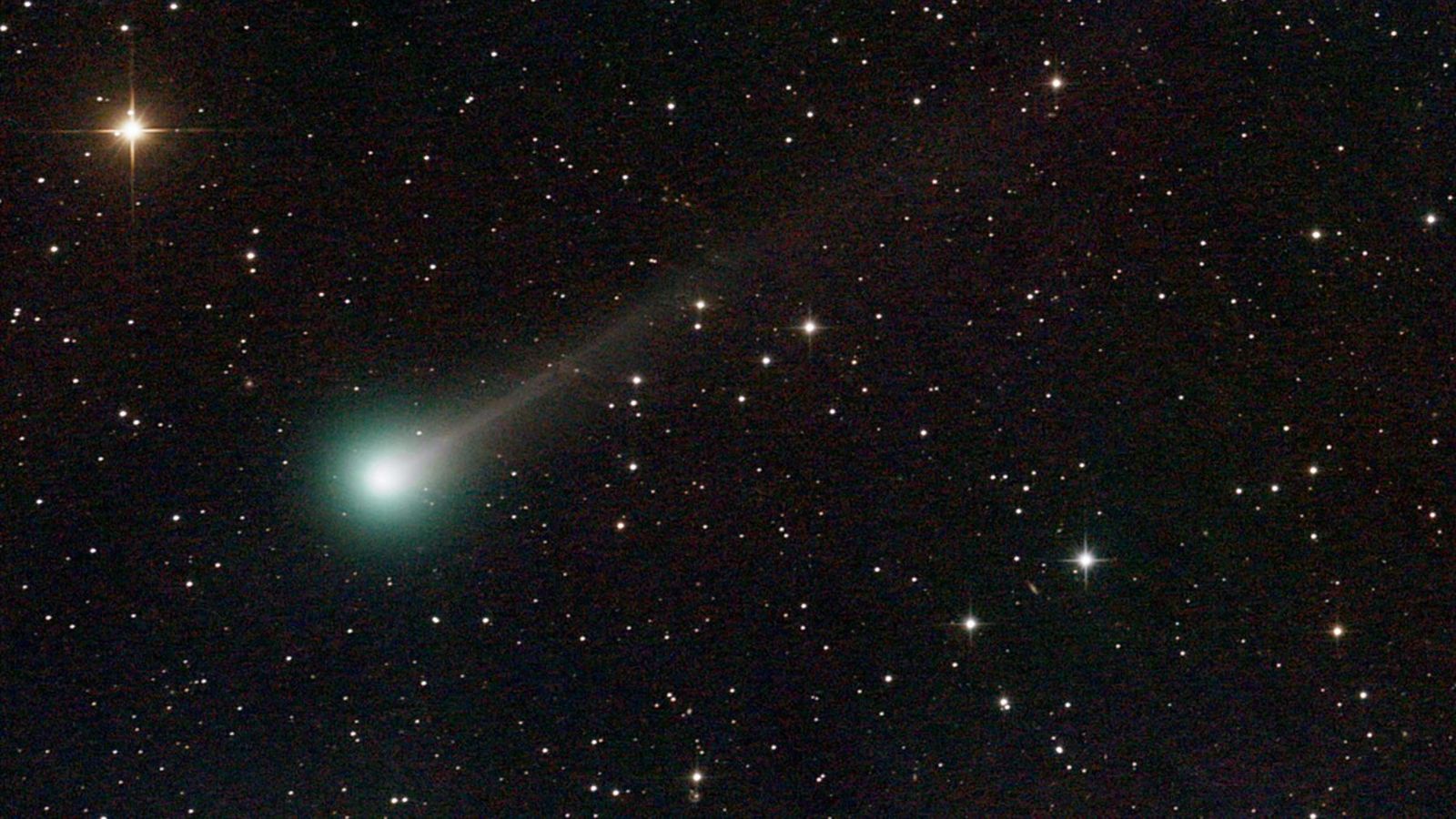
2026 may be less than two weeks away, but a new comet is already leading the way to becoming this year’s “Great Comet.” The much-anticipated ice ball may be visible to the naked eye and is scheduled to make its closest approach to us within four months from now.

Scientists discovered the incoming comet, named C/2025 R3 (PanSTARRS), on September 8, 2025, in images captured by the Panoramic Survey Telescope and Rapid Response System (Pan-STARRS), a 5.9-foot (1.8-meter) reflecting telescope atop Hawaii’s Haleakala volcano. It is currently about 216 million miles (348 million kilometers) from Earth, about halfway between the orbits of Jupiter and Mars, according to TheSkyLive.com.

C/2025 R3 is a long-period comet, meaning it likely takes more than 1,000 years to orbit the Sun, and likely originated from the Oort cloud, a huge reservoir of comets and other icy objects near the edge of the solar system. Astronomers have not yet narrowed down the comet’s orbital path, so we don’t know how long it takes the iceball to complete one orbit around our home star. However, similar discoveries in recent years have revealed comets that have not passed close to Earth in tens of thousands of years.

you may like

C/2025 R3 is currently accelerating toward the Sun and is scheduled to reach perihelion, or the closest point to our home star, on April 20th. It will come within 47.4 million miles (76.3 million km) of the Sun, which is somewhere between the orbits of Mercury and Venus.

Just one week later, on April 27, the comet will make its closest approach to Earth, coming within 44 million miles (70.8 million km) of Earth. This is more than 180 times further away than the Moon.
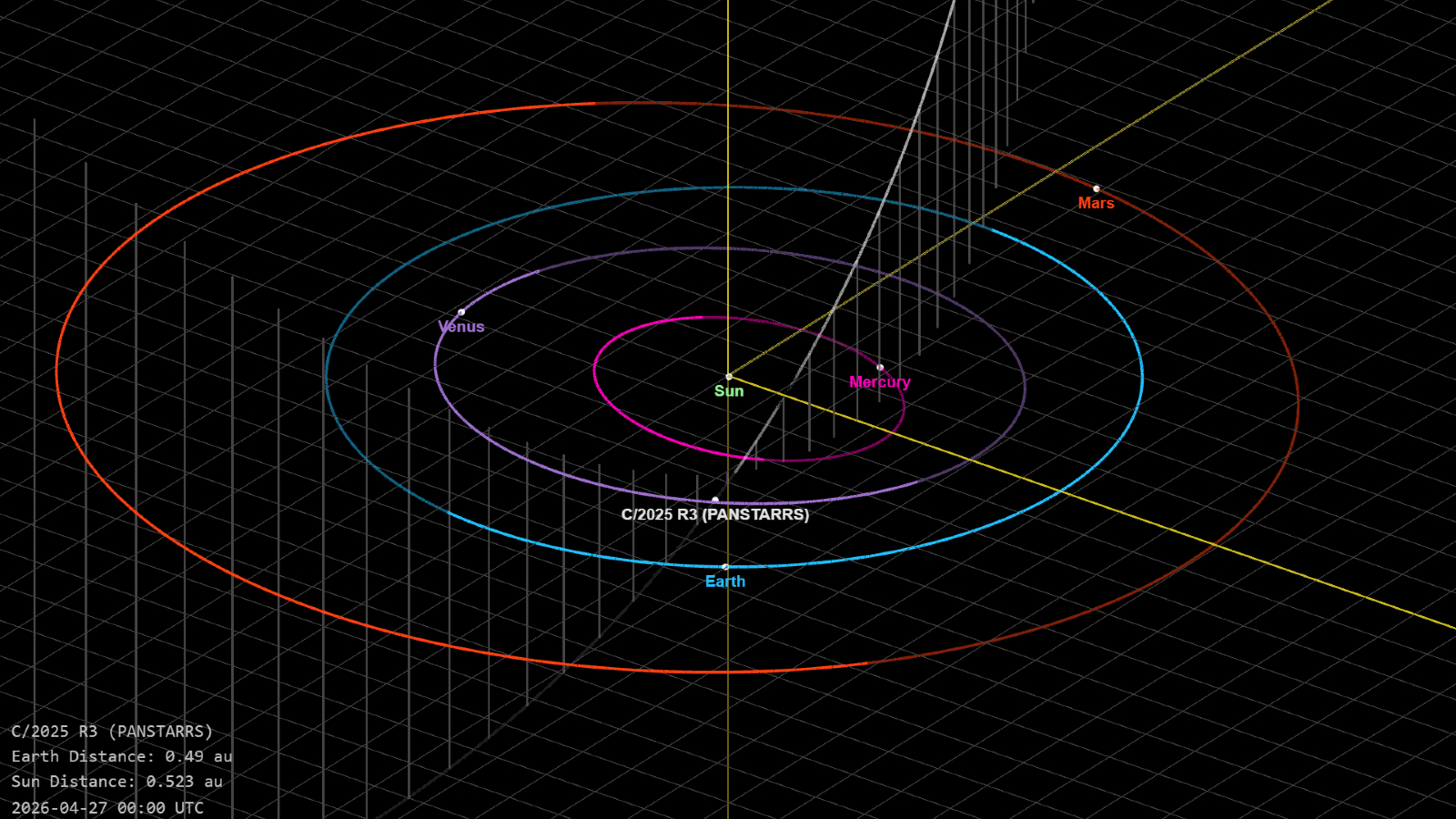
Orbit map showing the orbit of comet C/2025 R3 (Pan-STARRS)

C/2025 R3 (Pan-STARRS) will make its closest approach to Earth on April 27th. However, it will be best visible as it approaches perihelion about a week earlier. (Image credit: NASA/JPL/Small-Body Database Lookup)

Astronomers still don’t know how bright the comet will shine during its close approach to the Sun, Live Science’s sister site Space.com recently reported. Some researchers predict that the star will reach an apparent magnitude of 8. This means it will only be visible through a decent telescope or stargazing binoculars. But some estimate it could reach a magnitude of 2.5 and be clearly visible to the naked eye. (Apparent magnitude is measured on an anti-logarithmic scale, with lower numbers meaning greater brightness.)

When to see Comet C/2025 R3

The best chance to see C/2025 R3 will likely be just before perihelion, around April 17, when the new moon will darken the night sky, making it easier to spot the object at the limits of what can be seen with the naked eye. However, due to its closest approach to Earth, the comet may be obscured by the Sun, making it difficult to detect. Observers in the Southern Hemisphere may get a good look at the comet in early May.

Get the world’s most fascinating discoveries delivered straight to your inbox.

Whether a comet becomes visible to the naked eye may depend on a phenomenon known as forward scatter, which occurs when a comet is directly between the Earth and the Sun, as C/2025 R3 is. If this happens, the comet’s tail will likely scatter more sunlight, increasing its brightness, according to Space.com.

A comet’s brightness also depends on how it responds to increased solar radiation. As a comet approaches the Sun, it absorbs more sunlight, releases trapped ice and gas, and reflects sunlight back toward Earth. However, it is too early to predict exactly how this will affect C/2025 R3.

According to Space.com, C/2025 R3 will be located directly below the Great Plaza Pegasus in the constellation Pisces during its perihelion and approach to Earth.

you may like
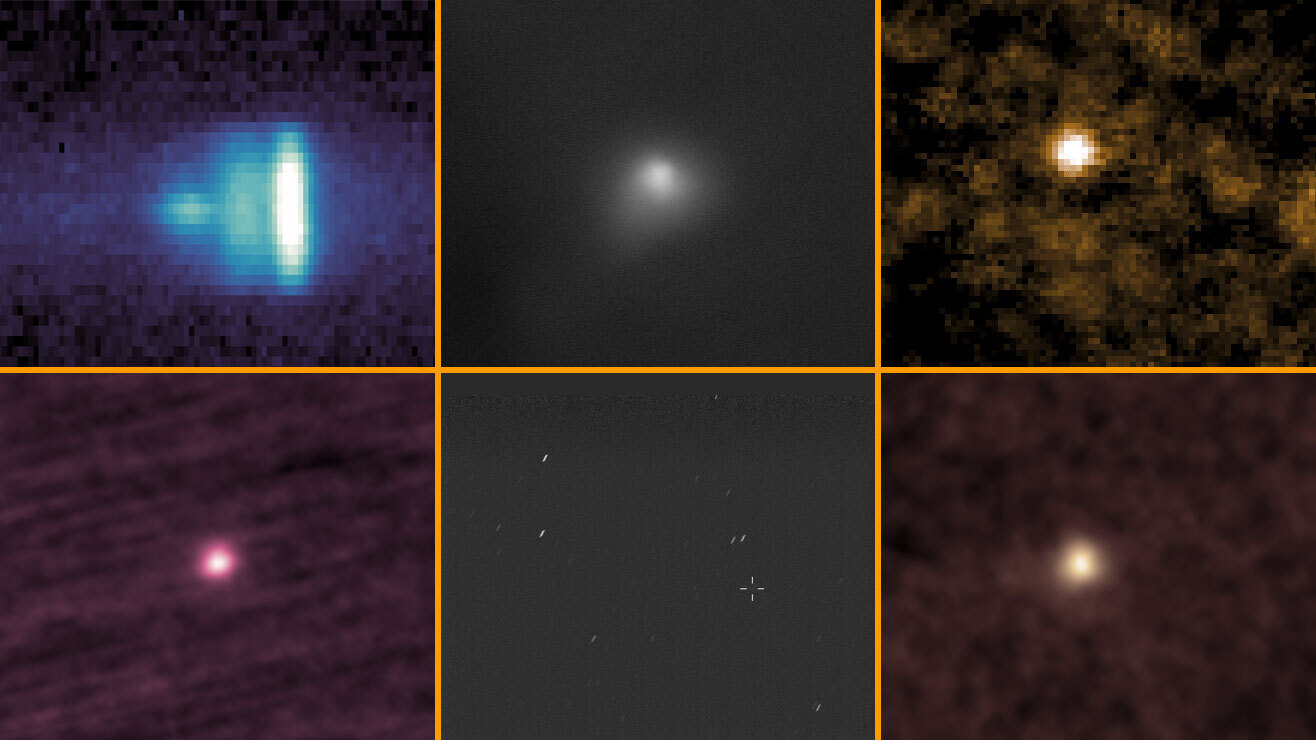
A collection of comet 3I/ATLAS images released by NASA.

In 2025, several interesting comets passed by us, including the interstellar visitor 3I/ATLAS. These photos of alien comets were taken by various NASA spacecraft during their flights over Mars. (Image credit: NASA/Goddard/LASP/CU Boulder/JPL-Caltech/University of Arizona/Southwest Research Institute/Lowell Observatory/Qicheng Zhang/ASU/MSSS)

What will be the next “Great Comet”?

Several amazing comets have passed by Earth in recent years, including the explosive “Devil Comet” 12P/Pons-Brooks, the “once in a lifetime” Comet Tuchinshan-Atlas, which passed in 2024, and the super bright comets Lemmon and Swan, which simultaneously lit up our skies last year.

In 2025, astronomers also discovered the interstellar comet 3I/ATLAS. This comet dominated the headlines due to wild and unsubstantiated rumors that it was an alien spacecraft. It made its closest approach to Earth in December, but is now rapidly receding and will soon be gone forever.

At this point, there aren’t many notable comets expected to pass by this year, so many are speculating that C/2025 R3 could be the “big comet” of 2026. This comet is a superlative title often used to describe the brightest comet of the year.

But there’s always the possibility that an even better, brighter comet will be discovered soon and make a similarly spectacular flyby later this year.


Source link

#Biotechnology #ClimateScience #Health #Science #ScientificAdvances #ScientificResearch
Follow on Google News Follow on Flipboard
Share. Facebook Twitter Pinterest LinkedIn Tumblr Email Copy Link
Previous ArticleLuminar lines up $22 million bidder for lidar business
Next Article Netflix had a great night at the 2026 Golden Globes with seven wins
user
  • Website

Related Posts

DNA from ancient viral infections aids embryo development, mouse study finds

January 12, 2026

Metal compound identified as potential new antibiotic thanks to robot performing ‘click chemistry’

January 12, 2026

Tuumba Majali Great Mother: North Macedonian box-shaped goddess figurine designed to protect Stone Age homes 7,800 years ago

January 12, 2026
Add A Comment
Leave A Reply Cancel Reply

Latest Posts

Consumer watchdog warns about Google’s AI agent shopping protocols — Google says she’s wrong

Doctors think AI can play a role in medicine, but maybe not as chatbots

Long-running web skimming campaign steals credit cards from online checkout pages

Malicious Chrome extension steals MEXC API keys by pretending to be a trading tool

Trending Posts

Subscribe to News

Subscribe to our newsletter and never miss our latest news

Please enable JavaScript in your browser to complete this form.
Loading

Welcome to Fyself News, your go-to platform for the latest in tech, startups, inventions, sustainability, and fintech! We are a passionate team of enthusiasts committed to bringing you timely, insightful, and accurate information on the most pressing developments across these industries. Whether you’re an entrepreneur, investor, or just someone curious about the future of technology and innovation, Fyself News has something for you.

Castilla-La Mancha Ignites Innovation: fiveclmsummit Redefines Tech Future

Local Power, Health Innovation: Alcolea de Calatrava Boosts FiveCLM PoC with Community Engagement

The Future of Digital Twins in Healthcare: From Virtual Replicas to Personalized Medical Models

Human Digital Twins: The Next Tech Frontier Set to Transform Healthcare and Beyond

Facebook X (Twitter) Instagram Pinterest YouTube
  • Home
  • About Us
  • Advertise with Us
  • Contact Us
  • DMCA
  • Privacy Policy
  • Terms & Conditions
  • User-Submitted Posts
© 2026 news.fyself. Designed by by fyself.

Type above and press Enter to search. Press Esc to cancel.