
UK drone sector to expand significantly with £46.5m funding
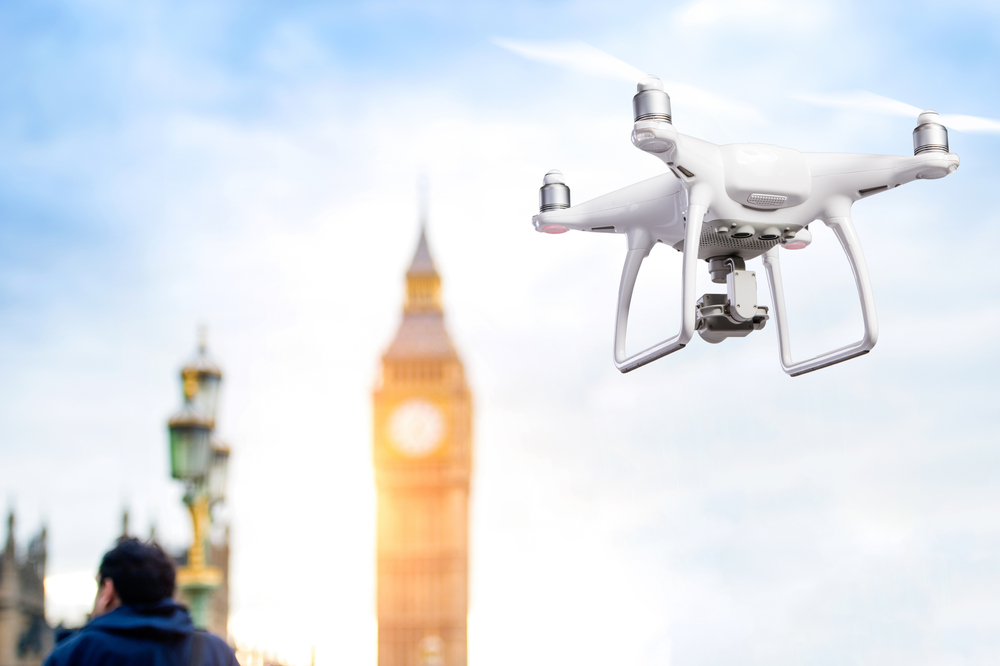
The UK Government has announced a £46.5m funding package to accelerate the future of drones, flying taxis and advanced aviation technology across the country.
The investment, made through the UK Civil Aviation Authority (CAA), aims to boost the uptake of commercial drone services, as well as strengthen the safety and security rules governing their use.
The bulk of the funding will focus on improving the way drones are regulated and tracked in the UK.
Ministers say new identification technology will help authorities deal with “faceless” drones, which are often associated with suspicious or illegal activity, while making it easier for legitimate operators to scale up services such as emergency response, medical delivery and infrastructure inspections.
The Government believes this measure will help unlock economic growth and establish the UK as a world leader in advanced air mobility.
The authority is also pushing ahead with plans to bring electric flying taxis to UK skies from 2028, supported by faster approvals and a simpler digital application system for operators.
£46.5m investment aims to grow UK drone sector
This funding package represents one of the Government’s biggest recent commitments to the UK drone industry.
Around £26.5 million will go towards modernizing aviation regulations to reduce delays and remove administrative barriers that are slowing the expansion of commercial drones.
Officials say the changes will help expand the use of drones in public services, especially in areas where rapid deployment can improve efficiency and save lives.
Emergency services, NHS logistics and public works inspections are all expected to benefit from faster authorization processes and modern digital systems.
The government also claims that simplifying regulations will encourage investment in high-growth industries related to robotics, artificial intelligence and aviation technology.
New drone ID system to combat illegal activities
Part of the investment will fund the UK’s first dedicated drone identification system.
The technology, known as Hybrid Remote ID, broadcasts the drone’s identity and current location while in flight, allowing nearby compatible devices to detect the drone.
The system also creates secure online records, including historical flight data, that can be accessed remotely by licensing authorities.
Ministers say this will enable police and aviation authorities to more effectively identify fraudulent operators, while improving accountability across the sector.
The crackdown comes amid growing concerns about nuisance drones near airports, prisons and sensitive infrastructure. By introducing clearer identification standards, the government wants to build public trust while supporting responsible commercial use.
Keir Mather, UK Secretary of State for Aviation, Maritime and Decarbonisation, added: “We are supporting the UK’s next generation of aviation innovators with almost £50 million to drive drone regulatory reform, create jobs, reduce emissions and lift barriers to growth that will enhance the UK’s world-leading aviation reputation.”
“Innovation must go hand in hand with strong security, so more than half of our investment will develop new ID systems to track drones in real time, support emergency services and build trust in an industry that could be worth up to £103bn by 2050.”
Flying taxis and advanced air mobility approach
The investment forms part of the Government’s wider ambitions to strengthen the UK’s position in the global aviation market.
Advanced air mobility projects, including electric flying taxis, are currently seen as a key growth area for the future.
Regulators are expected to continue developing a framework that will enable air taxis carrying passengers to operate commercially from 2028.
Ministers said the funding demonstrates a commitment to balance innovation with safety and ensure that Britain’s drones and emerging aviation technologies can scale up under clearer and more predictable rules.
Source link

