

Who is the artist responsible for the theme of “Atelier Witch’s Hat”?
Among the standout titles in what critics are already calling a prolific spring 2026 anime season, one series and its musical collaborators are garnering equal attention. The fantasy “Atelier of the Pointed Hat”, which depicts Coco, a girl who dreams of becoming a witch, and the mysterious singer-songwriter Haku Nakamura, who provides the ending themes “Tadabei no Noroi”, “Float in the Night”, and “Hikari”, has become one of the most talked about combinations this season.
explore

Check out the latest videos, charts and news
“What if a beautiful curse innocently tore apart even the light?”
This work is based on the popular manga by O Shirahama, which was nominated for the 2018 Kodansha Manga Award and won first place in the general section of the National Bookstore Recommendation Poll. This series has received great acclaim internationally, winning the Eisner Award for Best Asian Production in the United States, as well as awards in France, South Korea, and Spain.
When the animated version premiered in April, it quickly captured the imagination of a global fan base, not only for the sheer beauty of the animation, but also for its grounded setting and incredible storytelling. Beneath its seemingly light-hearted setting of apprentice witches finding their footing, the series isn’t afraid to confront its heroines’ innocent yet devastating mistakes and the grim reality that magic powerful enough to save a person can just as easily destroy. The ending theme by Haku Nakamura has also been highly praised for its mysterious resonance with the story and characters, as well as its heartbreaking atmosphere and vocal expressiveness.
Nakamura Haku is a singer-songwriter who debuted this spring, recording several tracks using only his voice and accompanied by an acoustic guitar. All of her releases are completely uncensored and unedited. Her artist profile simply states, “Her music exists just before the ending.” The concept alone suggests that someone is out of the ordinary, but nothing could have prepared listeners for the shock they felt the first time they heard “Tadabei Noroi” played over the anime’s end credits. (Note: Due to her one-take, no-edit approach, the anime edit is recorded as a new standalone version, rather than being cut from the entire track.)
“If only a beautiful curse could tear away even the light from your innocence/But if a dear curse could snatch and strip you of everything in an instant/I don’t want to see the despair seep into you, not for a second or forever.” These lines reflect the shocking scene in which Coco’s own innocence turns her beloved mother to stone. With only an acoustic guitar in the background, her voice screamed out from the darkness, as if to reveal the love and despair that had been dormant within Nakamura Haku herself. The aftershocks continued throughout the night.
“Plugless”: Concert without microphone
As established, Haku Nakamura records in a solo acoustic style with one guitar and one take, without any editing or retouching. The title song of their debut EP “White wa Yume”, currently released only on CD, was picked up by radio stations across Japan and ranked 2nd on Billboard Japan’s Heatseekers chart for two weeks in a row. She did not appear in public or give interviews for a simple reason: “It’s all about the music and the voice.” It’s an approach that strips away all personal elements other than the sound, and in keeping with that, she recently held a show at Tokyo Nord Hall that she calls “plugless,” with no microphones or amplifiers.
Approximately 200 meters above ground, amidst the glow of central Tokyo and almost no stage lights, Haku Nakamura appeared alone with an acoustic guitar in hand, opening with the lead track of her debut EP, “Seventeen.” His hood was pulled in so deep that his face was unreadable, but he sang in a completely vulnerable voice: “The me who used to cry all the time back then/The me who just ran and never looked back/I want to accept/I want to forgive/If I end up hating everything anyway.” The rawness can be heard on the recording, but the pain hits you differently live, locking you in place.
In a space occupied only by the music she made and the lights of a distant city, she faced despair and darkness, trembling, and raising her voice in search of a glimmer of hope. “I’m sorry, I just wanted to sing / Look up and sing a white song” (“White is a dream”) With the third song, “Tadabei no Noroi”, the ending theme of “Atelier of Pointed Hats”, one thing became clear during the live experience. Many viewers may have assumed that this song was written for the anime, and while this synchronicity is no doubt intentional, it is also a song born out of her own story and emotions. This beautiful curse is her curse in her own life. I can’t explain anything else. True despair, pure longing, trembling, and prayers that can only be uttered by someone who has lived with both – these existed in her voice and sounds with surprising purity.
Continuing with “Sandcastles”, “Good and Evil”, and “Floating in the Night”, the series depicts the mistakes that arise from innocence, the pain that comes from purity, and the betrayal that causes hatred in people who only wanted to be kind and right. The struggle against all of this and the light that should be found on the other side were laid bare in her performances and songs. Although this is just one writer’s impressions, there is no doubt that it was a program in which each listener’s life found a point of resonance, so if you haven’t seen it yet, it’s well worth experiencing through the archive footage.
What happens next — potentially reaching listeners around the world
This spring, Haku Nakamura launched maximum10, the label responsible for the Japanese releases of MUSE, Sigur Rós, and The Prodigy. The highlights of this short period are far too long to be summarized in a concise manner. But her story is just beginning. “Good and Evil” is currently attracting attention as the opening theme for the TV drama “Luna Sea.” From September to January, a nationwide plugless (outstore) live tour called “Itan” will be held, which is free for those who purchase the debut EP “White wa Yume” CD.
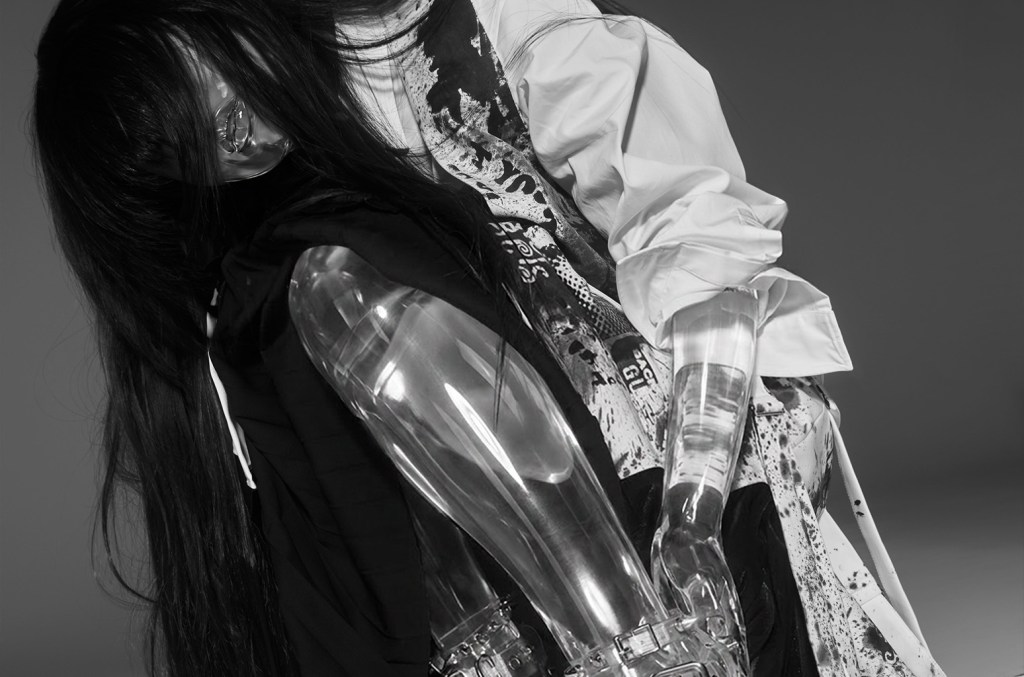
And with Atelier Witch’s Hat winning numerous prestigious international awards, this anime will bring Haku Nakamura and her music to audiences around the world. Like an artist’s photo where part of her body becomes glass, she refracts the music outward from every angle and reflects it into each of our lives. Her next move is worth watching.
—This article by Tetsuo Hiraga was first published on Billboard Japan
Source link
